
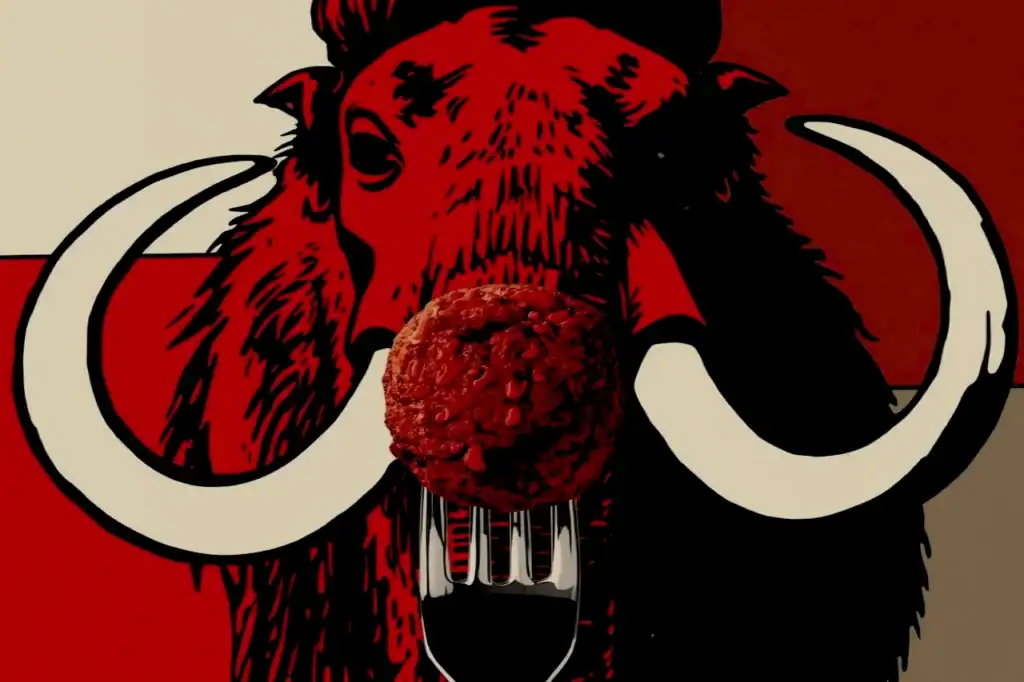

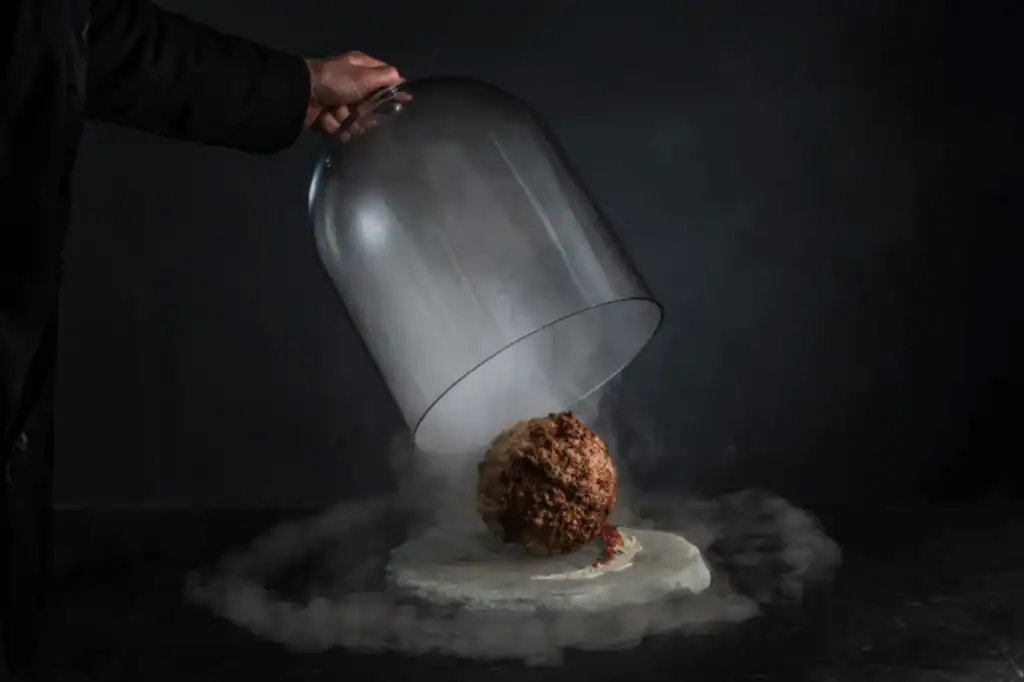
Bizarre But True! An Australian cultured meat company Vow created a meatball from extinct woolly mammoth DNA in 2023. The spherical creation sits somewhere between a softball and a volleyball in size. It weighs 0.88 pounds…
But nobody has taken a single bite!
The reason? Scientists have no idea how your immune system would react to a protein that hasn’t existed for 5,000 years. Professor Ernst Wolvetang from the Australian Institute for Bioengineering suggested it’s probably not safe to try just now, even if regulators permitted it.
James Ryall, Vow’s chief scientific officer, admitted the obvious: “I have no idea what the potential allergenicity might be.”
You don’t often see scientists create food specifically designed to never be consumed. But here we are.
It Smells Like Crocodile (Apparently)
The meatball has the aroma of crocodile meat. That’s the closest reference point scientists had for this prehistoric protein.
Vow had already been experimenting with cultivating meat from unconventional species including crocodile, alpaca, peacock and kangaroo. So when they needed a comparison for mammoth, they reached for the reptile.
How To Build a Mammoth From Scratch
You can’t just grow mammoth meat in a lab. Mammoths are extinct. Their cells are dead. So scientists used sheep cells as the biological chassis – the living framework that could actually multiply and grow.
Then they inserted one mammoth gene into those sheep cells: the gene for myoglobin, the protein that gives meat its colour and flavour. That single mammoth gene hijacked the entire system.
Scientists detected over 100 times more mammoth myoglobin in the cells than traditional sheep myoglobin. One gene out of 25,000 total genes – but it completely dominated cellular expression. The result: mostly sheep biology producing overwhelmingly mammoth protein.
Someone Has Actually Eaten Real Mammoth Meat
Love Dalén, a professor of evolutionary genomics at Stockholm University, knows what mammoth meat actually tastes like.
During a field trip to the Yana River in Siberia in 2012, he tried a small piece of frozen meat taken from a partial carcass of a baby mammoth. Dalén said he would definitely taste the lab-grown meatball if they ever went on sale. There’s an actual mammoth meat ‘connoisseur’ out there. And he’s game for round two.
The Publicity Stunt That Reached 12.8 Billion People
The campaign achieved a media reach of over 12.8 billion and 3,200 press mentions in the first two weeks after launch.
Coverage came from BBC, The Telegraph, Sky News, UK Guardian, The Independent, The Wall Street Journal, New York Post, Good Morning Britain, and Stephen Colbert’s Late Show.
The Climate Twist Nobody Saw Coming
Lab-grown meat was supposed to save the planet. The mammoth meatball was positioned as a conversation starter about sustainable food practices.
Then, ironically, a University of California, Davis study concluded lab-grown meat may be up to 25 times worse for the environment than natural, pasture-raised cattle!
Current methods of producing cell-cultured meat may require four to 25 times more energy than retail beef production, primarily due to pharmaceutical-grade growth media and energy-intensive cultivation environments.
The project meant to highlight sustainability might be undermining its own premise. That’s the kind of irony on what a so-called ‘green’ initiative actually delivers when you run the numbers..!
What This Was Really About…
Vow didn’t really create a food product. They created a conversation piece with scientific backbone. The meatball sits in a display case, generating headlines and forcing questions about biotechnology, extinction and the future of food. It’s not meant to feed anyone. It’s meant to make you think about what feeding people might look like in 20 years…