

From fog-soaked Victorian streets to modern-day media firestorms, the UK has produced some of the most haunting and culturally defining true crime cases ever recorded…
But these aren’t just stories about killers – they’re about class, power, institutional failure and the lives often erased in the telling. Our list of the top UK True Crime Books cuts through the clichés and zeroes in on single-case deep dives, books that reconstruct one crime with forensic detail, psychological depth, and narrative precision.
Whether it’s the myth-shattering approach of ‘The Five’ or the chilling psychological immersion of ‘Happy Like Murderers’, these are the titles that redefine British True Crime writing. If you’re searching for the best UK true crime books, this is where the real stories begin…
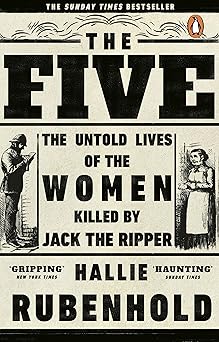
Case: Jack the Ripper victims
Rather than retelling the familiar hunt for Jack the Ripper, this book reconstructs the lives of the five victims - Polly Nichols, Annie Chapman, Elizabeth Stride, Catherine Eddowes and Mary Jane Kelly.
Rubenhold draws on census records, workhouse documents and social history to show that these women were not simply “prostitutes,” as often portrayed, but individuals shaped by poverty, housing instability and Victorian social structures.
The book couches the murders within the harsh realities of late 19th-century London, especially the precarious lives of working-class women. By removing the killer from centre stage, the book becomes a critique of how true crime can distort victims into stereotypes. It’s widely regarded as a corrective to decades of sensationalism on Jack the Ripper and fundamentally changes how readers understand the Whitechapel murders - not as a puzzle about a killer, but as a tragedy rooted in systemic neglect.
Case: Road Hill House murder (1860)
This book examines the brutal murder of a young boy, Saville Kent, in a respectable middle-class household - a crime that shocked Victorian Britain. The investigation was led by Inspector Jonathan Whicher of Scotland Yard, one of the first detectives to operate in a modern sense. Summerscale meticulously reconstructs the case using letters, newspaper coverage and police records.
Beyond the crime itself, the book explores the birth of detective fiction, showing how the case influenced writers like Charles Dickens and Wilkie Collins. It also dives into themes of family secrecy, class anxiety and the discomfort Victorians felt about professional detectives entering private homes. The eventual solution, both shocking and psychologically complex, makes the book feel remarkably modern despite its historical setting.

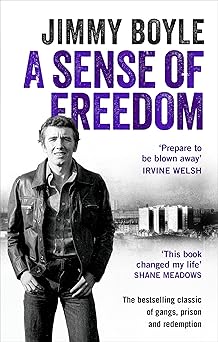
Case: Jimmy Boyle’s criminal life.
This autobiography offers a raw, first-person account of one of Scotland’s most feared gangsters. Boyle describes his violent upbringing in Glasgow, his rise within gang culture and the brutal crimes that led to his imprisonment. The narrative is unflinching in its depiction of violence, both on the streets and inside prison walls.
What makes the book stand out is its focus on transformation. While much of it reads like a case study in criminal psychology and systemic failure, it also documents Boyle’s eventual rehabilitation through art and education. This dual perspective, offender and reformer, makes it more than a crime story; it becomes an exploration of whether people shaped by violence can fundamentally change.
Case: Fred and Rose West
Burn’s account of the West murders is less a straightforward narrative and more a disturbing psychological excavation of the killers and the society around them. The book traces the couple’s backgrounds, their relationship and the series of murders carried out at their home in Gloucester.
Rather than sensationalising the crimes, Burn focuses on atmosphere, psychology and the banality of evil. He examines how such extreme violence could exist within an ordinary suburban setting and how warning signs were missed or ignored. The prose is deliberately unsettling, making the reader confront not just what happened, but how it could happen in plain sight.

Case: Murder of James Bulger
This book provides a deeply detailed and sensitive reconstruction of the 1993 abduction and murder of two-year-old James Bulger by two young boys. Smith draws on extensive interviews, court transcripts and psychological analysis to piece together the events leading up to the crime and its aftermath.
What sets it apart is its refusal to simplify the case. It examines the backgrounds of the perpetrators, the media frenzy and the broader society reaction, while maintaining a strong focus on the victim and his family. The book also explores difficult questions about childhood, responsibility and the limits of understanding extreme acts committed on children by other children.

Case: John Cooper
Written by the detective who ultimately solved the case, this book details how a series of murders in the 1980s went unsolved for decades before being reopened. Wilkins explains how advances in forensic science, particularly DNA analysis, and a careful re-examination of evidence led to the identification of John Cooper.
The narrative gives a rare insider perspective on long-term investigations, showing how persistence, new technology and attention to detail can crack cold cases. It also highlights the emotional toll on investigators and the importance of finally bringing justice to victims’ families after years of uncertainty.

Case: Dennis Nilsen
Based on direct communication with serial killer Dennis Nilsen, this book offers one of the most detailed psychological portraits in British True Crime. Masters explores Nilsen’s background, his crimes and his mindset, drawing heavily on letters and interviews.
The book is notable for its attempt to understand rather than simply condemn. It examines themes of loneliness, control and identity, while also documenting the investigative process that led to Nilsen’s capture. Its calm, analytical tone makes the subject matter even more unsettling and it remains a benchmark for psychologically focused true crime writing.

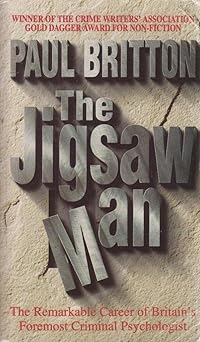
Case: Rachel Nickell Murder
This memoir by one of the UK’s leading criminal profilers provides insight into the development of offender profiling in Britain. A significant portion of the book focuses on the murder of Rachel Nickell on Wimbledon Common and the controversial investigation that followed.
Britton explains how psychological profiling was used and sometimes misused by police, leading to one of the most criticised investigations in modern British policing. The book sheds light on the tension between emerging investigative techniques and traditional methods, as well as the risks of tunnel vision in high-profile cases.
Case: Ian Brady and Myra Hindley
This book provides a comprehensive account of the Moors Murders, focusing on the crimes committed by Brady and Hindley in the 1960s. It traces their backgrounds, their relationship and the series of murders that shocked the nation.
Cook also explores the investigation, the discovery of victims and the enduring impact on the families involved. The case remains one of the most haunting in British criminal history and the book captures both the horror of the crimes and the long shadow they cast over public consciousness.

Case: Dr Crippen
This book revisits the infamous case of Hawley Harvey Crippen, who was convicted of murdering his wife in 1910. Rubenhold re-examines the evidence and shifts the focus toward the women in the story - his wife Belle Elmore and his mistress Ethel Le Neve.
By combining historical research with narrative storytelling, the book challenges long-held assumptions about the case and the people involved. It also explores Edwardian society, media sensationalism and the role of gender expectations in shaping both a crime and its legacy.