

Bizarre But True! Margarine wasn’t always the yellow spread sitting in your fridge. For most of its existence, it was illegal, pink and made from parts of cows you’d rather not think about…
The original 1869 recipe combined beef fat, milk, water and chopped cow udders. Not as garnish. But as a required ingredient. Udders contain mammary pepsin, an enzyme that transforms digestion products into milk. Without it, the mixture wouldn’t work.
Some versions swapped udders for gastric juices from pigs, creating something closer to jelly than anything you’d spread on toast.
States Legally Mandated Repulsive Pink Dye
By the 1880s, dairy farmers had declared war on margarine. Their weapon of choice? Colour legislation.
Vermont, New Hampshire and South Dakota passed “pink laws” requiring manufacturers to dye margarine an off-putting pink shade. The goal was simple: make it unsellable. Violators faced $100 fines or sixty days in prison.
The Supreme Court struck this down in 1898, ruling that forcing pink colouring rendered the product “unsalable” and created “a positive and absolute refusal to purchase the article at any price.” But states found workarounds.
They banned yellow margarine outright instead…
Wisconsin Residents Became Margarine Bootleggers
For 72 years, yellow margarine was contraband in Wisconsin. Residents who wanted it had to smuggle it across state lines.
Illinois petrol stations near the Wisconsin border sold as much as a tonne of yellow margarine per week to smuggling Wisconsinites. Even dairy farmers, the very people the ban was meant to protect, were buying the stuff!
Bootleggers faced fines up to $6,000.
Enforcement was rare, but not unheard of. One Appleton sheriff was caught smuggling yellow margarine into jail to feed prisoners. The irony wasn’t lost on anyone.
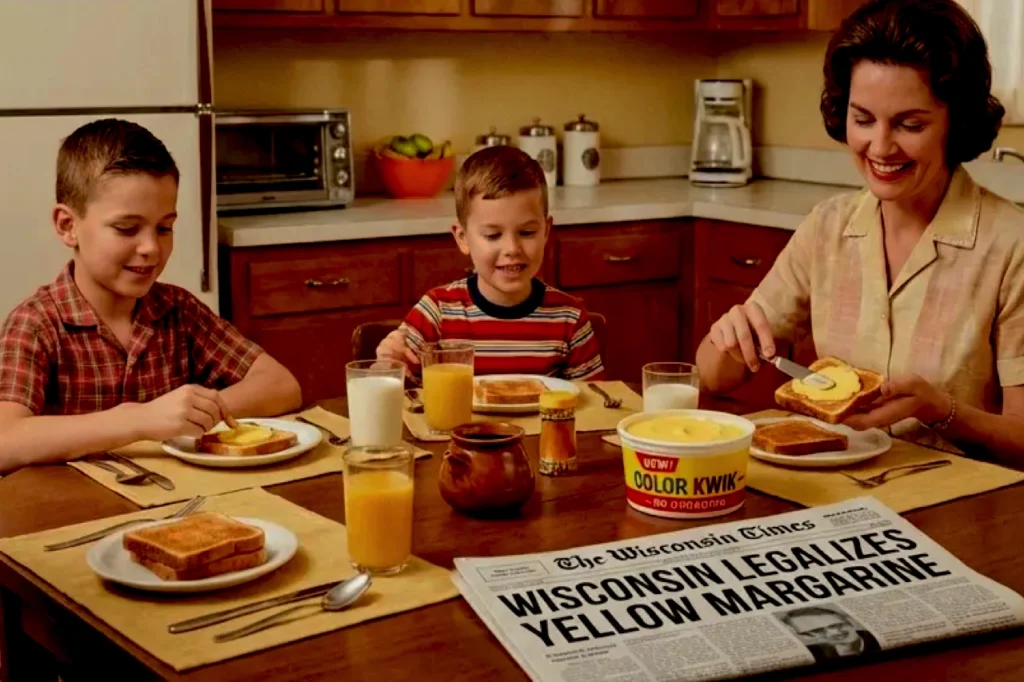
Manufacturers adapted. They sold white margarine with a capsule of yellow dye that consumers had to knead for about twenty minutes to mix properly. Children were assigned this as a regular household chore.
In 1948, someone invented “Colour Kwik”, transparent bags that reduced the kneading time to 90 seconds. Progress.
A Blindfolded Taste Test Ended The Ban
In 1955, Wisconsin Senator Gordon Roseleip, vocally anti-margarine, agreed to a blindfolded taste test. He preferred the margarine whilst insisting it was butter.
Later, it emerged his wife had been secretly serving him illegal yellow margarine for years instead of butter. She was trying to protect his heart. Wisconsin finally legalised yellow margarine in 1967.
The ban lasted longer there than anywhere else in America. Meanwhile, the butter they were protecting was so terrible it was sold as industrial lubricant in Chicago markets, not for human consumption! It was known as “western grease.”
Margarine Was Called an Abomination Against Morality
Minnesota Governor Lucius Hubbard proclaimed in the 1880s that “the ingenuity of depraved human genius has culminated in the production of oleomargarine and its kindred abominations.”
Six states banned margarine outright. Political cartoonists depicted factories dropping stray cats, soap, paint, arsenic and rubber boots into the margarine mix. The rhetoric framed margarine as a threat to “the American way of life and the moral order.” Not because it was dangerous. But because it competed with butter.
The Shift to Vegetable Oils Changed Everything
Modern margarine bears almost no resemblance to the original udder-based version. Today’s formulations use vegetable oils, water, salt and emulsifiers.
The process involves hydrogenation, solidifying oils by adding hydrogen atoms. This created trans fats, which are now recognised as harmful. Current manufacturing techniques minimise trans fat content, but it remains a concern.
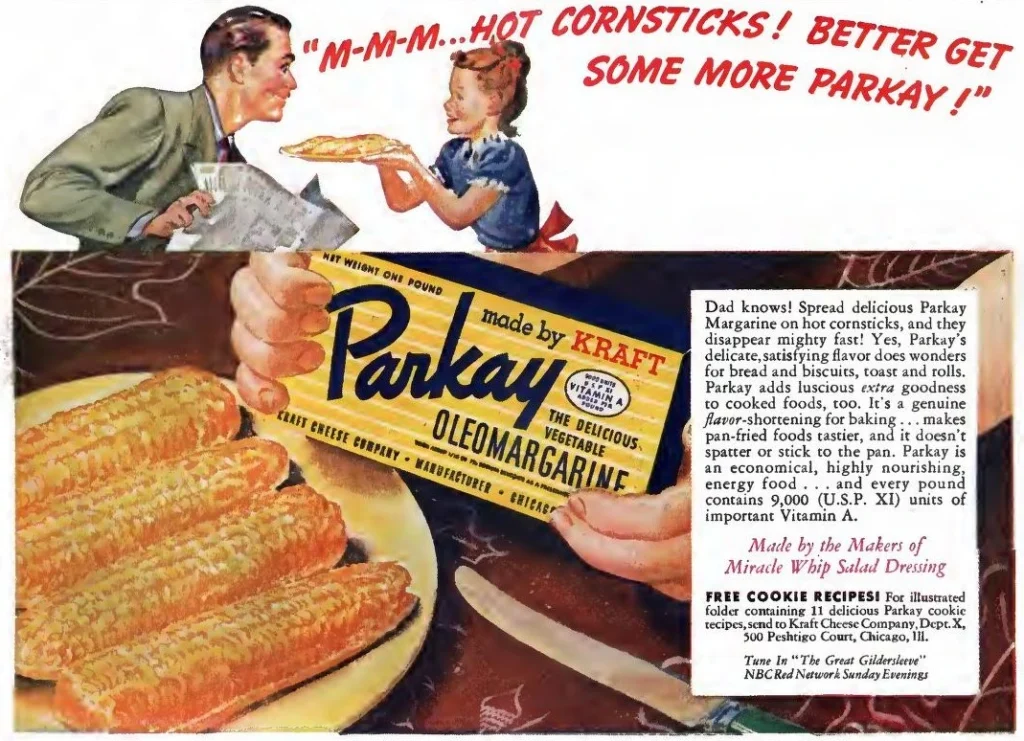
The colour issue persists in reverse. Margarine is now typically dyed yellow to resemble butter, using annatto or carotene. The same shade that was once illegal is now standard.
Margarine’s history reveals how far industries will go to eliminate competition. Laws weren’t written to protect consumers. They were written to protect dairy profits. And the same thing still happens, all over the world today, with other products that governments want to protect…