
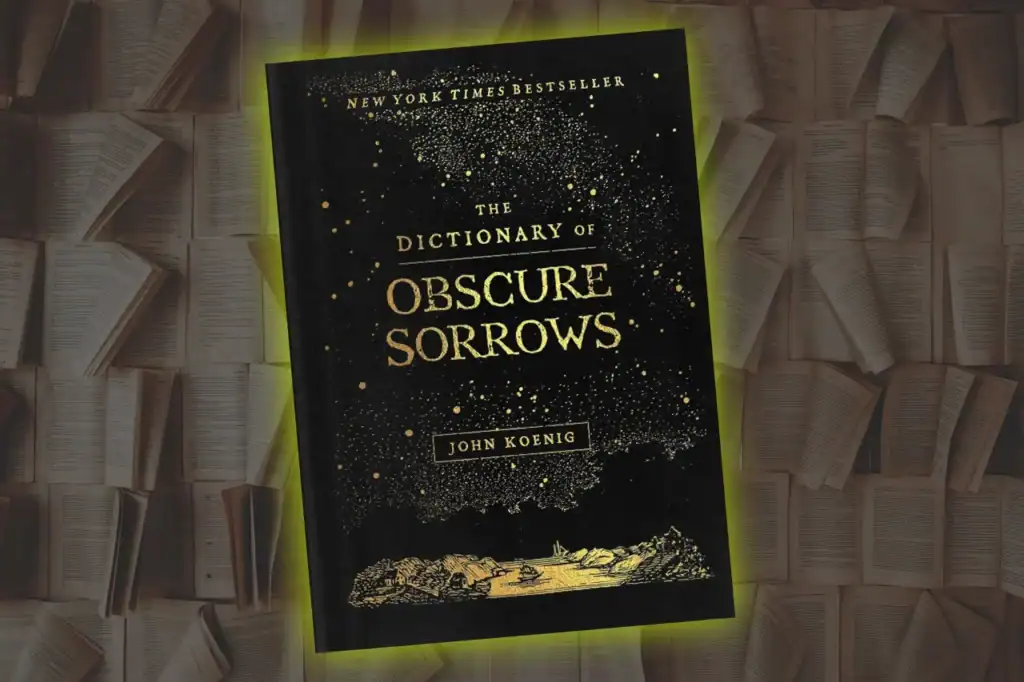

The Dictionary of Obscure Sorrows by John Koenig lands somewhere between a poetic reflection and an emotional field guide and it’s unexpectedly absorbing from the very first page. Rather than cataloguing the familiar, it dares to invent words for feelings so subtle they usually slip through language unnoticed: the ache of remembering a time that’s quietly ended, the soft melancholy stirred by old photographs, or that dizzying realisation that everyone around you is living a life as vivid and tangled as your own…
What strikes most is how natural these invented words feel. Terms like “sonder” and “anemoia” slip seamlessly into thought, as if they’ve always been waiting at the edge of the mind, unnamed but deeply known. They don’t just describe feelings, they legitimise them. There’s something quietly comforting about seeing the shadows and half-formed aches of everyday life turned into something tangible. It feels, oddly, like someone whispering, “You’re not the only one who feels this.”
The physical book itself adds to its appeal. With its elegant design and hardback format, it feels like it belongs on a nightstand or a coffee table ready to be opened whenever reflection calls. It isn’t the sort of book that demands to be read cover to cover in a rush; it feels better suited to quiet evenings, flipping to a random page and discovering a word that perfectly matches a feeling you didn’t even know could be expressed.
That said, not every word lands with the same force. A few definitions feel more clever than deeply resonant, as if stretching a little too far for effect. And while Koenig’s voice remains thoughtful throughout, there’s a sense that what began online with raw spontaneity sometimes feels a touch polished in print, as though the edges have been gently sanded down.
Still, those are small quibbles against what the book achieves. The Dictionary of Obscure Sorrows shines a light into the neglected corners of experience and reminds us that those strange, fleeting feelings aren’t just private quirks, they’re quietly universal. By giving them names, Koenig turns them from vague shadows into something almost beautiful.
More than anything, the book is a celebration of the complexity of being human: the quiet longings, nostalgic aches and moments of unexpected wonder that fill our days. And while the words themselves are new, the truths they capture feel timeless and deeply, recognisably shared…
Have you ever wondered about the lives of each person you pass on the street, realizing that everyone is the main character in their own story, each living a life as vivid and complex as your own? That feeling has a name: “sonder.” Or maybe you’ve watched a thunderstorm roll in and felt a primal hunger for disaster, hoping it would shake up your life. That’s called “lachesism.” Or you were looking through old photos and felt a pang of nostalgia for a time you’ve never actually experienced. That’s “anemoia.”
If you’ve never heard of these terms before, that’s because they didn’t exist until John Koenig began his epic quest to fill the gaps in the language of emotion. Born as a website in 2009, The Dictionary of Obscure Sorrows has garnered widespread critical acclaim, inspired TED talks, album titles, cocktails, and even tattoos. The Dictionary of Obscure Sorrows “creates beautiful new words that we need but do not yet have,” says John Green, bestselling author of The Fault in Our Stars.