

Imagine a time when drinking glow‑in‑the‑dark radium water was marketed as a health tonic, morphine syrup soothed teething babies and swallowing a few tapeworm eggs promised a slimmer waistline…
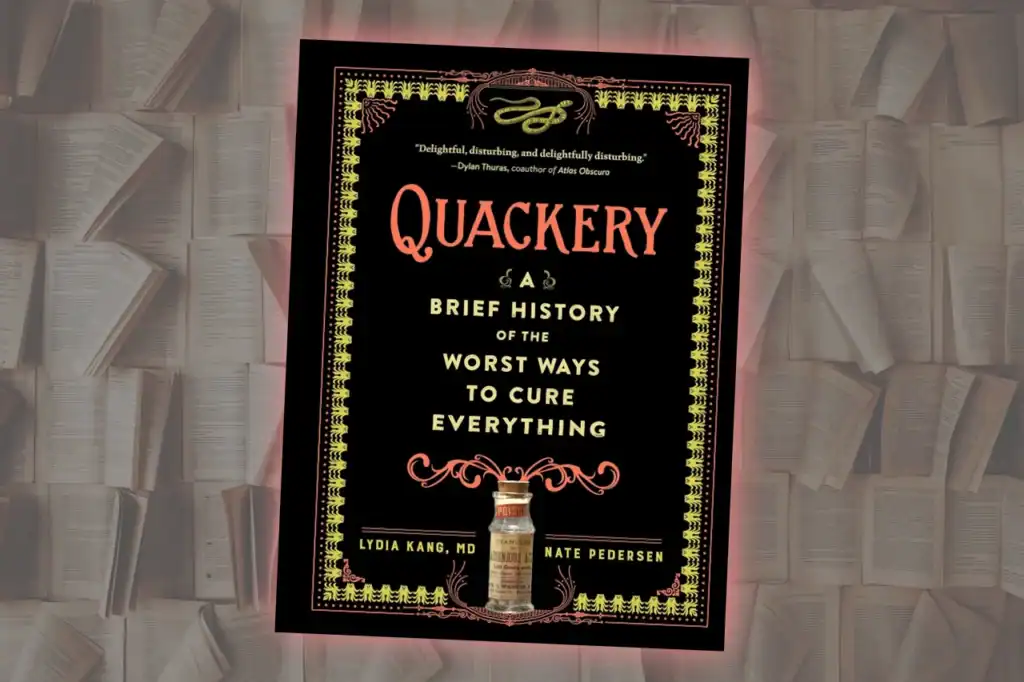
Quackery: A Brief History of the Worst Ways to Cure Everything by Lydia Kang and Nate Pedersen dives headfirst into this astonishing archive of medical misadventures, shining a wickedly funny light on the strange, alarming and often deadly paths humanity took in the quest for better health.
Across nearly 350 brisk pages, the authors act as irreverent tour guides through a cabinet of historical curiosities: arsenic pills sold as beauty treatments, heroin prescribed for coughs, strychnine hawked as a virility booster and gold-infused drinks that supposedly cured everything from arthritis to aging itself. And these weren’t just back‑alley scams, they often had the backing of serious doctors and scientists who truly believed they’d discovered miracle remedies.
What gives Quackery its bite isn’t just the roll call of bizarre cures but the way Kang and Pedersen set each one in context. They show how desperation, limited scientific knowledge and commercial ambition collided to produce treatments that were sometimes useless, sometimes deadly and occasionally paved the way to real breakthroughs. It’s part dark comedy, part cautionary tale about the eternal human hunger for quick fixes…
Packed with vintage ads, photographs and cheeky illustrations, the book becomes as much a visual feast as it is a written one. Each page feels like rummaging through a dusty trunk of forgotten medical oddities – bizarre, unsettling and weirdly entertaining. The humour is sharp but never cruel; there’s respect beneath the laughter, an acknowledgment that these quacks and charlatans weren’t always cynical but that they were often victims of their own overconfidence or of the era’s scientific blind spots.
The charm of Quackery is that it’s playful without being shallow. Alongside the tales of tapeworm diets and radium cocktails, the authors show how these failures nudged medicine toward real progress. It becomes clear that the boundary between legitimate innovation and dangerous quackery was (and sometimes still is) shockingly thin.
By the end, readers are left with an unsettling yet fascinating realisation: as laughable as the past seems, the desire to believe in miracle cures still hasn’t gone away. Quackery doesn’t just catalog the worst ideas in medical history, it invites us to ask what we might be getting wrong right now.
Darkly funny, smart and compulsively readable, this is the perfect antidote for anyone who thinks modern medicine was always grounded in reason. After all, history shows us just how strange, stubborn and wildly creative the human pursuit of health can actually be…
What won’t we try in our quest for perfect health, beauty, and the fountain of youth? Well, just imagine a time when doctors prescribed morphine for crying infants. When liquefied gold was touted as immortality in a glass. And when strychnine―yes, that strychnine, the one used in rat poison―was dosed like Viagra. Looking back with fascination, horror, and not a little dash of dark, knowing humour, Quackery recounts the lively, at times unbelievable, history of medical misfires and malpractices...