

Author Rosie Grant is walking through graveyards, photographing tombstones and recreating century-old recipes…
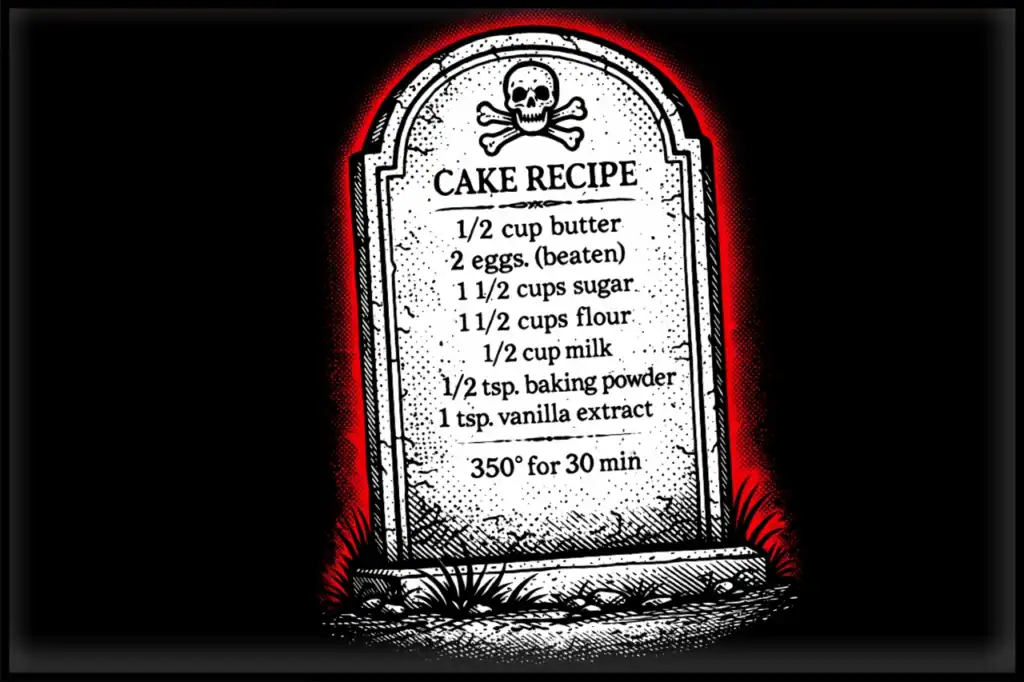
Not family recipes. Not heritage collections. Recipes carved into gravestones by people who wanted their signature dish immortalised alongside their name and dates.
Yes, that exists..!
When Your Tombstone Becomes A Recipe Card
Here’s what makes this practice stranger than standard memorial tradition.
People aren’t just adding “beloved mother” or “devoted husband” to their headstones. They’re engraving full recipes, measurements, cooking times, ingredient lists.
Research from psychologist and neuroscientist Hadley Bergstrom reveals why this works: your brain fuses aroma, taste, texture, temperature and context into a single “flavour memory.” Taste memories are the strongest associative memories your brain can make too. Not visual. Not auditory. But Taste.
When someone carves their fudge recipe onto granite, they’re not being eccentric. They’re exploiting the most powerful memory-encoding system humans have.
Research published on nostalgia memory proves food-evoked nostalgia is predominantly positive and hits harder than other memory triggers. A recipe on a headstone doesn’t just tell you what someone made, it gives you the exact mechanism to trigger the memory of them.
The Archive That Nobody Asked For
Rosie Grant, the creator behind @GhostlyArchive on TikTok and Instagram, stumbled onto something accidentally…
She’s creating a culinary archive from death records. Each tombstone represents a dish someone considered definitive enough to be their permanent legacy. Not their career achievements. Not their family lineage. Their biscuit recipe.
What makes this collection bizarre is its selection mechanism: these aren’t chef-approved, test-kitchen-perfected formulas. They’re home recipes that mattered enough to someone that they wanted strangers in 2026 to be able to make them.
The recipes range from Depression-era casseroles to church potluck desserts. Nothing fancy. Nothing Instagram-optimised. Just the dishes people actually made, repeatedly, for decades – carved into their gravestones!
What Happens When You Cook From a Graveyard
Grant recreates these recipes exactly as inscribed. No modifications. No modernisation. No substitutions for discontinued ingredients.
Some work perfectly. Others are disasters – measurements that don’t quite add up, instructions that assume knowledge nobody wrote down, ingredient names that haven’t been used in 40 years.
And that’s the point.
These recipes weren’t meant to be foolproof professional documentation. They were encoded by people who assumed the person reading them would already know how to cook.
The Culinary Archives Project and similar initiatives use crowdsourcing to preserve family recipes. In Italy, the Ragù project has digitised roughly 460 recipes from the 1960s to 1980s.
But gravestone recipes are different. They’re self-selected by the dead person, not their descendants. Nobody’s gran decided this should be preserved – the person themselves did.
Why This Matters More Than You Think
Over 70% of culinary traditions face extinction due to industrialised food production. Most treasured culinary traditions are on the brink of disappearing within the next century.
Food memories are being homogenised out of existence. Over 72,000 restaurants closed in the US in 2024 alone. Menus converge. Dishes get optimised for platforms rather than taste. Anything too specific, too regional, too weird gets smoothed away.
Gravestone recipes are a rebellion against that erasure. They’re people saying: this specific dish, made this specific way, mattered enough to be permanent.
Grant is creating an archive of cognitive novelty – recipes that never made it to cookbooks, never got optimised for modern tastes, never got algorithmic approval.
The Book: To Die For
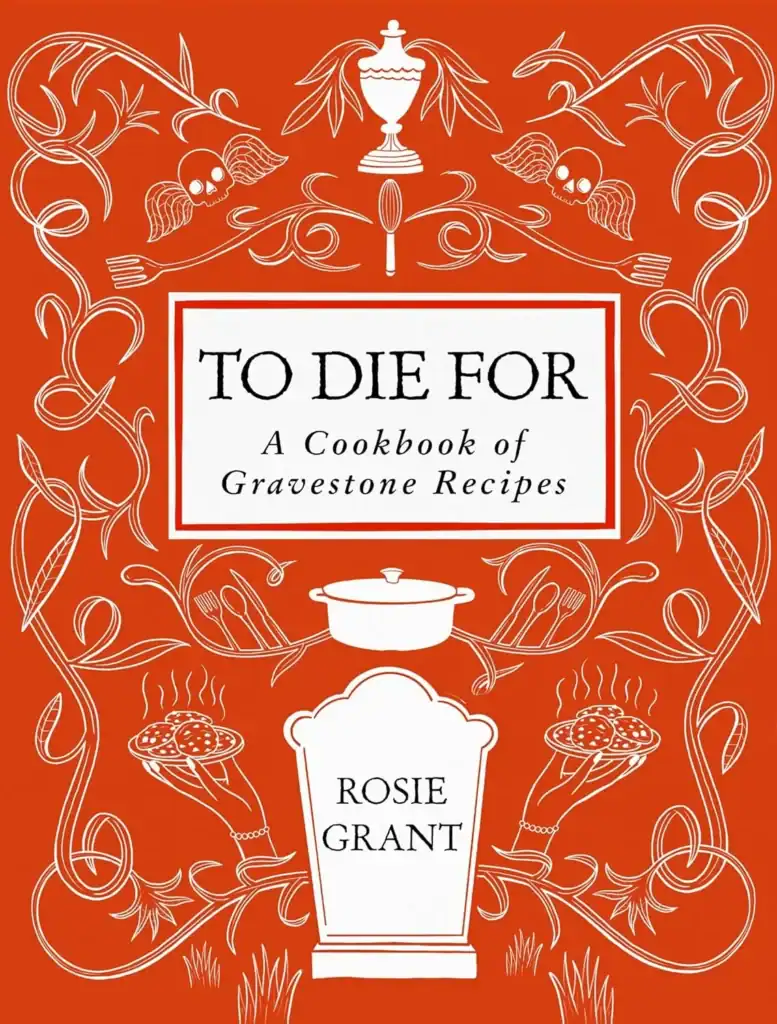
Grant’s research has become ‘To Die For: A Cookbook of Gravestone Recipes’, a New York Times and USA Today bestseller that documents this strange phenomenon with unexpected depth.
The book contains 40 recipes collected from gravestones across the globe—from spritz cookies to guava cobbler, carrot cake to chicken spaghetti casserole, snickerdoodles to French silk pie.
Each recipe is accompanied by an interview with the remaining family, plus photography of the food, the gravestone and any memorabilia the family wanted to share. Grant travelled to visit every gravestone featured in the book, recreated each recipe and spent years talking to families about what these dishes meant – why someone’s signature cookies or famous meatloaf deserved permanent stone inscription.
The project began during her digital archives internship at Congressional Cemetery in Washington, DC, where she was completing her Master’s in Library Science at the University of Maryland with a concentration in digital archives.
Thoughtfully and respectfully explored, Grant has documented this connection between food, legacy, and family—remembering the deceased through the recipes they most loved, and giving their families a platform to share their loved one’s story and cherished dish with the world.
It’s the strangest, most honest cookbook that exists – because, let’s face it, nobody lies on their tombstone…
For so many, food is a touching, nostalgic thing that brings us together. So much so that some families choose to remember their loved ones through the dishes they made and the food that brought comfort to those around them by immortalizing their recipes on their gravestones.
Rosie Grant, the creator behind @GhostlyArchive, has been searching out and documenting this interesting phenomenon. In To Die For, Rosie collects 40 recipes she’s found across the globe, carved into headstones or associated with a grave that has a story to share. Each recipe is accompanied by an interview with the remaining family, plus photography of the food, the gravestone, and any memorabilia the family wanted to share.
Recipes include:
- Spritz Cookies
- Homemade Fudge
- Chicken Soup
- French Silk Pie
- Guava Cobbler
…and more!
Thoughtfully and respectfully explored, Rosie has documented this connection between food, legacy, and family, remembering the deceased through the recipes they most loved, and giving their families a platform to share their loved one’s story and cherished dish with the world.