
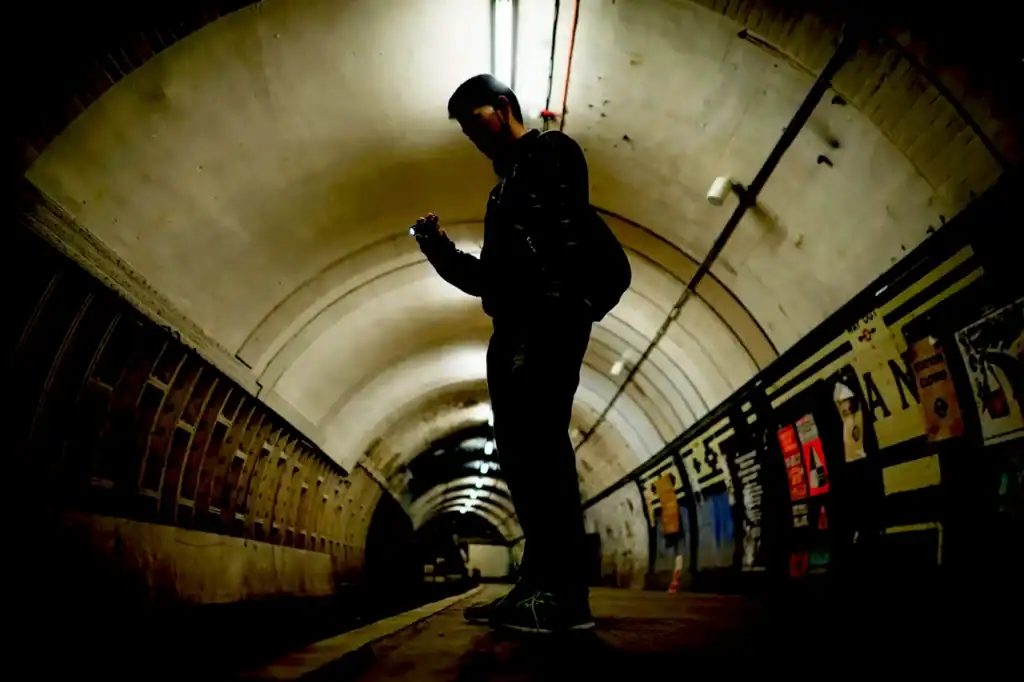

Bizarre But True! Around 40 abandoned stations exist beneath London’s streets. Most commuters travel the same routes daily, unaware that parallel tunnels run alongside them, empty platforms pass them by and sealed entrances remain in plain sight. Stations that vanished from maps but never left the ground…
These aren’t relics from centuries past. Some closed within living memory. Others shut during wartime and never reopened. Read on to discover the best ‘Ghost Stations’ on London Underground and how you can even visit one today…
The Station That Sheltered Britain’s Greatest Treasures
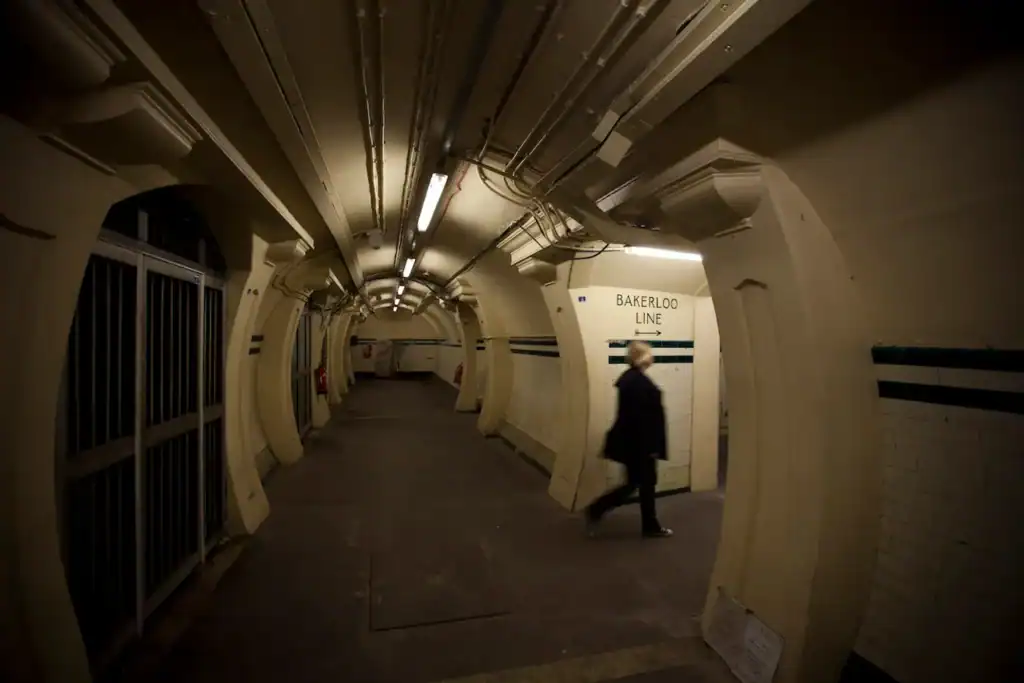
Aldwych station closed to passengers in 1994, but its most important work happened decades earlier…
During World War II, the station housed the Elgin Marbles and paintings from The National Gallery including JMW Turner’s Fighting Temeraire. All fitted with humidity and temperature controls. All under 24-hour surveillance by two security guards whilst London burned above.
The artefacts remained underground until 1948. Three years after the war ended, the British Museum building had suffered such extensive bomb damage that the disused tube station remained the safest storage location in London.
But Aldwych wasn’t just a vault…
During the Blitz, the station sheltered between 1,500 and 2,500 people nightly. The sewage system used a contraption nicknamed the “slophopper” – which ejected waste to the surface through pipes using compressed air. A necessary engineering solution for thousands of people sealed underground.
Churchill’s Secret Bedroom 73 Feet Below Mayfair
Down Street station served an entirely different wartime purpose.
Between October and December 1940, Winston Churchill used the abandoned station as his secret sleeping quarters. He nicknamed it “The Barn.” He dined on caviar and vintage brandy whilst coordinating war efforts, because the Cabinet War Rooms weren’t yet bombproof.
The government initially banned Underground stations from being used as shelters. They feared disease. They feared people falling onto electrified tracks. They feared citizens refusing to leave the perceived safety of the tunnels.
The great British public ignored the ban…!
On the busiest shelter nights during the Blitz, the Underground hosted upwards of 140,000 people.
The Station That Served 17 Passengers A Day
Not all closures involved wartime drama though…
Blake Hall station had an estimated just 17 passengers per day at its closure in 1981. One of the least-used stations on the entire network. A testament to how dramatically London Underground miscalculated demand in rural Essex.
York Road: The Station That Disappeared After 26 Years
York Road station operated for just 26 years before closing in 1932.
Located on the Piccadilly line near King’s Cross, the station suffered from catastrophically low passenger numbers. Too close to King’s Cross. Too far from anything worth visiting. A geographic miscalculation that doomed it from the start.
The platforms still exist beneath the streets. Trains pass through without stopping. The station architecture remains intact – tiled walls, signage and platform edges visible to anyone looking through the window at the right moment.
What makes York Road particularly strange? The building above ground vanished entirely. No blue plaque. No historical marker. Nothing to indicate a station ever existed there. One of the few abandoned stations that achieved complete erasure from surface-level London.
King William Street: The Station Built in the Wrong Direction
King William Street station opened in 1890 as the northern terminus of the City and South London Railway.
The problem? The tunnels curved too sharply. Eight years later, when the line extended northward, trains couldn’t navigate the bends at safe speeds. The station became operationally impossible.
It closed in 1900. Ten years of service. Then abandonment.
During World War II, the station served as an air-raid shelter. The sealed tunnels also housed anti-aircraft equipment and military personnel. After the war, the space returned to darkness.
The station entrance building survived until 1933 when road widening demolished it. Underground, the platforms remain. Entombed. A monument to Victorian engineering overconfidence.
Brompton Road: The Military Station That Never Returned
Brompton Road station closed in 1934 due to low passenger numbers. Then the military requisitioned it.
During World War II, the War Office converted the station into an anti-aircraft control centre. The London Electrical Engineers operated from the tunnels, coordinating defensive operations across the city. After the war ended, the station never reopened to the public.
The Ministry of Defence retained control of the site until 2014. Seventy-three years of military occupation. The distinctive ox-blood red station building still stands on Brompton Road, its original purpose visible but inaccessible.
Occasionally, film crews gain access. The station appeared in multiple productions requiring authentic Underground locations. But for ordinary visitors? The doors remain locked.
British Museum Station: Closed Because Success Made It Redundant
The British Museum station closed in 1933 for the most logical reason imaginable: a better station opened 100 yards away.
Holborn station’s expansion rendered British Museum obsolete. Why maintain two stations within shouting distance? The economics made no sense. Passenger numbers dropped. The station shut.
But the closure triggered something unexpected…
Rumours emerged about the station being haunted. Allegedly by the ghost of an ancient Egyptian princess whose tomb had been disturbed. Staff reported hearing screams echoing through the abandoned tunnels. Newspapers ran stories about supernatural activity.
The British Museum denied ever housing the supposed mummy. The haunting stories persisted anyway. A ghost station acquiring actual ghost stories – the kind of recursive weirdness London specialises in.
You can still see the platforms today. Look right through the eastbound Piccadilly line window between Holborn and Chancery Lane. The abandoned station flashes past. Tiles intact. Platform edges visible. A functional space serving no function.
Walk Through History At Aldwych
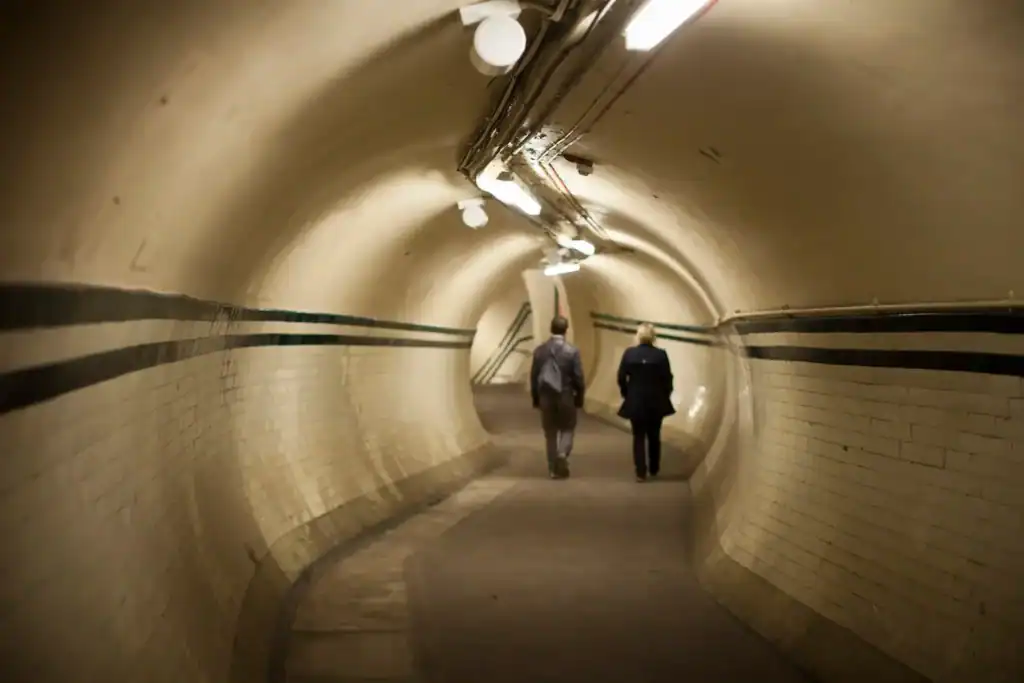
Most of these stations remain sealed. But Aldwych opens occasionally for guided tours. “The End of the Line” tour takes you through the station’s history. You explore hidden corners. You learn about the events that led to its closure. You stand on platforms that once sheltered thousands during the Blitz.
The tour reveals what lies beneath London’s surface. Not just tunnels and tracks, but the physical evidence of decisions made decades ago. The infrastructure that served a different city. The spaces that remain, waiting.
You walk through rooms where priceless artefacts sat in darkness whilst bombs fell above. You see the platforms where commuters once rushed to catch trains. You stand in a station that closed to passengers but never stopped serving London.
Book your tour of the Aldwych Ghost Station below now…!