

You blow out birthday cake candles in three seconds flat. Yet medieval Germans kept them burning for 12 hours straight. The birthday cake sitting on your table has a history that’s far more bizarre than you might actually realise…
This isn’t about ancient Greeks being nice to moon goddesses or Romans enjoying a sweet treat. It’s about all-day candle vigils, gender-based cake discrimination and miniature flaming torches that had nothing to do with making wishes.

The All-Day Candle Vigil That Started It All
In medieval Germany, birthday celebrations called Kinderfeste featured a ritual that would horrify modern fire marshals.
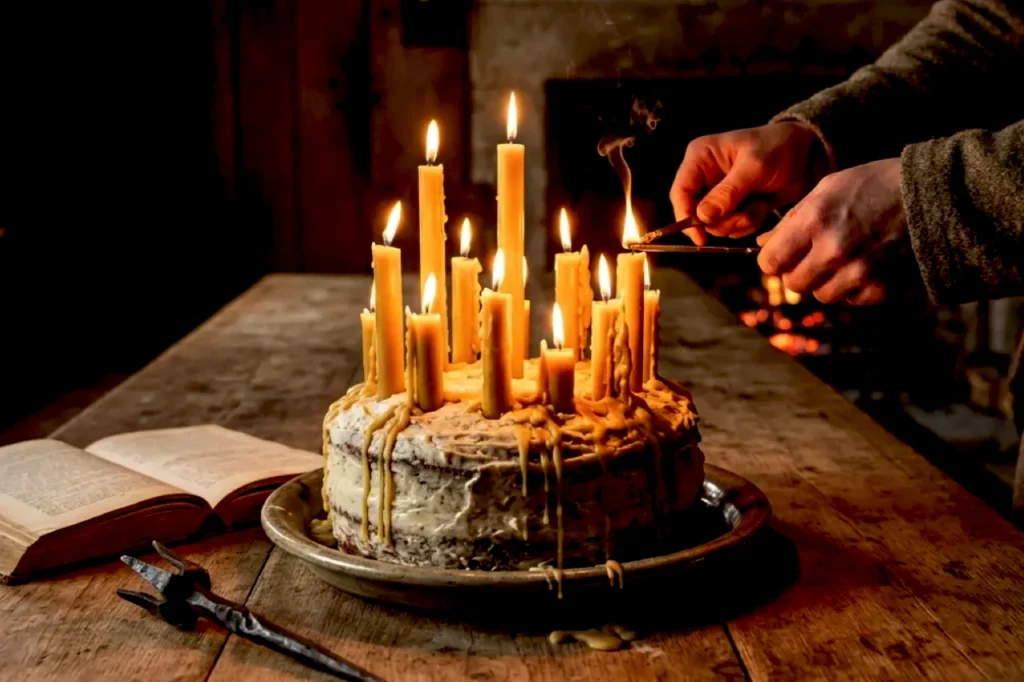
Candles weren’t blown out. They burned from morning until after dinner. The family replaced them as they melted down. By evening, the cake was coated in layers of hardened wax. Germans believed children were particularly vulnerable to evil spirits on their birthdays, so someone had to watch the candles all day to ensure they stayed lit.
The smoke supposedly carried the child’s wishes to heaven whilst warding off malevolent forces. Protection spell first, party decoration second.
When Only Men Got Birthday Cakes
Ancient Rome had a clear policy on birthday cakes: men turning 50 got them, women got nothing.
Any Roman man reaching his half-century milestone received a special cake baked with wheat flour, olive oil, grated cheese and honey. Roman women’s birthdays weren’t celebrated with cake at all until after the 12th century.
The rationale? Birthdays for women simply weren’t considered significant enough to warrant baked goods…!
Ancient Greeks Used Actual Torches, Not Candles
The ancient Greek version didn’t involve candles. They used tiny flaming torches instead.
During the Mounichia festival honouring Artemis, Greeks offered layered cakes called amphiphones topped with small torches called “dadia.” These weren’t decorative candles you could blow out with a breath. They were miniature actual torches that burned intensely. The circular cakes symbolised the moon and the torches represented its light.
No wishes involved. Just ritualistic fire management.
The Cake That Nearly Burned Down Goethe’s Party
In 1801, German writer Johann Wolfgang von Goethe turned 52 and received a birthday torte with approximately 50 flaming candles.
The candles began to melt and threatened to burn down because there wasn’t enough room for additional candles to represent coming years. This was customary for children’s festivities, but scaling it up for adults created a legitimate fire hazard.
The incident became one of the earliest documented examples of age-corresponding candles on a birthday cake nearly causing property damage.
When Deer-Shaped Cakes Replaced Animal Sacrifices
Ancient Greeks occasionally ran into supply chain problems with their religious sacrifices.
During the Elaphebolia festival for Artemis the Deer-Shooter, when deer became difficult to acquire, Athenians sacrificed deer-shaped cakes instead. This wasn’t considered cheating.
Animal-shaped cakes were accepted substitutes whenever appropriate animals couldn’t be found. The gods apparently didn’t mind receiving baked representations instead of actual blood offerings. And who can blame them…!
The Oven-Breaking Birthday Cake of 1746
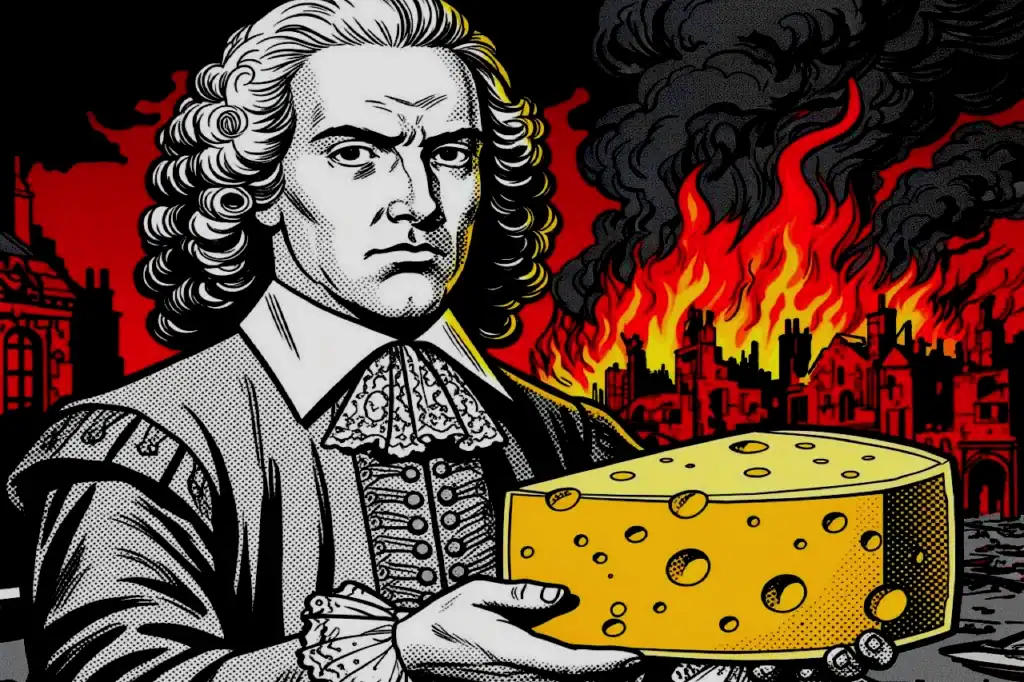
Count Ludwig von Zinzendorf had a birthday cake in 1746 that was described as “as large as any oven could be found to bake it.”
The cake featured holes made according to the years of the person’s age, with a candle stuck into each hole and one placed in the middle. This extravagant display helped establish the modern custom of age-corresponding candles.
The cake literally maxed out available baking technology. If the oven could fit it, it went in.
How Industrial Revolution Made Cake Stop Being Posh
Birthday cakes remained luxury items until mass production changed the economics. The Industrial Revolution made sugar and refined flour accessible to people who weren’t wealthy. What was once reserved for Roman men turning 50 or German nobility became something ordinary families could afford.
Bakeries started offering ‘ready-made’ cakes. The transformation from ritualistic offering to common treat happened because ingredients got cheaper and production got faster.
Why Your Cake Doesn’t Look Like Medieval Wax Sculptures
Early icings were simple mixtures of sugar and egg whites. As culinary techniques advanced, decorations became more and more elaborate.
Today’s cakes feature designs that would baffle medieval Germans who spent their day replacing melting candles. Personalised messages, intricate patterns and structural engineering that prevents collapse.
The shift from protection ritual to aesthetic expression happened gradually. Once the evil spirit concern faded, people focused on making cakes look impressive rather than keeping flames burning for 12 hours.
The birthday cake moved from spiritual technology to edible art. Same basic structure, completely different function…