
Bizarre But True! Robert Earl Hughes weighed 1,041 pounds at his peak. That’s not the remarkable bit. The remarkable bit is that he could still walk. Every other person who came close to his weight became bedridden – unable to move, trapped by their own mass. Hughes stayed mobile. Not easily, not comfortably, but mobile…
He remains the heaviest human in recorded history who could walk without assistance. That distinction separates him from everyone who came after.
The Weight Arrived Before He Could Walk
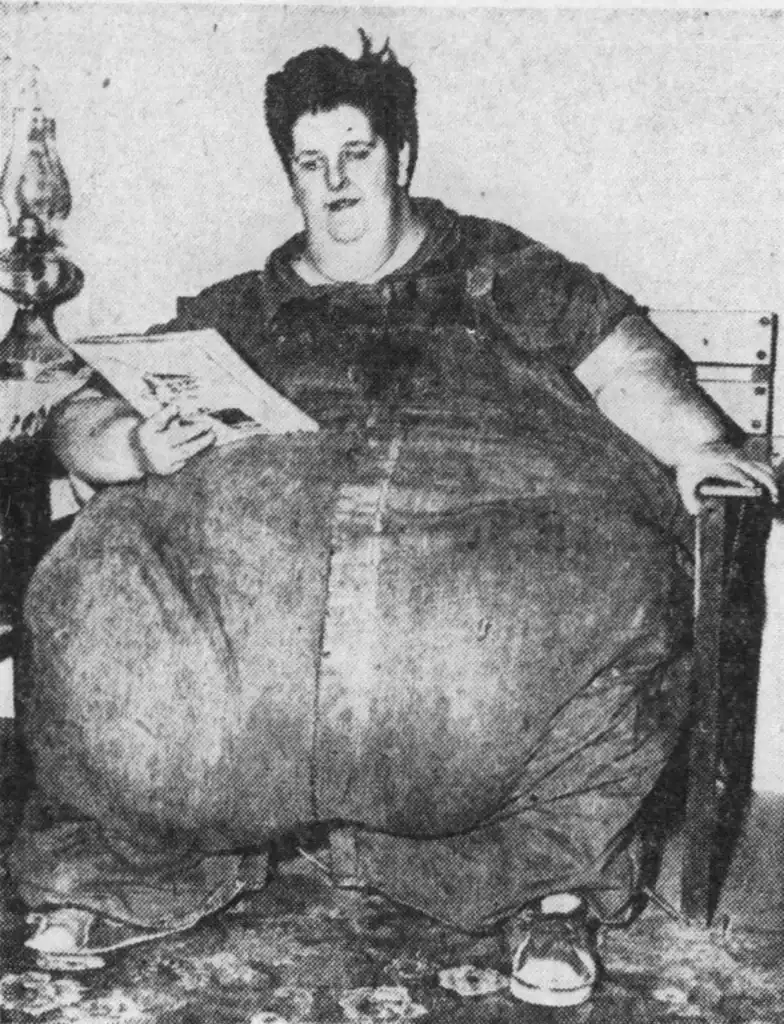
Hughes was born in 1926 in Fishhook, Illinois. By age six, he weighed 203 pounds.
By ten, he’d nearly doubled to 378 pounds. Doctors examined him. They found nothing definitive. His pituitary gland malfunctioned – that much they knew, but a precise diagnosis never materialised.
The weight just kept coming…
His chest measured 124 inches at its largest. That’s over ten feet around. No standard clothing fitted. No standard furniture held. His existence required custom infrastructure at every turn.
The Carnival Circuit Became His Income
Hughes didn’t hide. He couldn’t afford to.
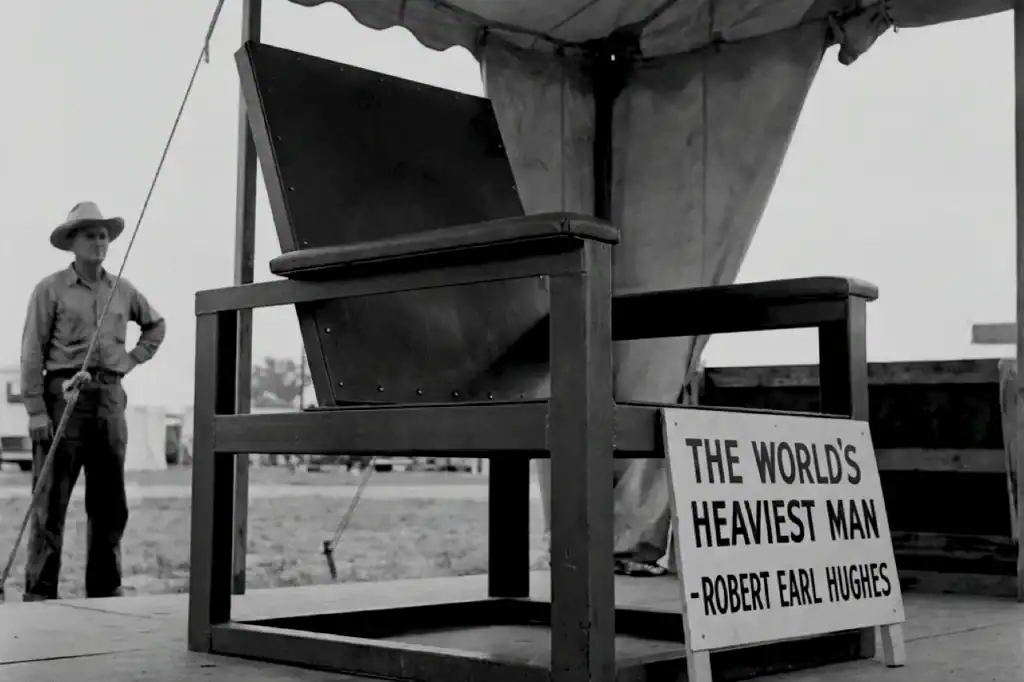
At 20, he sold 160 autographed photographs at the Baylis Fall Festival. He made $240.03, enough to realise people would pay to see him. So he joined the carnival circuit as “The World’s Heaviest Man.”
It wasn’t glamorous work.
Drunk patrons occasionally stubbed cigarettes out on his arm to verify his flesh was real. His screaming recoil confirmed the authenticity. But he kept his humour, by most accounts. He needed the money and carnival work provided it.
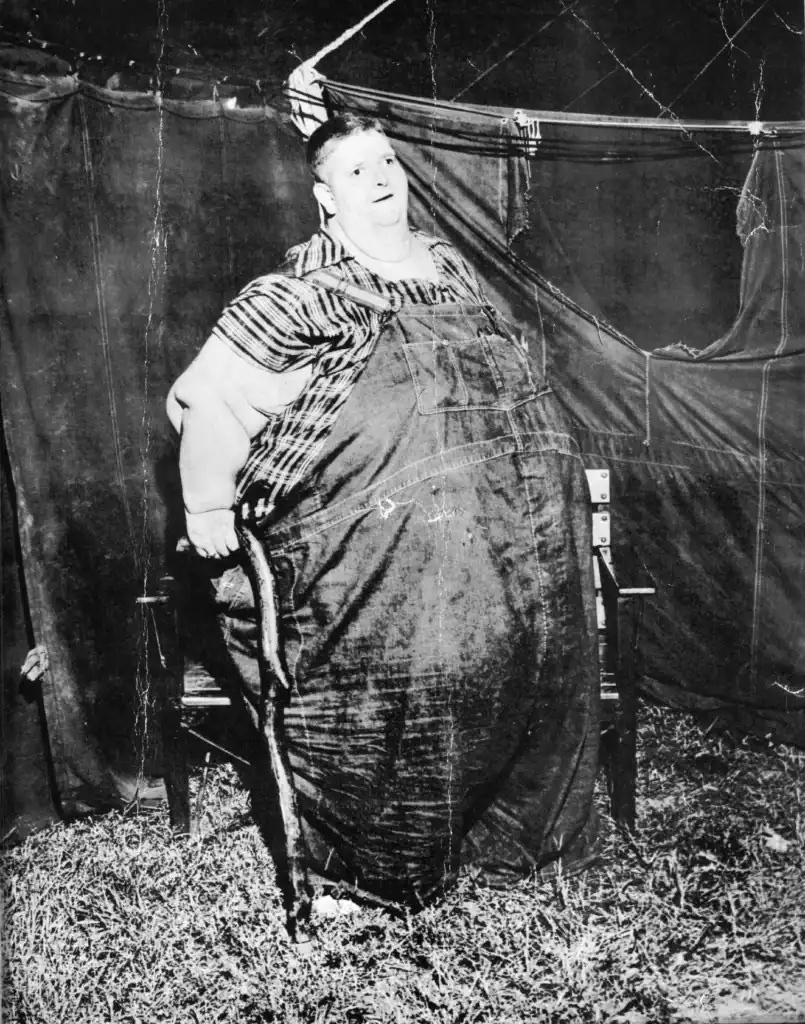
When his father died, Hughes stayed on tour to honour his commitments rather than attend the funeral. By season’s end, he could only walk 20 feet before family members had to follow with a five-foot wide, steel-reinforced chair.
The infrastructure followed him everywhere.
The Numbers That Defined His Limits
At half a ton, standard scales couldn’t weigh him. He required specialised platforms, the kind used for livestock or freight. Weigh-ins happened every six months because the logistics were too complex for anything more frequent.
His mobility window kept shrinking…
Twenty feet. Then fifteen. Then ten. But he never stopped completely. That’s what made him different from every other person in his weight category. You can find videos of people heavier than Hughes now. They’re all bedridden.
The Mythology Started Before He Died
The Guinness Book of World Records reported for decades that Hughes was buried in a piano case.
That’s false…
His coffin was the size of a piano case – custom-built, requiring eight men to carry. About 2,000 people attended his open-casket funeral. Many hunted for souvenirs. The spectacle continued even after death.
Hughes contracted measles in 1958. His size prevented doctors from moving him to hospital, so they treated him in his trailer. The measles developed into uraemia. He fell into a coma and died of congestive heart failure at 32.
His weight made him famous. It also prevented the medical intervention that might have saved him.
What He Said About His Own Life
In 1956, Hughes told the Fort Lauderdale News:
“I can read, write, have a warm and comfortable home and a fine group of relatives. A lot of other people aren’t as fortunate. What can I do? I’ve just got to make the best of what the Lord gave me.”
That’s not self-pity. That’s not resignation. That’s someone who understood his circumstances and chose to keep moving anyway. He didn’t frame himself as a victim. He framed himself as someone dealing with what he’d been given.
The Record That Still Stands
Hughes held the title of world’s heaviest man for decades. Others have since surpassed his weight. But none, still, have walked. That’s the record that matters.
(NB: Cover image is an artist’s impression.)