

Fancy a peek behind the velvet ropes..? Surprisingly, many of Britain’s Royal Palaces are actually open to the public! These current and former homes of Britains Kings & Queens are also packed with their fair share of Bizarre But True! stories…
We’re talking bloodstains that won’t wash away, secret tunnels with squatters and ghosts only children can see. Forget the sanitised history lessons and book your tickets to these amazing Royal Residences today…
1. Buckingham Palace: The Mirror That’s Actually A Door
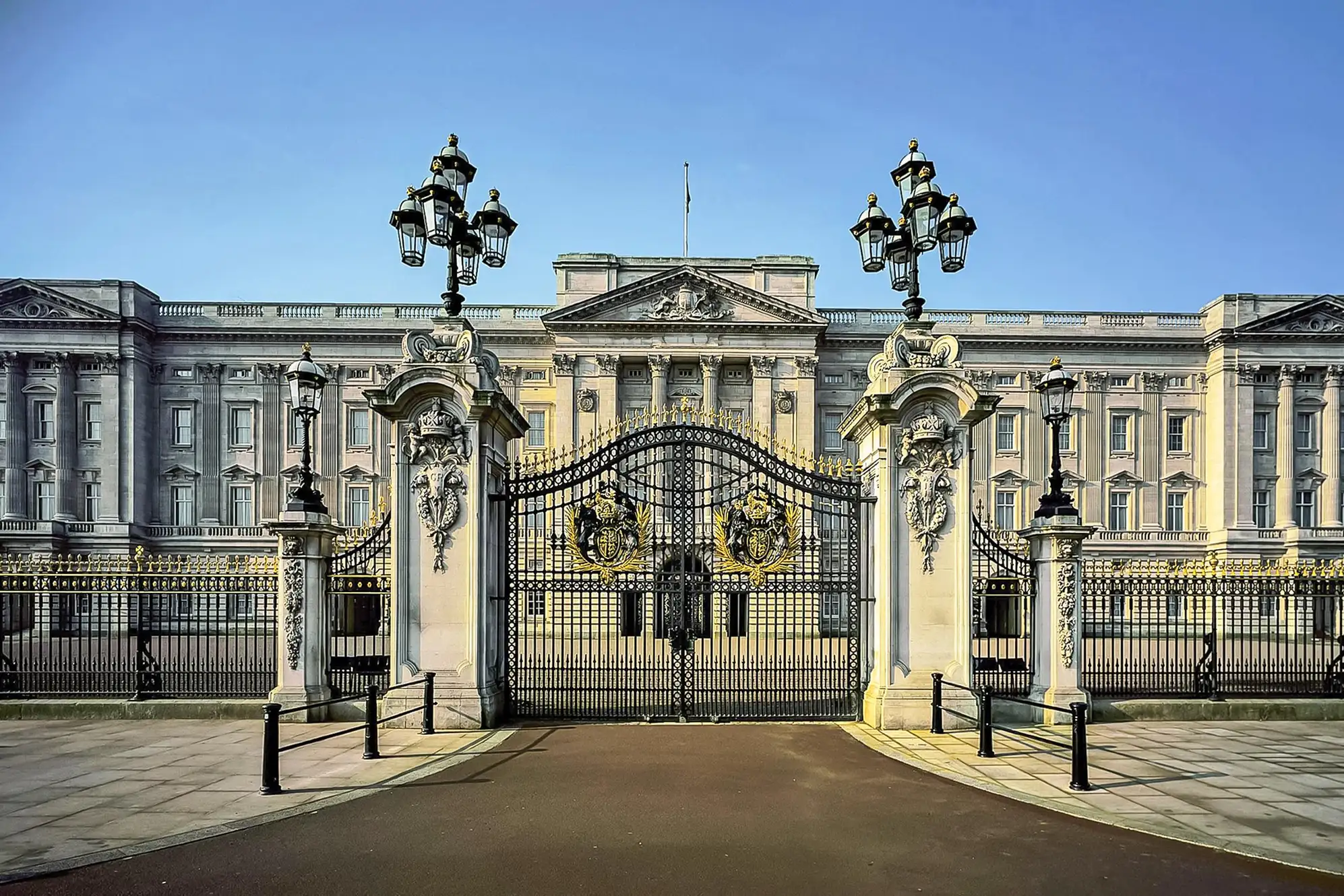
You walk into the White Drawing Room at Buckingham Palace and see a massive gilded mirror. Floor-to-ceiling. Ornate. Very expensive-looking. It’s also a door…
The mirror doubles as a secret passageway to the monarch’s private apartments. Royals use it to make surprise entrances at events without walking through multiple rooms like normal humans. One moment the room’s empty, the next the King’s just appeared. Pure theatrical stagecraft built into the architecture.
And here’s the bit that really sells it: during World War II, King George VI and the Queen Mother went exploring the underground tunnels beneath the palace one evening. They found a man called Geordie living down there. He claimed he was “a friend of a friend” of a palace employee and was, according to the Queen Mother’s reports, “very courteous”despite squatting beneath the royal residence.
The palace also has its own private Coutts ATM with no withdrawal fees and a Court Post Office handling 70,000 pieces of royal mail annually.
BOOK YOUR BUCKINGHAM PALACE TICKETS NOW !
2. Windsor Castle: The Medieval Escape Route Still Ready To Use
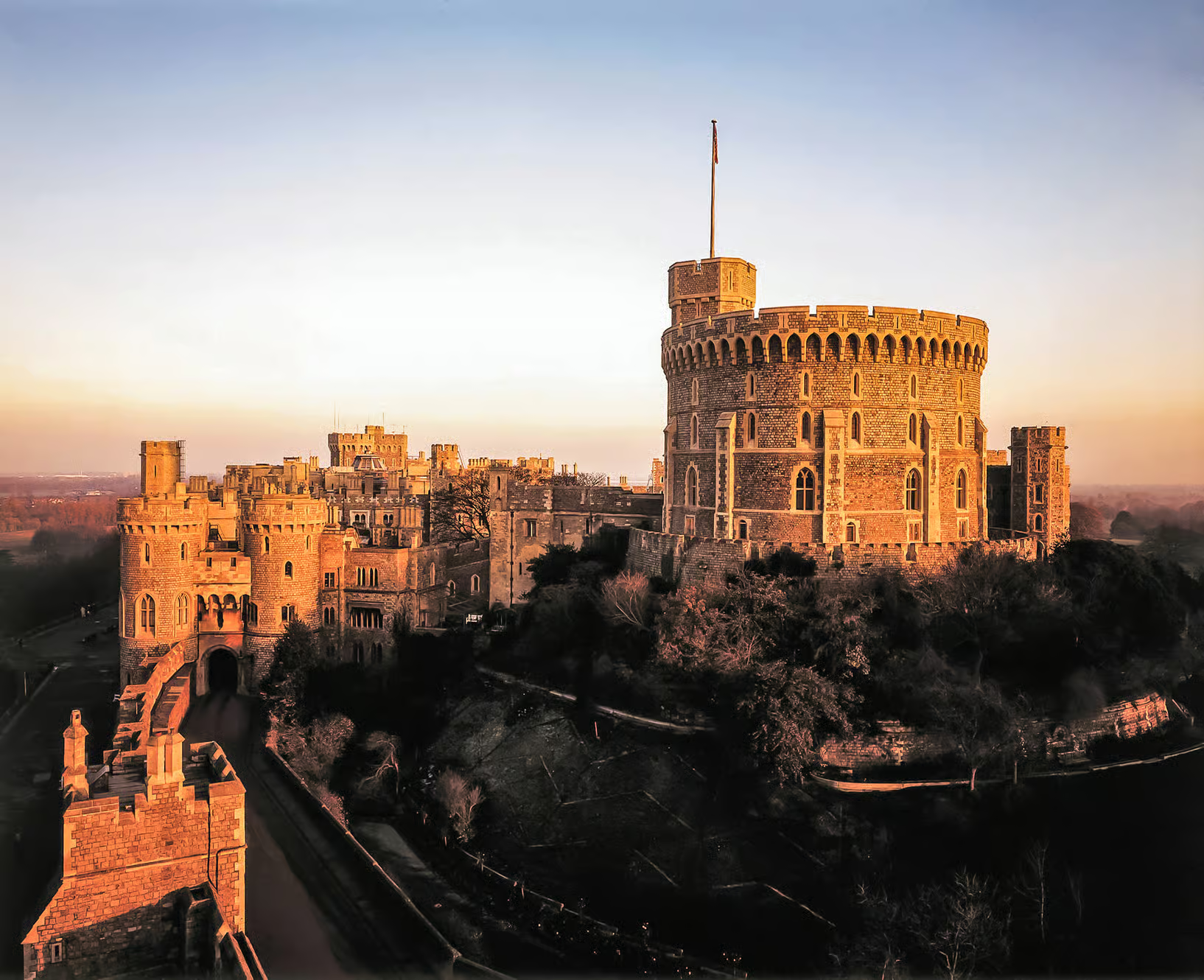
Hidden beneath the carpet in an unassuming office at Windsor Castle sits a medieval wooden trapdoor. Lift it up and you’ll find a 13th-century secret passage…
The stone tunnel is wide enough “to accommodate a whole army of men” and was designed so besieged soldiers could sneak out onto the street and attack enemies from behind.
The escape route remains ready. Just in case…
During World War II, the Crown Jewels were stashed at Windsor in ordinary-looking hatboxes filled with old newspapers. Princess Elizabeth and Princess Margaret had to unwrap layers of newspaper to discover the priceless treasures hidden inside.
And then there are the ghosts. At Windsor’s Norman Gate, an unknown Royalist prisoner from the Civil War supposedly haunts the grounds. Adults just feel him brush past them. Only children can actually see him.
A little boy’s voice shouts “I don’t want to go riding today!” in the Deanery. King Henry VIII’s ghost groans and drags his ulcerated leg through the Cloisters according to some…
BOOK YOUR WINDSOR CASTLE TICKETS NOW !
3. Palace Of Holyroodhouse: The Bloodstain That Won’t Disappear
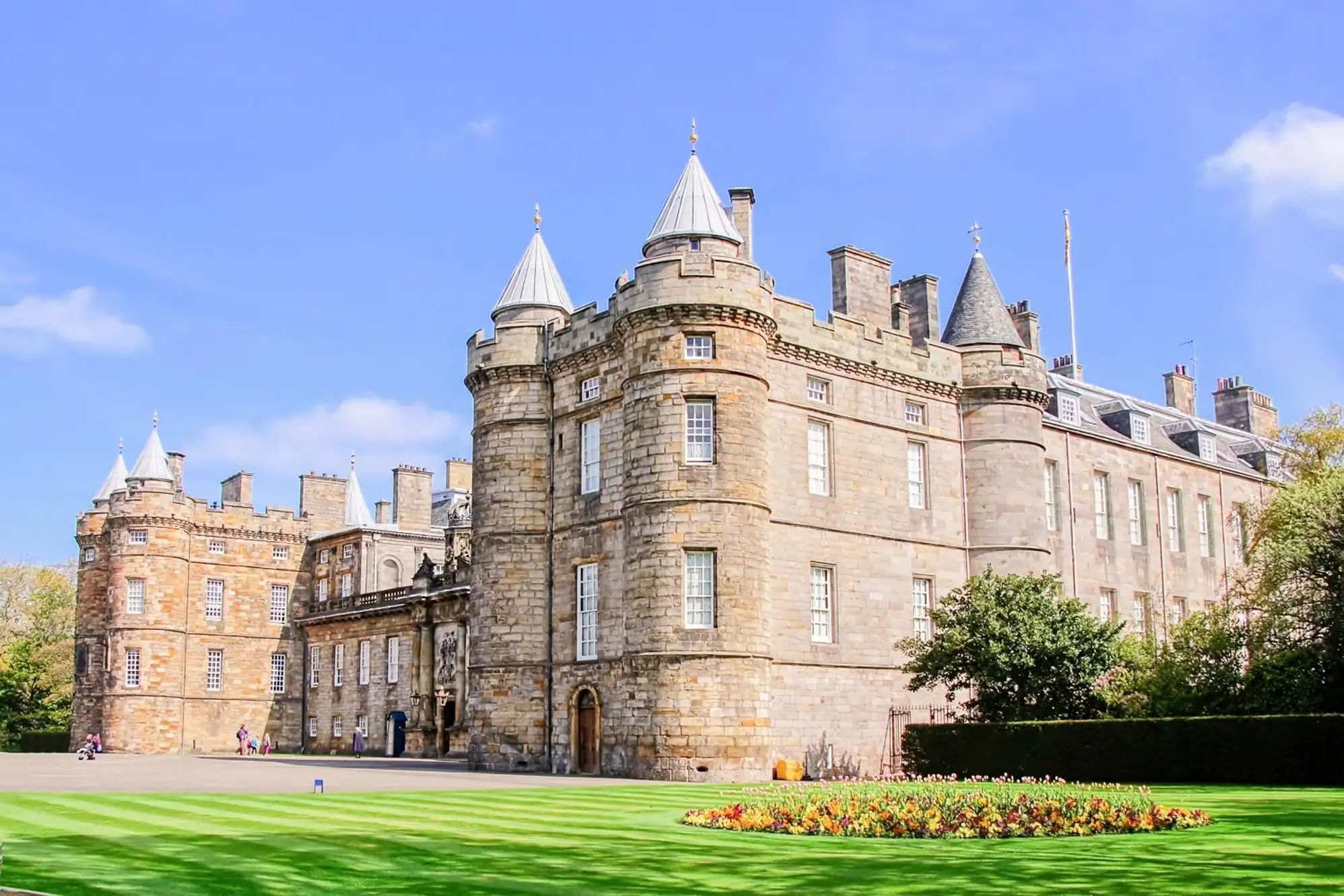
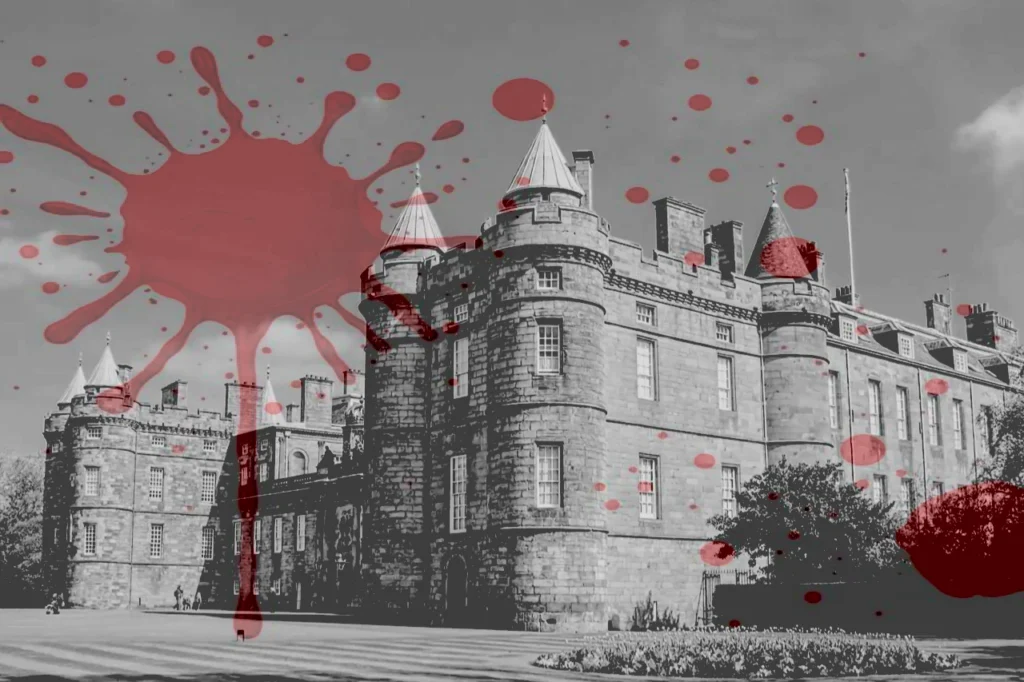
In a corner of Holyrood Palace, a 450-year-old bloodstain sits on the wooden floor…
It’s from David Rizzio, Mary Queen of Scots’ secretary, who was stabbed 57 times by her jealous husband and nobles whilst the heavily pregnant queen watched.
Rizzio’s blood has seeped so deeply into the centuries-old planks that no amount of cleaning removes it. The stain is still visible today.
The palace’s most frequently reported ghost is said to be “Bald Agnes” Sampson, a witch tortured during the North Berwick witch trials. In 2014, a maintenance worker saw her at the end of a well-lit corridor – bald, naked, severely injured and limping towards him with arms outstretched. He screamed. She vanished.
A German diplomat fled his room in the 1990s after encountering the same apparition1
BOOK YOUR HOLYROODHOUSE TICKETS NOW !
4. Brighton Royal Pavilion: The Palace That Looks Like “Stone Pumpkins”
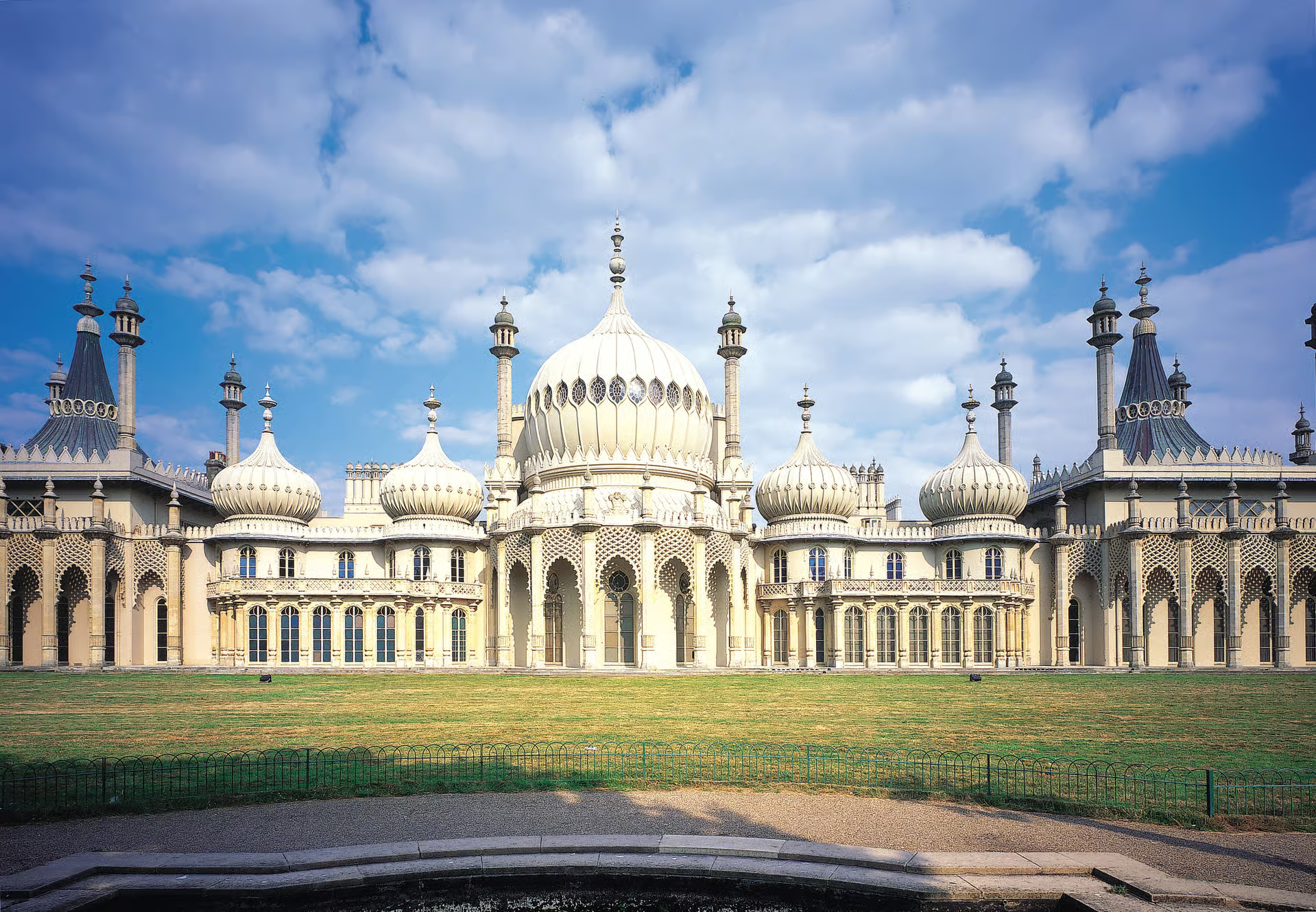
When the Brighton Pavilion was built, critics absolutely destroyed it…
William Cobbett said it looked like “the genius of architecture had at once the dropsy and the megrims.” William Hazlitt called it “a collection of stone pumpkins and pepper boxes.” Sydney Smith quipped: “It looks as if St Paul’s Cathedral has come down to Brighton and pupped.”
The palace cost over £700,000 (an absolute fortune in those times) and George IV was mocked relentlessly for his exotic folly.
Inside, the Great Kitchen features decorative cast-iron palm trees as structural supports -industrial engineering disguised as exotic fantasy. The kitchen clocks were kept five minutes fast to ensure Queen Victoria always received her food on time.
During World War I, this fantasy palace inspired by Indian architecture became a military hospital specifically for wounded Indian Army soldiers. The Music Room where high society once danced became a ward filled with hospital beds.
A British fantasy of the Orient now sheltered actual soldiers from the East. The historical irony is profound. A visit to the Pavilion is everything you would expect of mad Royal excess in a fairytale castle…
BOOK YOUR BRIGHTON PAVILION TICKETS NOW !
5. Osborne House: See Queen Victoria’s Death Bed
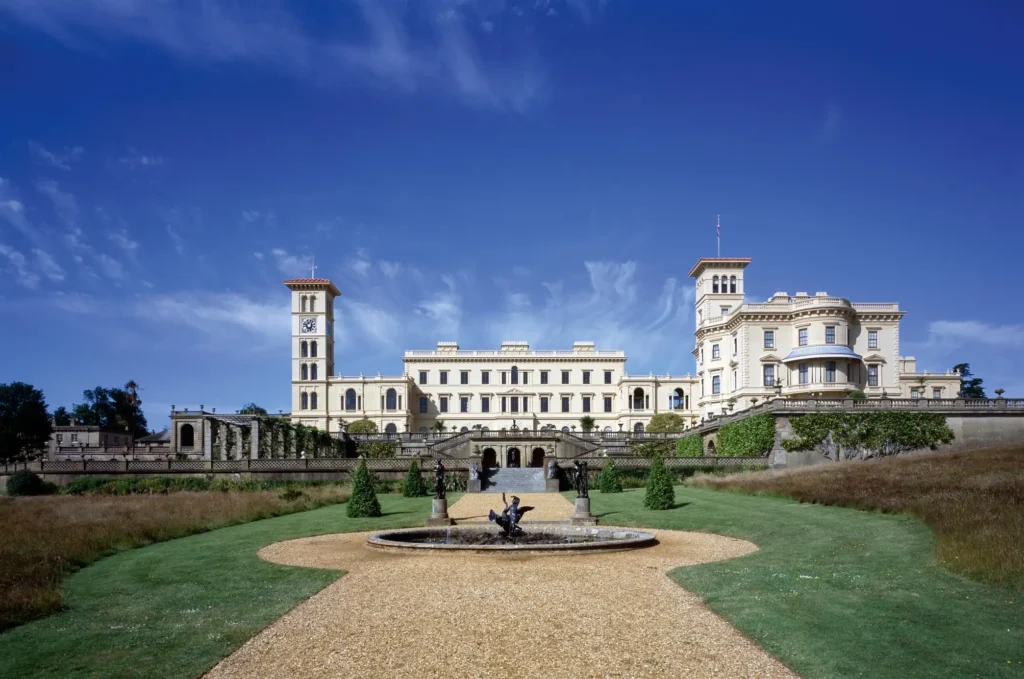
Osborne House on the Isle of Wight was Queen Victoria’s seaside retreat. This is where the royal family went to be normal humans – or as normal as royalty gets…
The opulent rooms show a different side of Victorian monarchy. Less pomp, more personal. You can wander through the stunning gardens and imagine what life was like when the most powerful woman in the world just wanted a break from London.
It’s intimate in a way the grand London palaces can never be.
The house reveals Victoria’s private tastes, her family life and the spaces where she actually relaxed. No performance. No spectacle. Just a monarch at home.
In her later years, Queen Victoria permanently relocated to Osborne House and died there in 1901 – her bedroom and deathbed now open to the public…
BOOK YOUR OSBORNE HOUSE TICKETS NOW !
6. Hampton Court Palace: Henry VIII’s Magnificent Former Home
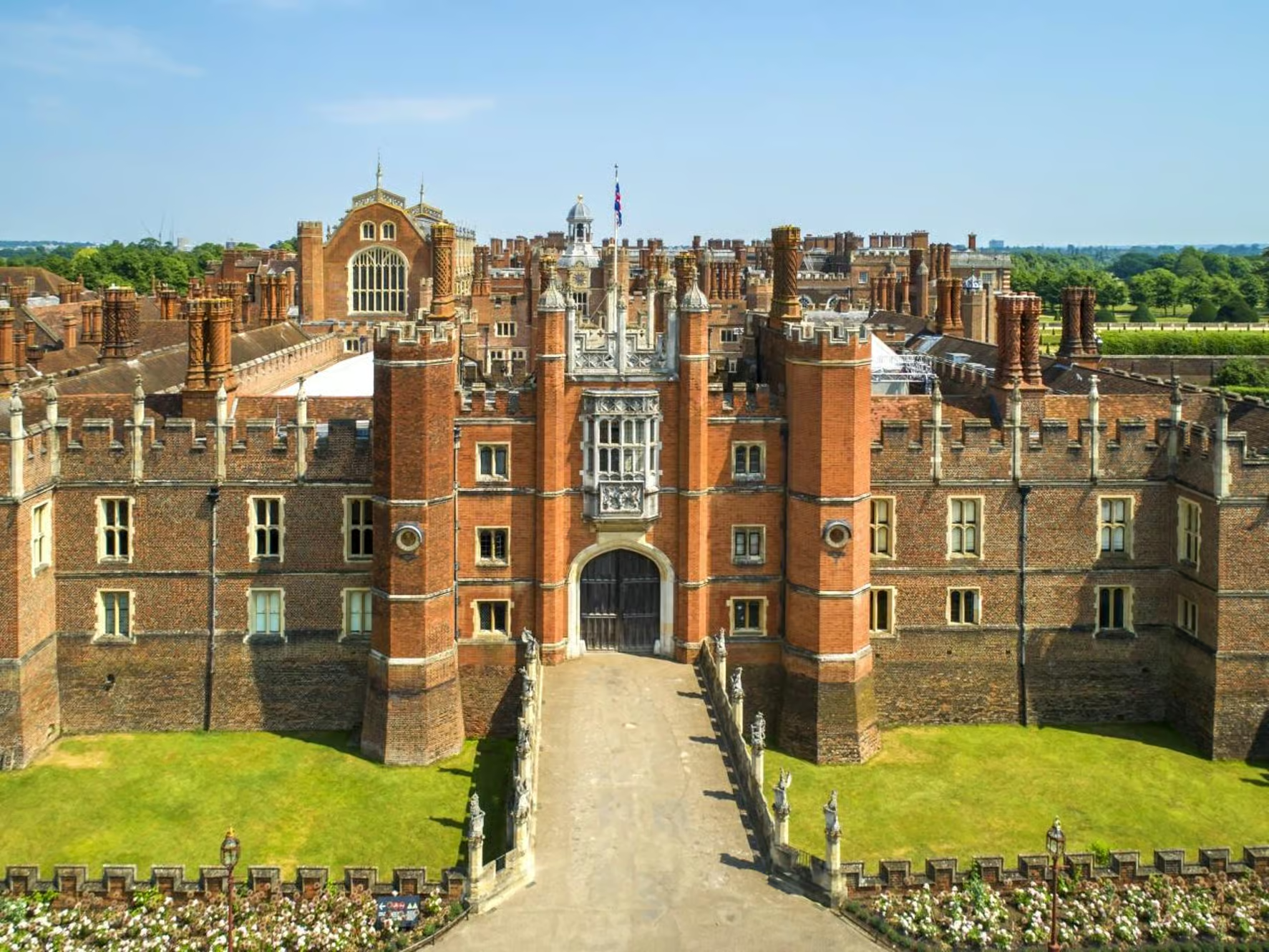
Hampton Court Palace is where Henry VIII lived, schemed and married his way through six wives…
The Tudor kitchens alone are worth the trip – massive, chaotic, designed to feed hundreds of people daily.
You can wander through the famous maze, explore the stunning Baroque palace built by William & Mary and walk the same halls where some of Britain’s most dramatic royal moments unfolded. The palace is packed with history, intrigue and architectural brilliance.
It’s a full day trip from London and every room tells a different story. From Tudor power plays to Baroque elegance, Hampton Court shows you how royal tastes evolved across centuries.
BOOK YOUR HAMPTON COURT TICKETS NOW !
7. The Palace Of Westminster: Where Royalty Meets Government
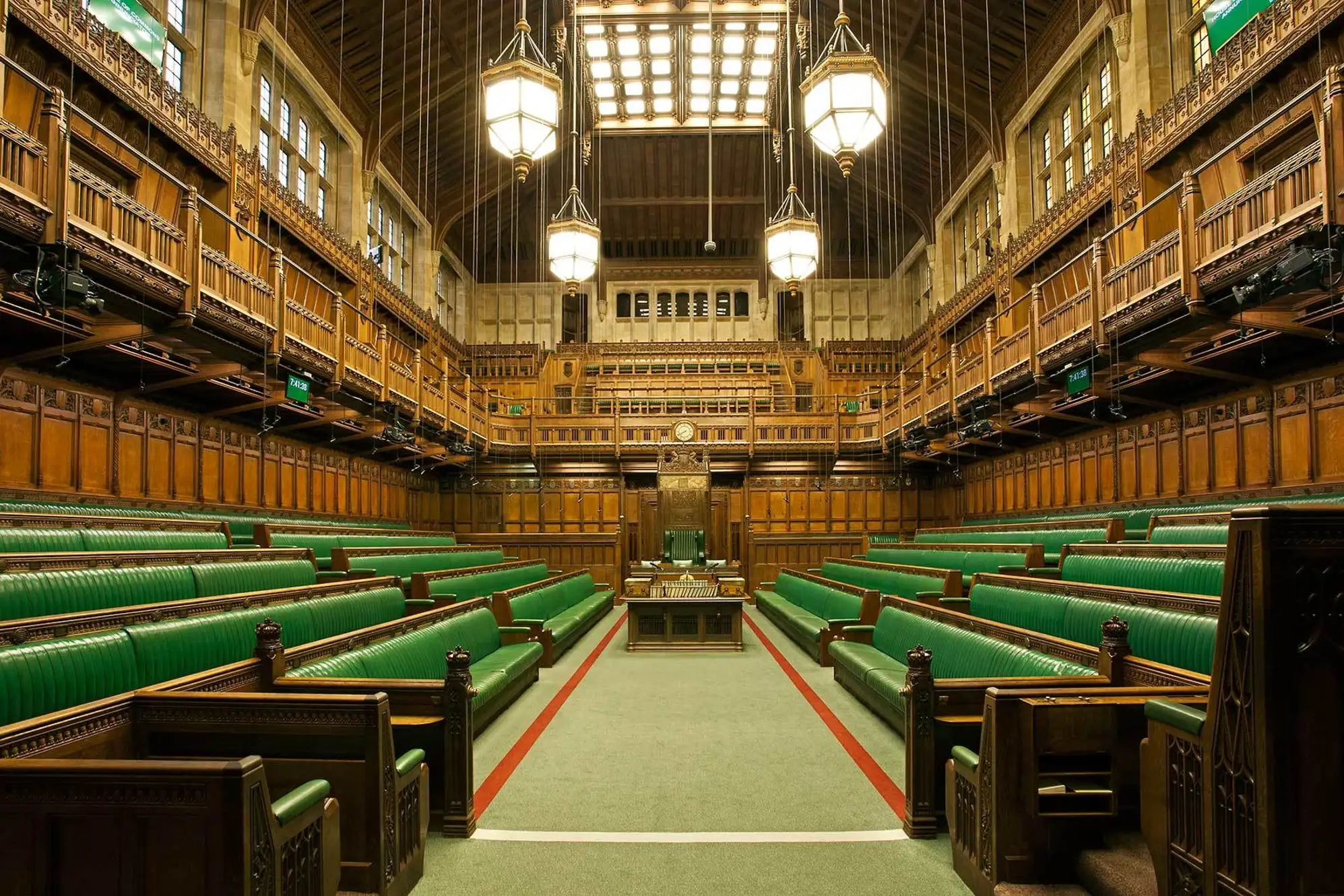
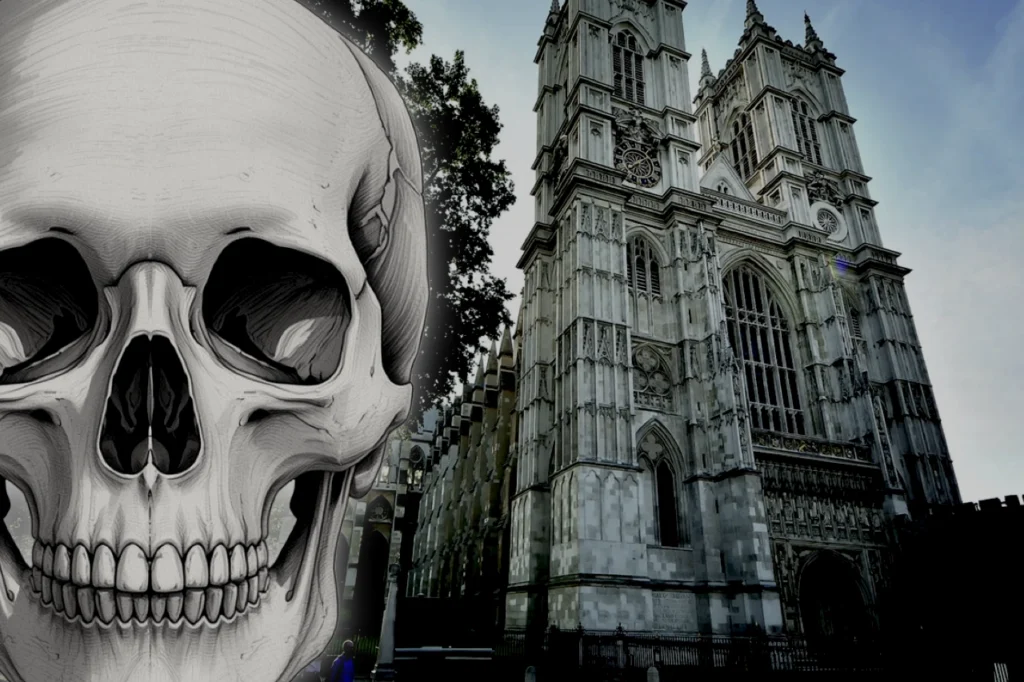
The Houses of Parliament, technically known as the Palace of Westminster is actually classified as a current Royal Palace – despite being generally stuffed with politicians rather than Royalty…
Next door sits Westminster Abbey, site of official Crownings and Royal funerals for centuries.
A guided tour shows you the grandeur of these iconic landmarks and explains how monarchy and government intertwine in Britain’s constitutional system. You’re standing where centuries of royal ceremonies literally shaped the nation and in lots of cases, the whole world!
The architecture is stunning. The history is dense. The symbolism is everywhere. It’s a different flavour of royal experience – less personal residence, more national theatre!
BOOK YOUR PALACE OF WESTMINSTER TICKETS NOW !
8. Kensington Palace: The Royal Residence Where Princess Diana Actually Lived
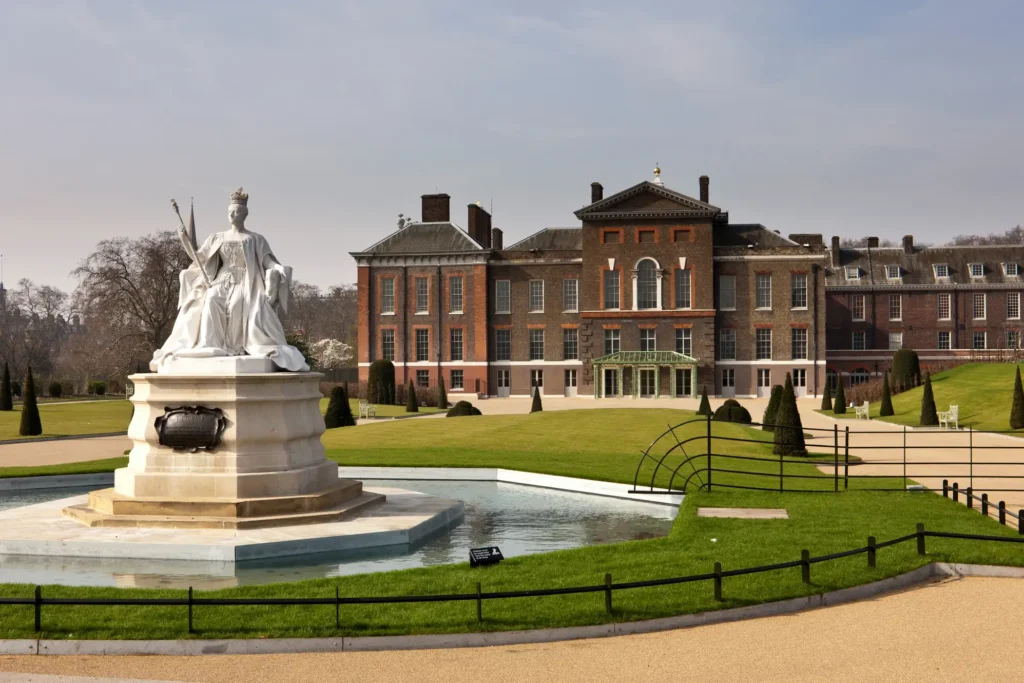
Kensington Palace isn’t just another royal building filled with dusty portraits and roped-off furniture. This is where Princess Diana actually lived…
Where she raised William and Harry. Where she walked the same corridors you can now explore on a 90-minute sightseeing tour that takes you through the State Apartments and the stories behind them.
Queen Victoria was born here in 1819. She spent her entire childhood confined to these rooms under the strict “Kensington System” – a controlling regime designed by her mother and advisor to isolate her completely. No friends her own age. No privacy. Constant supervision.
The moment she became Queen at 18, Victoria moved out and never slept at Kensington Palace again!
The King’s Staircase features massive painted illusions – trompe-l’oeil architecture that makes flat walls look three-dimensional. Georgian courtiers painted onto the ceiling stare down at you as you climb, creating the unsettling sensation of being watched by ghosts.
In the 1960s, Princess Margaret hosted legendary parties in her Kensington Palace apartment. The royal rebel entertained actors, musicians and artists until the early hours whilst the rest of the royal family maintained their stiff formality elsewhere.
Today you can walk through the rooms where multiple generations of royals lived, schemed, celebrated and suffered.