
You’ve probably handled one. Maybe you’ve even spent one. But you’ve probably never actually solved one…
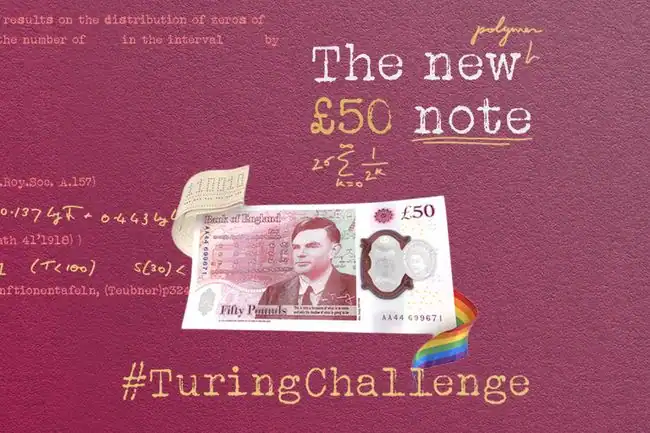
The Bank of England’s current £50 note featuring Alan Turing isn’t just currency. It’s a cryptographic gauntlet thrown down by GCHQ—the same intelligence agency Turing’s legacy helped build. And the challenge has been hiding in plain sight for three years!
The Challenge That Stumped Experts
GCHQ officials estimate the puzzle will take experienced puzzlers at least seven hours to complete. They’ve admitted it “might even have left him scratching his head”—though they doubt it.
The challenge requires solving 11 separate puzzles based on the banknote’s features to unlock a final Enigma code. This isn’t a clever marketing gimmick. This is proper, brain-melting cryptography.
What’s Actually Hidden on the Note?
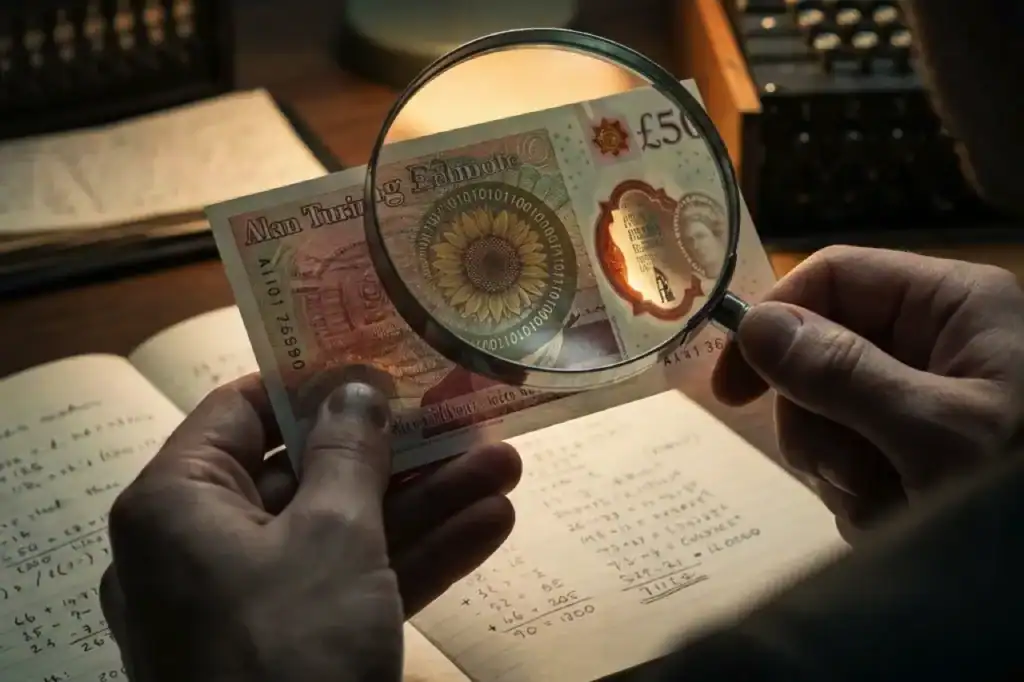
The design conceals layers most people never register: Ticker tape running across the note depicts Turing’s birth date (23 June 1912) in binary code. Not decorative. Functional. A coded timestamp waiting for someone to translate it.
Two green spiral features based on a sunflower head link to Turing’s morphogenetic work, his lesser-known research into mathematical patterns in nature. Leopard spots. Sunflower seed arrangements etc.
Every design element serves dual purpose: aesthetic and cryptographic. The note functions as currency and as intellectual combat that Turing most likely would have been both impressed and flattered by.
Why This Matters Beyond the Puzzle
Turing’s codebreaking work at Bletchley Park shortened the Second World War by at least two years, potentially saving millions of lives. But here’s the part that stings:
Had the security services known Turing was homosexual during WWII, he would have likely been fired and Britain could potentially have lost the war as a direct consequence.
And this isn’t speculation. Dr. Shaun Wylie, a Bletchley Park cryptanalyst who became GCHQ’s chief mathematician, confirmed it.
A ban on gay men and women serving in MI5 and MI6 staggeringly remained in force until 1991. The man who saved millions was chemically castrated by the state he served. The treatment rendered him impotent and caused breast tissue to form. In a letter, Turing wrote that “no doubt I shall emerge from it all a different man, but quite who, I’ve not found out”.
He died by cyanide poisoning in 1954, aged just 41.
Queen Elizabeth II signed a pardon for Turing’s conviction on 24 December 2013. It was only the fourth royal pardon granted since the conclusion of the Second World War.
The Puzzle as Monument
Director of GCHQ Jeremy Fleming described Turing becoming the first gay man to appear on a banknote as confirming his status as “one of the most iconic LGBT+ figures in the world”. The puzzle isn’t just tribute. It’s correction of the past too.
What Happens When You Try
You’ll need logical reasoning. Pattern recognition. Historical knowledge of Turing’s life and work. The ability to sit with frustration for hours without immediate gratification.
GCHQ released these challenges to celebrate Turing’s contributions and to encourage interest in coding and cryptography. But they also function as recruitment tools, highlighting the skills intelligence agencies value. The puzzles act as a gateway. They separate casual curiosity from committed problem-solving.
And they do it using some of the most widely circulated piece of currency in the world.
The Verification Problem
Here’s what makes this fascinating though: The puzzles embedded in the note are completely verifiable. No fabrication. No enhancement. No sensationalisation beyond documented reality.
The bizarreness derives entirely from factual circumstances: a government intelligence agency embedding cryptographic challenges in legal tender to honour a man that same government persecuted to death.
What You Can Actually Do
GCHQ published the full challenge online, so you don’t need a physical note to actually attempt it. You need patience. Logic. Willingness to fail repeatedly. The puzzle waits. It’s been waiting since 2021.
So, how long will it take you to solve what’s been hiding in plain sight..?