

Romania carved salt out of the ground for nine centuries. Then someone looked at the massive holes left behind and thought: let’s put a Ferris wheel down there…
Bizarre But True! Salina Turda is the world’s largest underground theme park, sitting 120 metres below the surface in chambers so vast they swallow sound and spit it back twenty times over…

The Extraction Economy Left Cathedral-Sized Voids
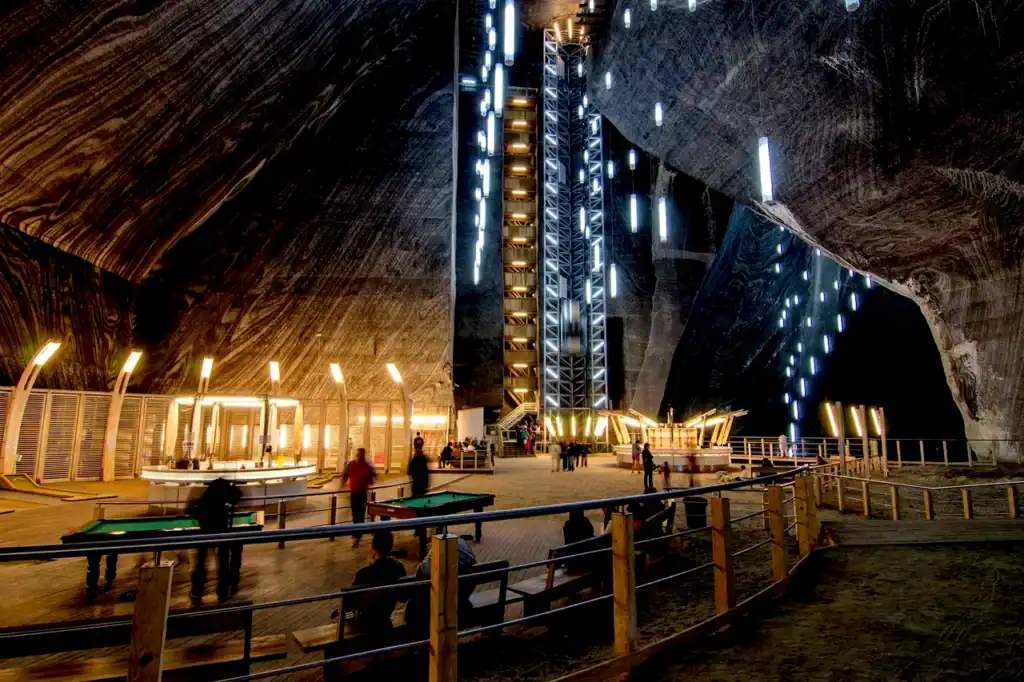
Mining operations at Turda pulled over three billion tonnes of salt from the earth between medieval times and 1932. Workers used pickaxes, hammers, chisels and steel wedges to carve out chambers that now reach 90 metres in height and 87 metres in diameter.
The Terezia Mine alone could fit a small cathedral inside it. The Iosif Mine, a conical chamber 112 metres deep and 67 metres wide at the base, generates echoes so powerful they’ve now called it the “Echoes Room”. Sound reverberates up to twenty times within the salt structure.
When you extract that much material, you don’t just leave a hole. You leave architecture.
From Cheese Storage To Ferris Wheels
After the mine closed in 1932, the Franz Josef Gallery became cheese storage between 1950 and 1992. An abandoned salt mine repurposed as a massive underground refrigerator for dairy products.
In 2010, a €5,888,000 modernisation transformed the site into something Business Insider ranked as the most beautiful underground place in the world. The Rudolf Mine now houses a 20-metre-high Ferris wheel – the only panoramic Ferris wheel in the world that operates underground!
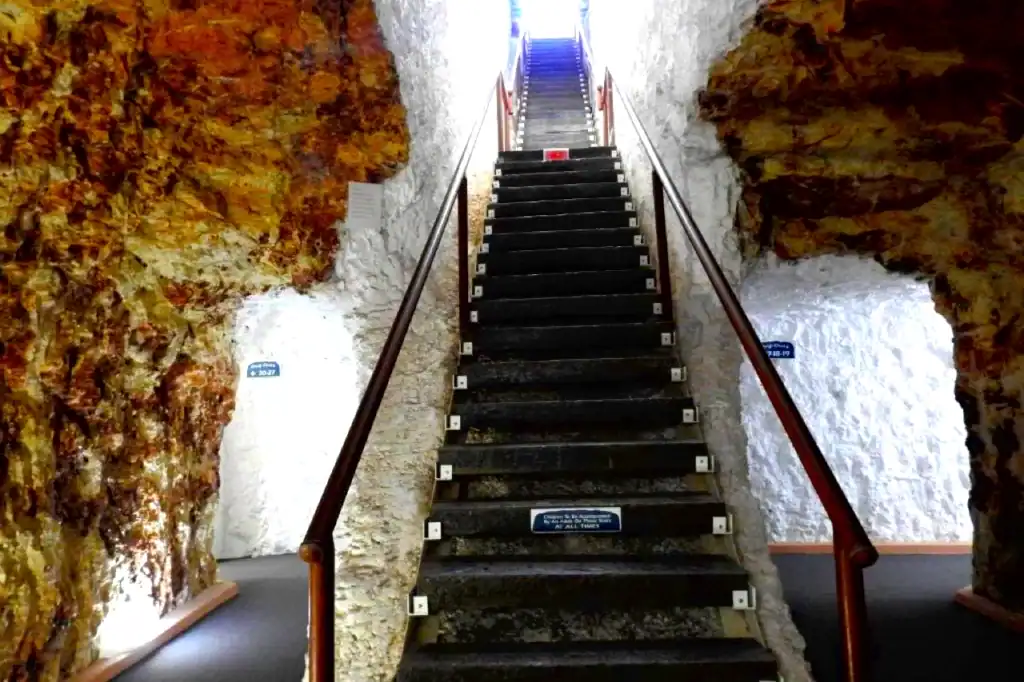
You descend 172 steps through 13 “floors” to reach it. Each floor’s walls are carved with the year that specific level was opened. A vertical timeline documenting centuries of extraction descending into geological history.
Salt Stalactites Grow At 2 Centimetres Per Year
The mine maintains a microclimate where the concentration of allergens is practically zero. Air pollutants and pathogenic germs are absent. Microbiological determinations reveal germ counts below 2,000 per cubic metre.
It’s an environment free of bacteria and pathogens at 80% humidity and constant 11-12°C.
Salt stalactites form on chamber ceilings at approximately 2 centimetres per year. When they reach roughly 3 metres in length, they break under their own weight. Visible evidence of geological time passing in accelerated formation.
The underground lake’s salt density matches that of the Dead Sea. Visitors row boats on water so saline it resists conventional swimming.

618,000 People Descend Per Year
Approximately 618,000 Romanian and foreign tourists visited in 2017—a 22% increase from 2015. Attendance surged to over 600,000 visitors annually following the modernisation.
The octagonal Crivac room hosts a winch dating from 1881 – rudimentary machinery originally powered by horse and used to lift salt rocks vertically. It’s the only machine of its kind in all Romanian and probably European salt mines that remains in its original location.
You can play mini-golf 120 metres underground. You can bowl in chambers carved by centuries of manual labour. You can even visit a spa complex underground!
Most abandoned mines get filled in or fenced off. This one got a Ferris wheel. Now 618,000 people per year pay to descend into a hole that took 900 years to carve—proving that the most bizarre ideas sometimes generate the best revenue…!