

The world goes quiet after it snows. Not just peaceful. Not just calm. Actually, measurably, scientifically silent. You step outside and the usual noise—traffic, voices, the hum of everyday chaos, just vanishes…
The air feels thick. Your footsteps sound wrong. Even your own voice seems to get swallowed before it reaches your ears. Know the feeling?
Well, this isn’t psychological. It’s actually physics.

Fresh Snow Is 90% Trapped Air
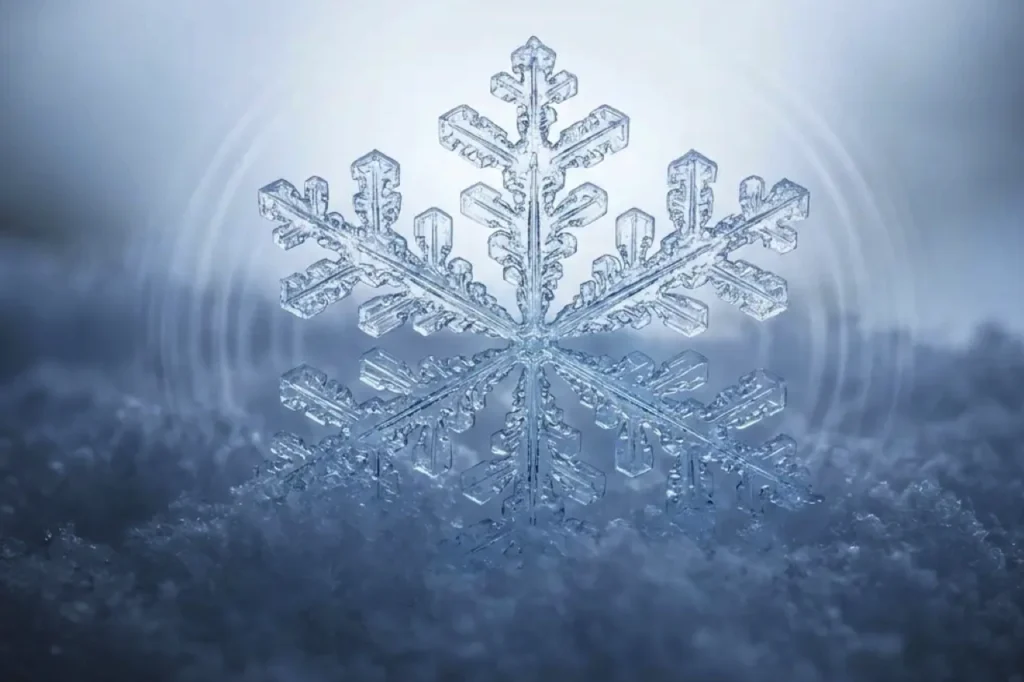
Bizarre But True! When snow falls, it doesn’t land as solid ice. It builds a structure. Each snowflake locks into place with thousands of others, creating a porous blanket that can be up to 90% trapped air.
So, fresh snow is mostly empty space held together by intricate crystalline architecture. That air does something remarkable: it absorbs sounds. When noise hits the structure, it doesn’t bounce back like normal. It enters the maze of air pockets between ice crystals and gets trapped. The sound wave’s energy converts into microscopic heat through friction – so small it won’t melt anything, but enough to make the noise disappear.
The sound just vanishes…
Snow Absorbs 60-90% Of Ambient Noise
Acoustic engineers measure sound absorption on a scale from 0 to 1. Fresh snow rates between 0.5 and 0.9.
That means just two inches of fresh powder can absorb 60% of sound that hits it. At the high end, snow performs as well as commercial acoustic foam—the stuff recording studios use to kill echoes.
A German study from the Fraunhofer Institute measured snow with 59% porosity. The results? Sound absorption ranging from 60-80% in higher frequencies, the exact range where human voices and road noise live.
Snow doesn’t just muffle sound. It functions like manufactured sound-absorbing materials. Your street becomes a natural anechoic chamber.
The Silence Is Temporary & Measurable
This acoustic phenomenon doesn’t last. The quietness persists for hours, maybe a day. Then it starts to fade.
As snow settles, the spaces between crystals shrink. When it melts slightly and refreezes, the porous structure collapses. Traffic compresses it. Footsteps destroy it. Each time you hear that satisfying crunch underfoot, you’re literally crushing the fine crystalline architecture that absorbed the sound.
You’re pressing bubble wrap. The air pockets collapse. The acoustic ability dies.
And when snow fully transforms into ice? The effect completely reverses. Ice reflects sound waves instead of absorbing them. The silent landscape becomes an echo chamber. Sounds travel further. Voices carry. The acoustic properties flip from absorber to amplifier.
Snow Covers The Noise Sources Too
But the absorption effect only tells half the story. Snow also buries the things that make noise themselves too. It muffles car engines, machinery, the scrape of footsteps on concrete. The blanket effect eliminates sound sources before they even reach your ears.
Hard surfaces that normally reflect noise—pavements, walls, roofs—get covered in sound-absorbing material. The urban environment transforms from an acoustic amplifier into a dampener.
The noise doesn’t just get quieter. The sources themselves get smothered.
Your Brain Registers The Absence
There’s a psychological component at play too. Your brain expects a certain baseline of ambient noise. Traffic hum. Wind rustling. The mechanical drone of modern life. When snow absorbs those frequencies, your auditory system notices the gap.
The visual transformation amplifies this. The world turns white. Familiar landmarks disappear under powder. Your brain reads this environmental shift and adjusts your perception accordingly.
The quiet feels more profound because the landscape signals that something fundamental has changed.
Let It Snow…
So the next time it snows, step outside in the first few hours. Listen to what’s missing. You’re standing inside a natural sound laboratory, but one that only exists until the snow changes its mind…