

One woman reached absolute despair about her sexuality and planned to throw herself off a bridge. On the day she resolved to do it, she passed a bookshop. She saw “Odd Girl Out” in the window. She bought it, read the entire thing and then went home for dinner instead…
This wasn’t therapy. It wasn’t a support group. It was a 25-cent paperback with a lurid cover sold next to cigarettes in a drugstore.
And it literally prevented lesbian suicides…
The Structural Impossibility Of ‘Happy Endings’(!)
Bizarre But True! Between 1950 and 1965, over 500 lesbian pulp novels flooded American drugstores and bus stations. They cost the same as a packet of cigarettes. They had covers designed to attract heterosexual men. And they operated under one absolute constraint: No character could be both homosexual and happy at the story’s end.
This wasn’t editorial preference. It was legal survival.
Publishers demanded tragic endings because books travelled through the U.S. mail. Anything mailable was subject to government censorship under the Comstock Act. The “crime doesn’t pay” formula extended to lesbianism – characters had to end their lives, go insane, ‘return’ to heterosexuality, or face some equally unappealing fate. If they didn’t, all books in that shipment would be returned.
The system created a bizarre market dynamic. Publishers needed to sell books about lesbians to stay profitable. But they also needed to punish those characters to stay legal. The result was a genre built on unpleasant contradictions – representation that could only exist if it ended in tragedy.
The 22-Year-Old Housewife Who Sold 2 Million Copies
Ann Bannon was utterly unschooled in the ways of the world.
She was 22 years old. She lived in suburban Philadelphia. She was married. She had two young children. She had zero practical experience with the underground lesbian world she was documenting. Her first novel, “Odd Girl Out,” became Gold Medal Books’ second best-selling title of 1957.
She eventually sold 2 million copies…
The disconnect was massive. She took covert “field trips” to Greenwich Village for eight weeks total. Those brief research visits formed the basis of work that would influence women around the world when there was no access to lesbian information other than in the pages of pulp fiction.
She selected her pen name from a list of her husband’s customers. For decades, almost no one outside her immediate family knew she’d written the series. She wrote whilst raising children. She wrote without authority. She wrote without experience. And somehow, she created characters that became archetypes when no role models existed.
The Red Light System
In 1964, Chicago’s Fun Lounge was raided. Over 100 arrests. Newspapers printed the names of eight teachers detained. Charges were dropped. But having their names in print made the correction largely irrelevant. They’d already lost their jobs.
The Sea Colony lesbian bar in New York was raided weekly. A button would be pressed turning on a red light in the back room where illegal dancing occurred. Everything would freeze. People would run to their tables and just sit like they’re having drinks.
This was the environment these books entered.
Women bought them as covertly as possible. Many burned or destroyed the books after reading them due to the danger of being discovered with them. Kate Millet admitted in her 1974 autobiography that she actually burned her Bannon books before a trip to Japan in case her sub-letter discovered them.
These were disposable paperbacks on cheap pulp paper not designed to last for more than a year. Yet women risked being chastised if caught purchasing them. The contradiction was the point, the books had to be both accessible and deniable.
The Cover Artist Who Never Read The Books
Authors had zero control over covers or titles…
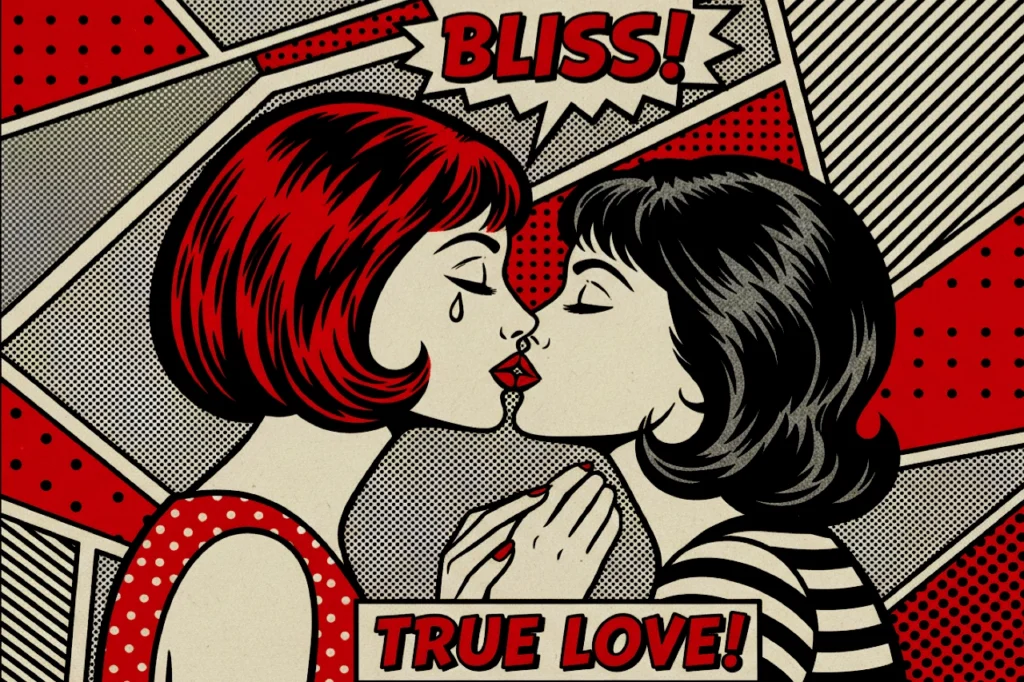
Publishers deliberately made them as suggestive and lurid as possible for male buyers. Cover artists rarely read the books they illustrated. One editor told a cover artist not to stress about the plot, they’d change the plot to match the cover instead!
The instruction was simple: focus on showcasing “perfect breasts” and making “’em round.” Male artists were hired because the subject matter was deemed too sensitive for women. Female artists designed countless other pulp covers, just not lesbian ones.
The entire system was engineered backwards. The covers attracted straight men. The men funded the operation. The books reached isolated lesbian women. And the cycle continued because economic incentives aligned with accidental representation.
Invisibility As Distribution Strategy
These books sold in drugstores and bus stations for one specific reason.
Their lowbrow status kept them off The New York Times review radar. This made them invisible to repressive authorities. The lurid covers functioned as both an advertisement and “gay North Star” – leading isolated women to representation whilst attracting heterosexual male buyers who actually funded the entire operation.
The mechanism was genius in its unintentionality.
Publishers wanted profit. They marketed to men. But the books reached women who had no other access to information about their own existence. The commercial imperative accidentally created distribution infrastructure for survival literature.
Joan Nestle, lesbian historian, called them exactly that – survival literature. Not because they were well-written. Not because they were affirming. But because they proved other, similar, women existed…
Read One For Yourself…
Bannon’s books are still in print and we’ve selected our choices below for the best ones to have a first peek at. Why not see for yourself how racy her books actually are…?
With Beebo Brinker, Bannon introduces the title character, a butch 17-year-old farm girl newly arrived in New York after she is driven from her Wisconsin home town for wearing drag to the State Fair. Befriended by the gay Jack Mann, a father-figure with a weakness for runaways, Beebo sets out to find love. She never knew what she wanted--until she came to Greenwich Village and found the love that smolders in the shadows of the twilight world.

In the 1950s, Ann Bannon broke through the shame and isolation typically portrayed in lesbian pulps, offering instead women characters who embraced their sexuality. With Odd Girl Out, Bannon introduces Laura Landon, whose love affair with her college roommate Beth launched the lesbian pulp fiction genre.

Dubbed the “Queen of Lesbian Pulp” for her series of landmark novels beginning in 1957, Ann Bannon’s work defined lesbian fiction for the pre-Stonewall generation. Following the release of Cleis Press’s new editions of Beebo Brinker and Odd Girl Out, Journey to a Woman finds Laura in love amidst the lesbian bohemia of Greenwich Village. This fifth in Cleis Press’s series of rereleased lesbian pulp fiction classics features a new introduction by the author.