

A pig ate some potatoes. The farmer shot the pig. Two empires nearly went to war…
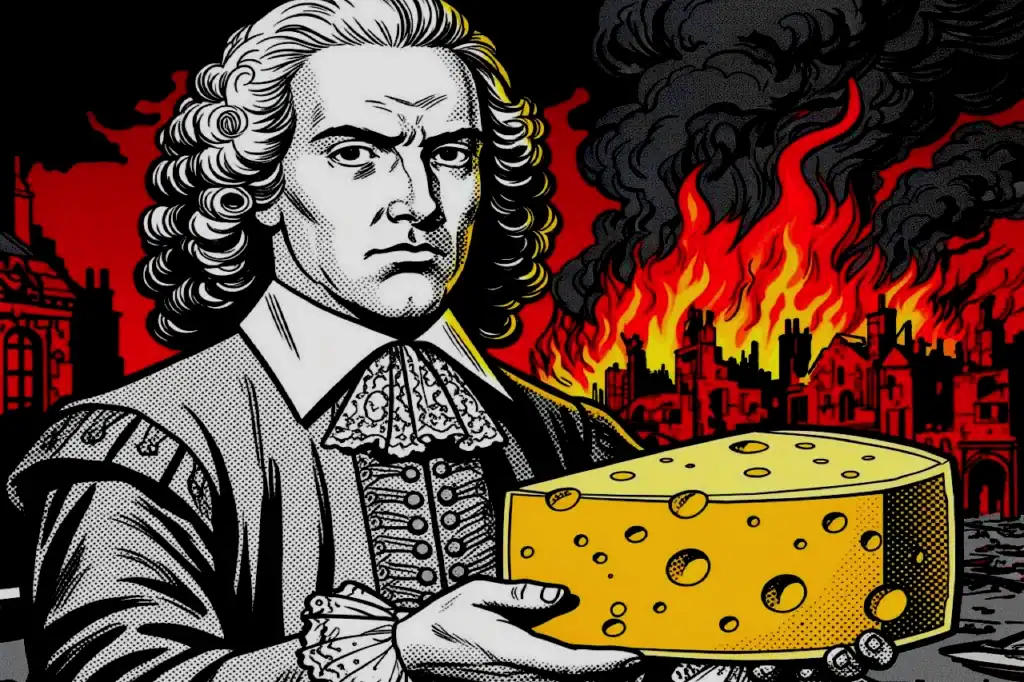
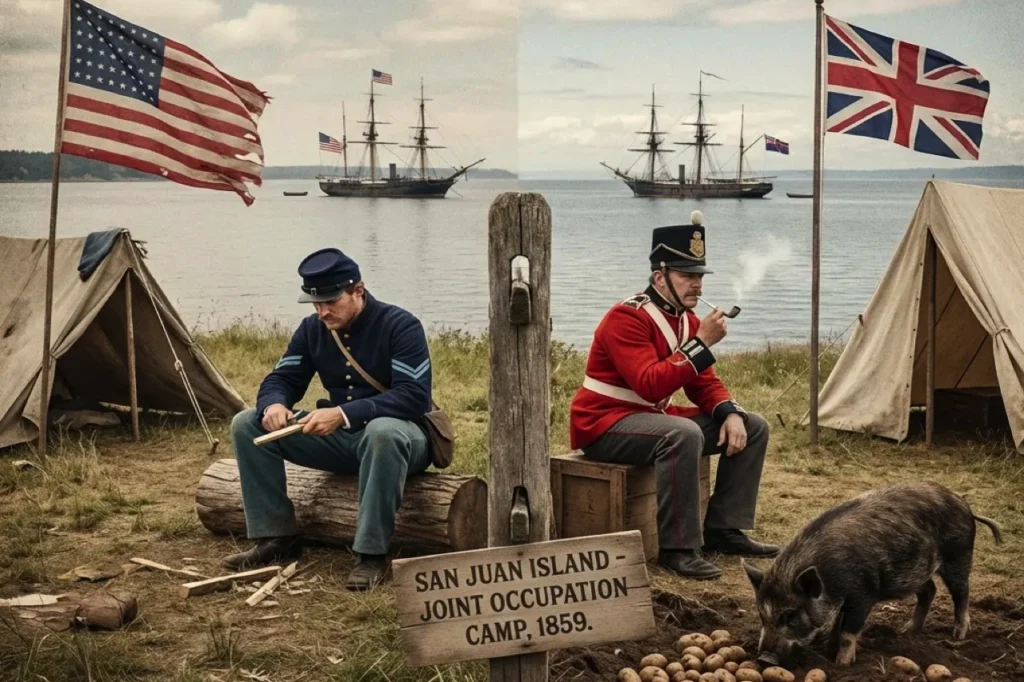
Bizarre But True! This actually happened. In 1859, on San Juan Island, a scrap of land caught between Vancouver Island and mainland Washington, an American settler named Lyman Cutlar had finally had enough of his neighbour’s pig rooting through his potato patch. So he shot it.
The pig belonged to Charles Griffin, an Irishman and British subject. What followed was a masterclass in how national pride and terrible diplomacy can turn a dead farm animal into an international crisis. Modern-day politicians take note.

The Compensation That Broke The Camel’s Back
Cutlar offered Griffin $10 for the dead pig. Griffin demanded $100.
That’s a tenfold difference. In today’s money, Cutlar offered roughly $350 whilst Griffin wanted $3,500. The pig was apparently a valuable Berkshire breeding boar, but still, ten times the offer felt like an insult wrapped in audacity.
Cutlar refused. Griffin reported the incident to British authorities. The British threatened to arrest Cutlar.
And that’s when things got truly Bizarre…
Enter The Military (Because Why Not)
American settlers on the island panicked and called for military protection.
Brigadier General William S. Harney, a man with a well-documented hatred of the British, dispatched Captain George Pickett (yes, that Pickett from Gettysburg) and a company of soldiers to occupy San Juan Island.
The British responded by sending warships…
By August 10, 1859, the situation had escalated to something genuinely absurd: 461 Americans with 14 cannons facing five British Royal Navy warships mounting 70 guns and carrying 2,140 men.
All over a dead pig.
Pickett, facing three British warships and outnumbered roughly 30 to 1, famously declared they’d “make a Bunker Hill of it”, invoking the Revolutionary War battle as if sheer bravado could overcome naval artillery.

The Admiral Who Saved Everyone
Rear Admiral Robert L. Baynes received direct orders from his governor to attack the American position.
He refused…
He stated he would not “involve two great nations in a war over a squabble about a pig.” This act of insubordination likely prevented actual warfare. Baynes recognised what the politicians couldn’t, that starting a war over pork-based property damage was absolutely insane.
President James Buchanan, upon hearing about the standoff, sent General Winfield Scott to sort out the mess. Scott negotiated a joint military occupation of the island, with both American and British forces maintaining separate camps. The arrangement lasted an incredible 12 years.
The Weirdest Peacekeeping Mission Ever
During the joint occupation, something unexpected happened.
The soldiers became mates.
They held picnics together. Attended each other’s dances. Organised sporting events. Celebrated both the Fourth of July and Queen Victoria’s birthday side by side.
According to park rangers who now maintain the historic sites, the biggest threat to peace on the island during the 1850s and 1860s wasn’t geopolitical tension. It was whisky.
The only artillery fire during the entire 13-year “war” was a 13-gun salute to General Scott when he arrived to negotiate. The American ridge-top battery fired ceremonially, marking the sole use of cannon throughout the occupation.

The Resolution Nobody Asked For
In 1872, the dispute finally went to international arbitration.
Kaiser Wilhelm I of Germany assembled a three-person commission to decide who owned the San Juan Islands. After nearly a year of deliberation in Geneva, two commissioners voted for the United States and one dissented.
San Juan Island became American by one vote.
The Pig War ended without a single human casualty. Just one dead pig and 13 years of awkward military camping.
What This Actually Tells Us..?!
Of course, the Pig War wasn’t really about a pig…
It was about unclear borders, national pride and what happens when politicians let minor disputes spiral into potential disasters. The Oregon Treaty of 1846 had vaguely defined the boundary as running through the “middle of the channel” separating the islands, but multiple channels existed, leading to conflicting interpretations.
Both countries claimed sovereignty. Neither wanted to back down. A dead pig became the spark that nearly ignited the powder keg.
What saved everyone was Admiral Baynes refusing to follow orders and General Scott recognising that shared occupation beat shared bloodshed. The soldiers who actually lived through the joint occupation figured it out faster than their governments did. They realised their supposed enemies were just blokes doing a job and that sharing a beer beat shooting each other.
Sometimes the people closest to a conflict understand its absurdity better than those giving orders from thousands of miles away.
The Pig War proves that even the most ridiculous of situations can escalate into genuine crises when pride overrides common sense. It also proves that sometimes, refusing to fight is the bravest decision of all…