

The numbers are so massive they break your brain. Bizarre But True! 2.5 billion Tyrannosaurus Rexes lived and died over roughly 2.5 million years across North America. That’s not a typo. It’s what the data shows…
For decades, nobody thought this kind of estimate was even possible. George Gaylord Simpson, one of the most influential palaeontologists of the last century, believed computing population numbers for long-extinct animals simply couldn’t be done.
He was wrong…
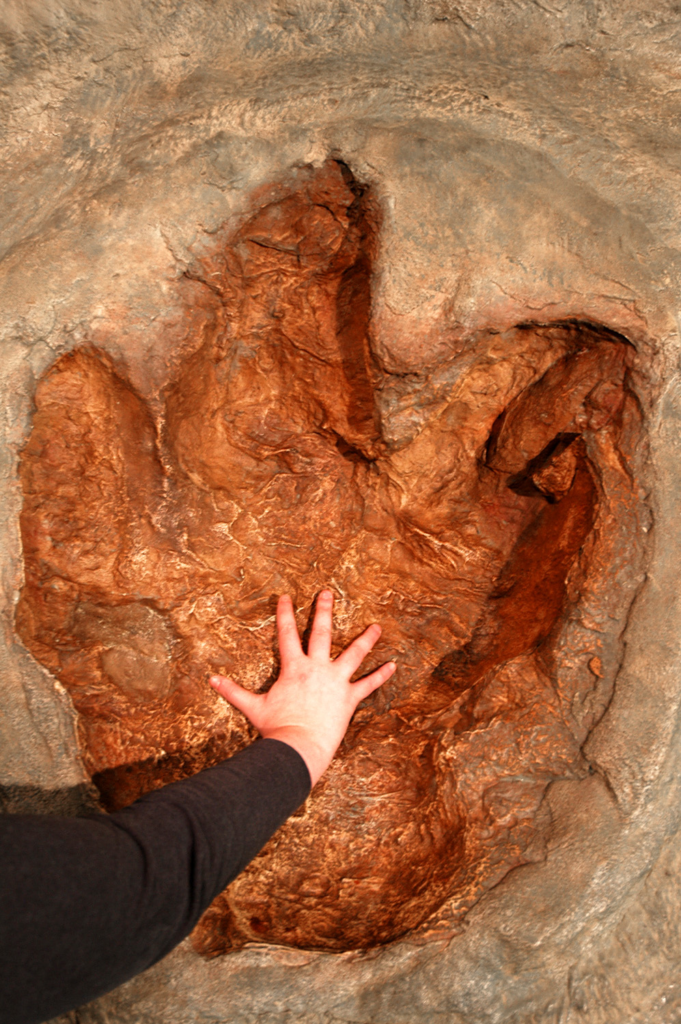
The Calculation That Changed Everything
A team led by Charles Marshall at UC Berkeley did what Simpson thought was impossible. They took everything we know about T-Rex biology: body mass, lifespan, reproductive rate and applied ecological principles used for living animals.
The result? At any given moment during the Cretaceous period, roughly 20,000 adult T-Rexes were stomping around at the same time. That’s the population density we’re talking about.
Think about it this way: there would be about two T-Rexes in a place the size of Washington, D.C. Or 3,800 in California. One dinosaur for every 100 square kilometres.
The species persisted for approximately 127,000 generations, with each generation lasting about 19 years.
Do the maths. That’s where you get 2.5 billion animals ever existing in total.
The Fossil Record Makes No Sense Until You See This
Here’s where it gets properly Bizarre But True!
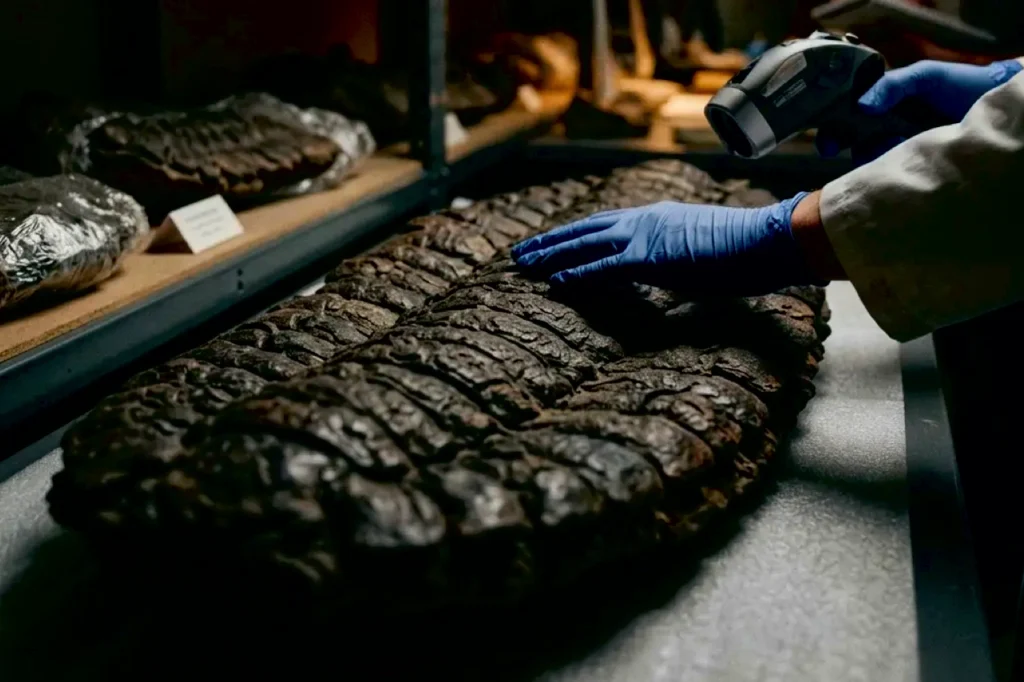
Only one in 80 million T-Rexes were preserved as fossils. Despite their fame, we’ve found fewer than 100 individual T-Rexes total and many of those are represented by a single fossilised bone. There are about 32 relatively well-preserved, post-juvenile specimens in public museums today.
That’s it. That’s what survived from 2.5 billion animals.
The researchers also ran the numbers backwards. If the T-Rex population were 2.5 million instead of 2.5 billion, we would probably never have known the T-Rex existed at all. Which begs the question, how many creatures have roamed this planet that we have absolutely no idea even existed…?
The fossil record isn’t incomplete because we haven’t looked hard enough. It’s incomplete because fossilisation is absurdly rare and we’re staggeringly lucky to have found anything.
The Uncertainty Is As Massive As The Beast
The 95% confidence range stretches from 1,300 to 328,000 individuals at any given time. That means the total number that existed over the lifetime of the species could have been anywhere from 140 million to 42 billion.
That’s not a rounding error. That’s the nature of working with fragmentary data across deep time. The biggest source of uncertainty? Population density variance. For example, Jaguars and hyenas are about the same size, but hyenas are found in their habitat at a density 50 times greater than jaguars. We don’t know where T-Rex fell on that spectrum.
What This Actually Means
This isn’t just a fun fact for dinosaur enthusiasts. This is a fundamental shift in how we understand extinct ecosystems.
T-Rex wasn’t a rare apex predator clinging to survival. It was a dominant ecological force that persisted successfully for millions of years. The resources required to sustain a population that large reshape our understanding of Cretaceous food webs entirely.
The study proves that quantitative palaeontology works. You can apply ecological principles, statistical modelling and verified data to extinct species and extract meaningful insights. The methodology is sound. The data is real. And the scale of these bygone creatures is absolutely insane.
So what other long-extinct animals are we massively underestimating? What else have we assumed was rare simply because the fossil record is sparse?
But more tantalisingly, what will future civilisations on the planet work out from our extinct human records in future millennia…?