
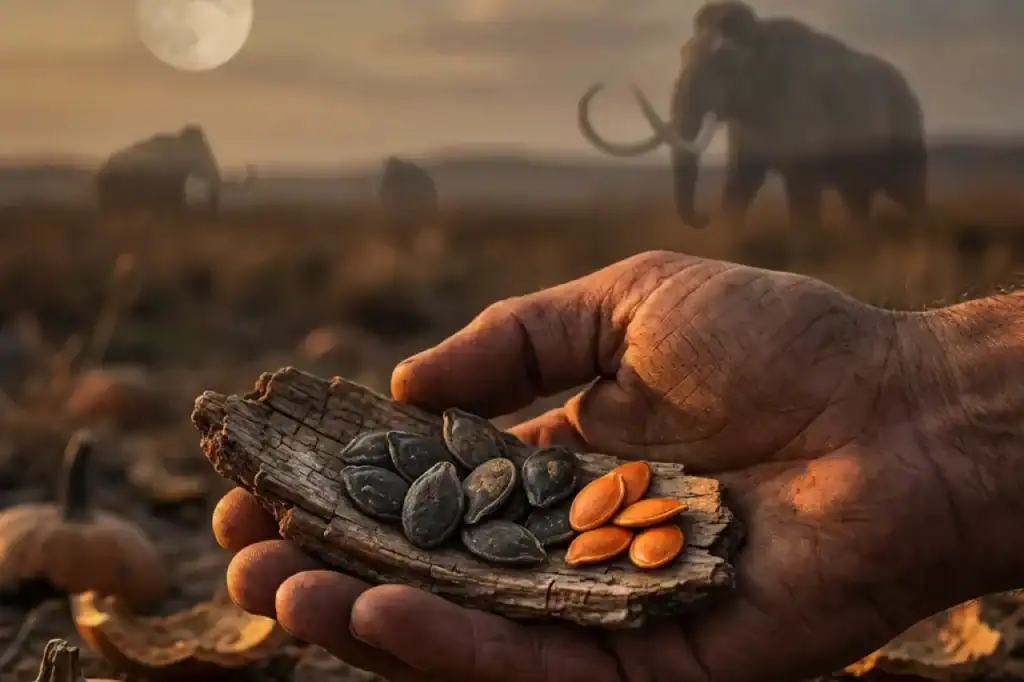

Your Jack-’O’-Lantern exists because mammoths had terrible taste buds and iron stomachs. Bizarre But True! The pumpkin sitting on your doorstep each halloween descends from plants so toxic and bitter that a single bite would cause acute gastronomic distress in humans…
Wild pumpkins tasted like tennis balls and were just as hard. They were completely inedible to anything smaller than an elephant. But mammoths? They ate them by the hundreds…
The Megafauna Dispersal System
Mammoths could consume 70 to 100 kilograms of food every single day!
They vacuumed up vegetation across entire landscapes, trampling forests and creating disturbed ground wherever they went. Wild pumpkins thrived in exactly that kind of chaos.
The plants needed open, disturbed soil to germinate. And the mammoths provided it. The fruits needed something massive enough to eat them whole, walk for days and deposit the seeds miles away in a pile of fertiliser. Mammoths provided that too.
Squash seeds have been found preserved in 30,000-year-old mastodon dung deposits in Florida. Which forms direct physical proof, fossilised in ancient faeces, of the mammoth-pumpkin relationship.
Why Mammoths Could Stomach Poison
Wild pumpkins contained cucurbitacins, compounds so bitter and toxic that most animals avoided them entirely. But mammoths had two advantages:
First, they couldn’t taste bitterness properly. Researchers compared bitter taste receptor genes across 40 living mammals and found a pattern: the larger the animal, the fewer receptors. Mammoths literally couldn’t detect how disgusting these plants were.
Second, their bodies were too massive to poison. A fully grown African elephant would need to eat approximately 75 to 230 whole wild gourds in a short timespan to reach a lethal dose of cucurbitacins. So the mammoths size made them immune to toxins that would devastate smaller animals.
So they ate the toxic tennis balls, walked for miles and deposited seeds across continents.
The Extinction Crisis
Then the mammoths died out. Around 12,000 years ago, megafauna across the Americas vanished. Mammoths, mastodons, giant ground sloths – all gone.
And the wild pumpkins were suddenly stranded.
Without elephant-sized dispersers, the plants could only grow as far as the pumpkin rolls. Long-distance seed dispersal contracted by at least two-thirds after the megafauna extinction. Some wild pumpkin populations collapsed entirely. The wild ancestor of your jack-o’-lantern pumpkin has gone completely extinct.
Then Humans Step In…
Initially, people ate the seeds of wild gourds after washing away the bitter taste. The flesh was still too toxic to consume directly, but the seeds were nutritious once cleaned.
Then something changed. Across the Americas, humans began selecting plants with thinner rinds, less bitterness and more edible flesh. Pumpkin domestication occurred at least six different times in six different locations.
Genetic studies show there were at least six independent domestication events separating domestic species from their wild ancestors. Pumpkin domestication even pre-dates maize by around 1,000 years!
The mammoth extinction crisis inadvertently launched agriculture.
The Thanksgiving & Halloween Connection
Fast-forward to colonial America. Pumpkins were abundant, easy to grow, and stored well through winter. Early settlers adopted them from Indigenous peoples who had been cultivating them for thousands of years.
Pumpkin pie didn’t exist yet—that came later, once sugar and spices became more accessible. But pumpkins themselves became a staple food source.
And all of it traces back to mammoths with bad taste buds, eating toxic tennis balls and pooing out seeds across Ice Age America.
What This Actually Means
Your Halloween pumpkin exists because humans replaced mammoths as the planet’s seed-spreading service. We became the new megafauna.
So next time you carve a jack-o’-lantern, remember: you’re continuing a 12,000-year-old rescue mission that started with mammoth poo!