
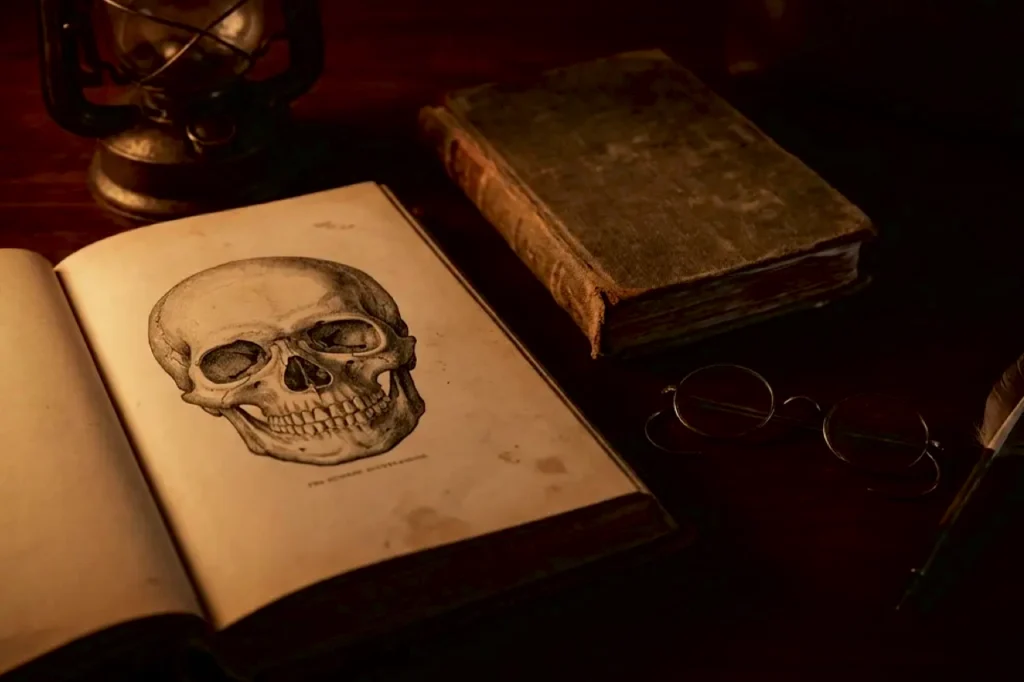
Edinburgh’s underground vaults hold a story darker than most horror films. Back in the early 1800s, medical schools needed bodies. Surgeons needed to teach anatomy. Students needed to learn on actual human corpses. But the law only permitted dissection of executed criminals and there weren’t enough executions to meet demand…
The gap between legal supply and desperate demand created a market. And where there’s a market, someone will always find a way to fill it…
The Economics Of Death
William Burke and William Hare didn’t start out as murderers. They started as opportunists.
When a lodger in Hare’s boarding house died owing rent in 1827, the pair sold his body to Dr Robert Knox’s anatomy school at Surgeon’s Square. They received £7.10s for their troubles. That was roughly two months’ wages for a labourer and so not an insignificant amount…
The transaction revealed something neither man could ignore: fresh corpses could be turned into serious business. Surgeons paid £10 in winter when bodies could be preserved for weeks and £7 in summer when decomposition accelerated.
Burke and Hare earned roughly £150 total across their killing spree. In today’s money, that’s just over £10,000. Split between two men. For at least 16 murders. The profit margin was grotesque, but it worked.
The Method That Left No Marks
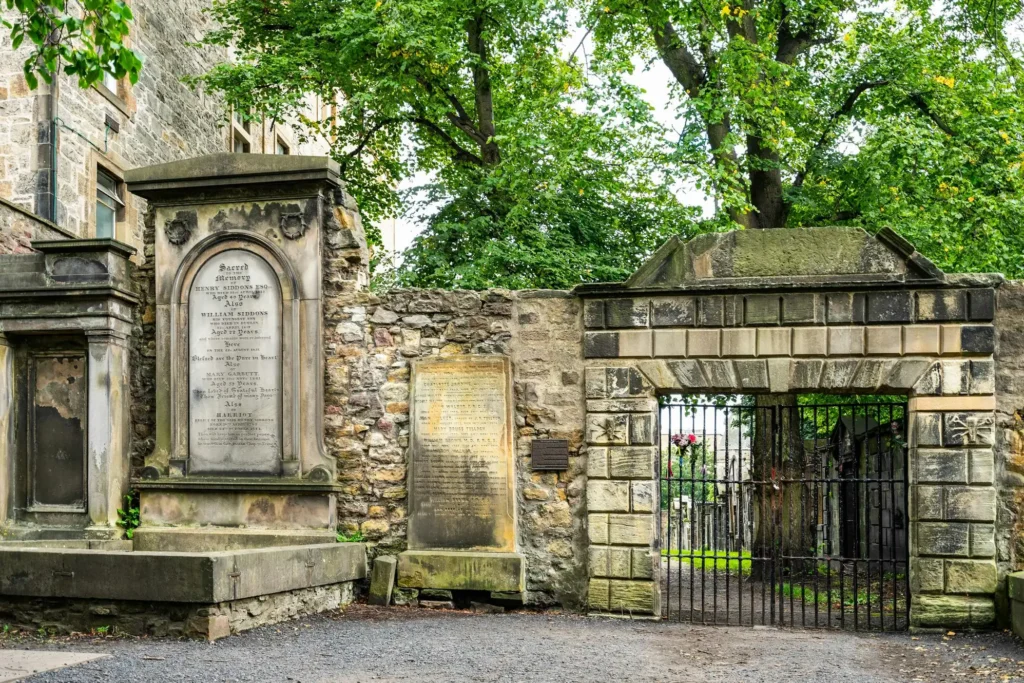
‘Resurrection men’, the polite term for grave robbers, had been operating for years, digging up fresh burials and selling them to anatomists. But exhumation was risky. Families guarded graveyards. Authorities patrolled cemeteries. The work was physically demanding and legally dangerous.
Burke and Hare discovered a more efficient system: skip the grave entirely.
Their method became known as “Burking.” Suffocation. One man would cover the victim’s nose and mouth whilst the other held them down. No blood. No visible wounds. No evidence of violence that would raise suspicion when the body arrived at the dissection table.
Dr Knox never asked questions. When Mary Paterson’s body arrived, he was so impressed with its quality that he pickled it in whisky and kept it for three months before dissecting it. The freshness that should have triggered alarm instead inspired aesthetic appreciation, and that’s the perverse logic of a broken system. The better the “product,” the fewer questions anyone wanted to ask.
When Profit Became Routine
The pair targeted Edinburgh’s most vulnerable. Elderly lodgers. Sex workers. People whose disappearance wouldn’t immediately trigger investigation.
They operated for nearly a year. Sixteen confirmed victims, though the actual number may be higher. Each murder followed the same pattern: lure the victim with alcohol, wait until they were incapacitated, suffocate them, deliver the body to Knox’s school, collect payment.
The system only collapsed when other lodgers grew suspicious. In October 1828, residents discovered a body hidden under a bed. Burke and Hare were arrested. Hare turned King’s evidence. He testified against Burke in exchange for immunity. Burke was convicted and sentenced to hang.
The trial became Edinburgh’s most sensational event in decades.
Justice as Theatre
Burke’s execution on 28 January 1829 drew a crowd estimated between 25,000 and 35,000 people. Windows overlooking the scaffold rented for prices ranging from 5 shillings to 20 shillings. Edinburgh’s population at the time was roughly 160,000.
This wasn’t just an execution. It was the city’s most-attended hanging in history.
The judge added a final instruction: Burke’s body was to be publicly dissected. And if preservation became possible, his skeleton should be kept permanently.
Professor Monro performed the two-hour dissection. During the procedure, he dipped his quill pen into Burke’s blood and wrote, “This is written with the blood of Wm Burke, who was hanged at Edinburgh.” The letter still exists in Edinburgh University Archives.
Burke’s skin was tanned and sold for souvenirs. A pocketbook bound with his skin sits in Edinburgh’s Surgeons’ Hall Museum, bearing the inscription “Executed 28 Jan 1829” with a pencil still inside. Another calling card case, made from skin taken from Burke’s left hand, sold at auction in 1988 for £1,050.
Burke’s skeleton remains on display at Edinburgh Medical School. The body-seller became the perpetual specimen himself. Fitting!
The Man Who Escaped
Hare walked free. His testimony secured Burke’s conviction and the Crown kept its promise of immunity.
But freedom didn’t mean safety. Multiple accounts of his fate exist: that he worked at a lime pit until recognised, whereupon his fellow workers threw him in, blinding him. That he turned to begging on Oxford Street in London. That he fled to Ireland or America and lived for 40 years after the murders.
The man who escaped justice also escaped history. Only rumours remain.
The Anatomist’s Reckoning
Dr Robert Knox was never charged. A committee cleared him of direct involvement. But Edinburgh didn’t forgive.
In February 1829, crowds gathered outside his house and burned an effigy of him. Newspapers published editorials accusing him of encouraging the murders. His lectures were disrupted. His reputation was destroyed. Knox left Edinburgh in 1842. He died in poverty in 1862.
The system that created the market for murder remained unchanged.
The Anatomy Act of 1832 finally legalised the use of unclaimed bodies for dissection, eliminating the economic incentive that had made Burke and Hare’s enterprise viable. But the damage was done. Edinburgh’s medical reputation carried the stain for decades.
Book Now & Walk Where History Turned Dark
You can read about Burke and Hare. Or you can stand in the streets where they actually operated…
Edinburgh’s underground vaults still exist. The closes and wynds where victims were lured remain. The atmosphere that permitted 16 murders to unfold over months hasn’t entirely dissipated.
The Haunted Vaults and Graveyard Tour takes you beneath Edinburgh’s streets into the spaces where the city’s darker history unfolded.
Book your place on the tour and experience Edinburgh’s most notorious chapter and more on your next visit…