
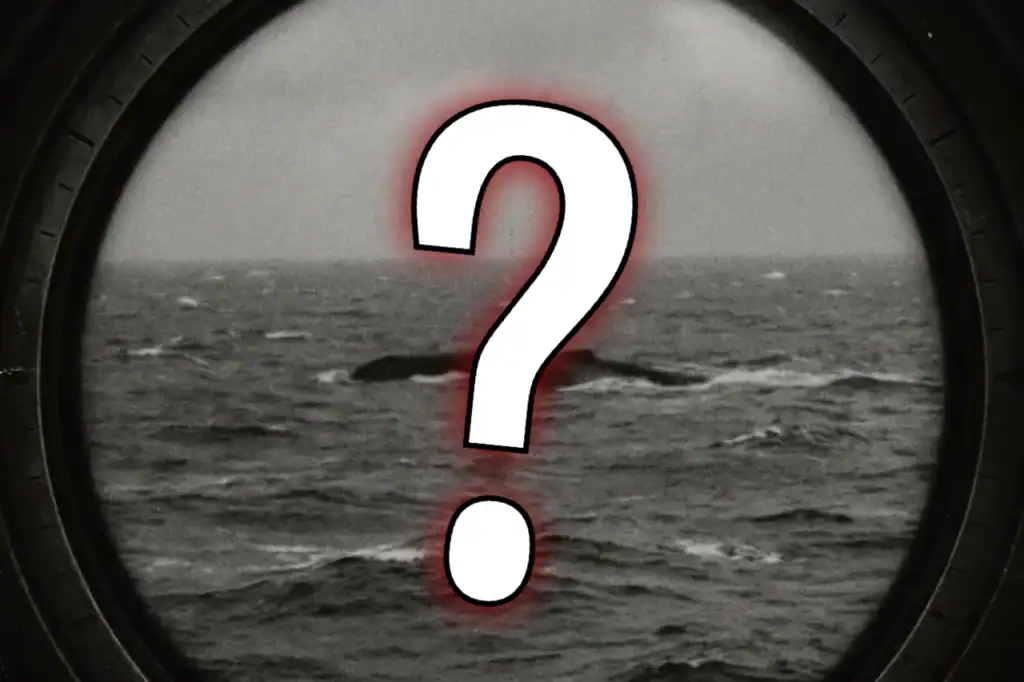

Loch Ness in 1941. War was raging across Europe and Royal Navy vessels were laying anti-submarine nets to protect harbours from German U-boats. And then the nets caught something…
HMS Ocean Swell and HMS Norbreeze crews watched as their anti-submarine gear snagged an unknown sea serpent, partially hoisting it from the water before the equipment gave way under the strain.
Not a seal. Not debris. Not any creature the naval personnel recognised.
The Letters That Surfaced Decades Later
Lewis Tyler served aboard HMS Ocean Swell during the war. He never spoke publicly about what happened in May or June 1941. His grandson, John Gibbens, only discovered the incident after Tyler died when he found letters buried amongst his late grandfather’s papers.
The letters, dated May 1967, came from David James of the Loch Ness Phenomena Investigation Bureau. They were reaching out to Tyler for information about that wartime encounter.
One letter reads: “Dear Sir, in May or June 1941 HMS Ocean Swell and HMS Norbreeze apparently had an exciting experience when some sort of unknown sea serpent got entangled in the anti-submarine nets and was partially hoisted out of the water before the gear gave way.”
The investigator asked Tyler to describe what he remembered: “size, shape, colour, texture etc.”
The fact that official cryptozoology investigators tracked down crew members decades later suggests the incident generated enough notice to leave a trail.
Anti-Submarine Nets Don’t Lie
Anti-submarine nets during WW2 were industrial-strength equipment designed to stop German submarines. Heavy-duty steel cables, massive anchors, built to withstand thousands of pounds of force.
And they gave way. Whatever got tangled in those nets generated enough force to break equipment designed for military-grade resistance.
The creature was partially lifted from the water, meaning the crew got a direct visual. Not a shadowy shape beneath the surface. Not a fleeting glimpse. Something hauled partway into view before escaping.
John Gibbens discovered the story after his grandfather’s death. “I had no idea he had seen a serpent during his lifetime,” he told What’s The Jam. “But after he died I found letters among his papers approaching him for information about an encounter in Loch Ness.”
Tyler never sought publicity. Never profited from the story. The letters found him because someone, somewhere, kept records of that May or June day in 1941.
What Actually Lives in Loch Ness?
Loch Ness is massive. Nearly 23 miles long, over a mile wide in places and plunging to depths of 755 feet. It contains more fresh water than all the lakes in England and Wales combined.
The loch is dark. Peat particles suspended in the water reduce visibility to near zero below certain depths. Sonar surveys have mapped the bottom, but optical observation becomes impossible in that murk.
Eels inhabit Loch Ness in significant numbers. European eels can grow to substantial sizes too. Reports of eels exceeding six feet exist, though confirmation remains limited.
Sturgeon – large, prehistoric-looking fish, occasionally enter the loch from the sea via the River Ness. These can reach 12 feet in length and weigh hundreds of pounds. To someone unfamiliar with the species, a surfacing sturgeon certainly looks bizarre.
But naval personnel in 1941 weren’t tourists misidentifying wildlife. They were experienced sailors who’d spent months at sea, trained to spot submarines, mines and other threats.
If they couldn’t identify what broke their nets, that carries weight.
The Silence That Speaks Volumes
Lewis Tyler served on the Royal Yacht after the war. He showed young princesses – the future Queen Elizabeth II and Princess Margaret, around the engine room. He was, by all accounts, a credible, beloved man.
He never publicised the Loch Ness encounter. Never sold his story. Never sought attention.
That restraint matters. People who fabricate sea monster stories don’t quietly take them to the grave. They leverage them. Sell them. Build them into personal mythology.
Tyler’s silence suggests he did indeed see something he couldn’t explain, accepted he couldn’t explain it and moved on. The investigators found him – not the reverse.
Could it have been a large eel? Possibly. Could it have been a sturgeon caught at an unusual angle? Perhaps. Could it have been wartime stress creating misidentification? That’s the easiest explanation.
But anti-submarine nets broke. Equipment built to stop U-boats failed under the strain of whatever got tangled in them. And decades later, investigators still cared enough to track down the witnesses and ask what they’d seen…
Want your chance to find out more about the so-called Loch Ness Monster? Then book your tickets below for the Loch Ness Centre…