



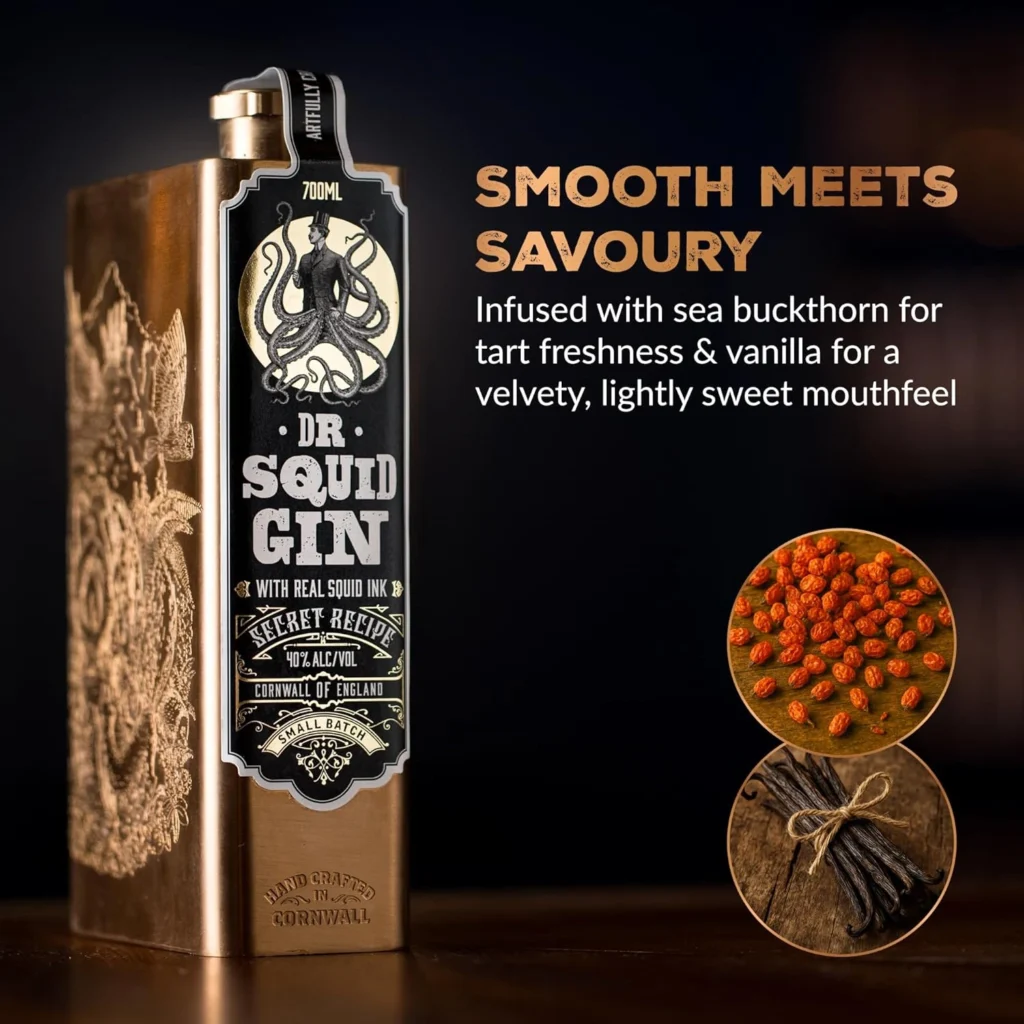
Dr Squid Gin pours black from the bottle. Midnight black. Then you add tonic water and it turns pink. The squid ink within the gin contains pH-sensitive compounds that react when they hit the alkaline tonic. The colour shift happens in seconds, right there in your glass…
Pocketful of Stones distillery in Cornwall spent years developing this thing. They nearly abandoned the project multiple times because balancing the recipe proved so difficult. The copper flask alone was a nightmare to manufacture. But they couldn’t let it go – and we’re glad!

What Squid Ink Actually Tastes Like
Bizarre But True! Squid ink has umami flavour. That savoury, mouth-coating quality you get from mushrooms or aged cheese. It comes from high concentrations of glutamates in the ink itself.
The black colour? That’s melanin. The same pigment in human skin.
You’re drinking a cephalopod’s biological defence mechanism mixed with juniper and tonic water. That’s the less edgy reality of what’s happening here.
The distillery uses locally foraged botanicals alongside the squid ink. The gin captures coastal Cornwall without resorting to generic “seaside gin” clichés. It tastes like the ocean without tasting like salt water – oops, we did it that time!
The Broader Marine Gin Movement
Dr Squid sits inside a growing category of ocean-inspired spirits. Distillers are using oysters, lobster, sugar kelp, even sea salt to create what they’re calling “merroir” – the oceanic equivalent of terroir. It’s the idea that sea conditions – temperature, salinity, currents – imprint themselves onto flavour, just as soil and climate do for wine grapes.
Isle of Harris Gin works with a local diver who scavenges sugar kelp from the ocean floor. That’s the level of commitment people are bringing to this.
Here’s the slightly dodgy part: most commercially sold “squid ink” is actually cuttlefish ink. Cuttlefish ink has richer, more palatable flavour. So the product you think you’re buying might be from an entirely different cephalopod species.
Dr Squid uses actual squid ink though. They’re specific about that – so no knock-offs here!
Where Squid Ink Cooking Came From
One theory suggests culinary squid ink use in Europe originated from 17th-century missionaries returning from the Philippines. Indigenous people there cooked adobong pusit – squid adobo laced with vinegar, soy sauce and squid ink.
So your fancy G&T might actually trace its lineage to pre-colonial Filipino cuisine!
Squid ink only arrived in Japan in the 1970s through Italian pasta dishes. Within years it spread to rice dishes, hamburgers and even ice cream.
The Branding Question
The name “Dr Squid” does the heavy lifting. It signals weirdness without being alienating. The bottle design and label lean into coastal aesthetics without going full nautical kitsch – the bottle is impressive on it’s own and definitely one to keep on the kitchen shelf!
This matters because squid ink in gin is a hard sell to some people. Savoury notes in spirits throw off drinkers who expect sweet or citrus-forward profiles. But for people seeking something genuinely different, not just another flavoured gin with the same botanical lineup, Dr Squid definitely delivers.

So Does It Actually ‘Work’..?
The colour change is real. The umami depth is real. The connection to Cornish coastline is real.
But hey, you either want to drink a cephalopod’s defence mechanism or you don’t. There’s no middle ground on this one.
The gin exists for people who see “squid ink spirit” and think “yes, obviously” rather than “absolutely not.” If you’re in the first camp, Dr Squid delivers exactly what it promises.
If you’re in the second camp (or have a shellfish allergy!) then there’s approximately seven thousand other gins available…!