
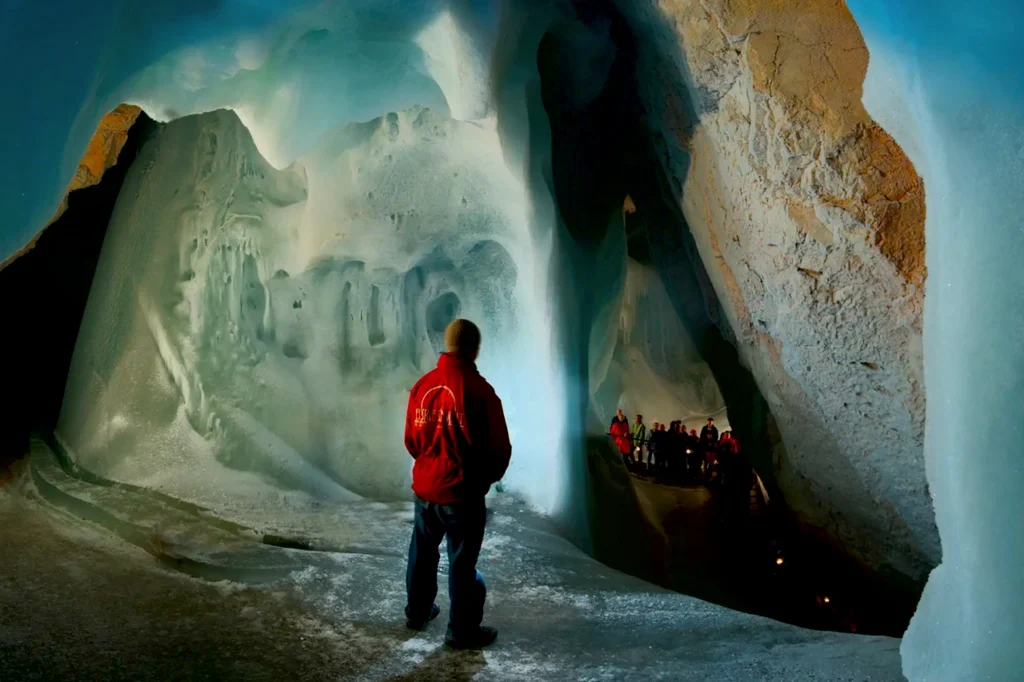

For centuries, the villagers of Werfen, Austria, knew about a massive cave entrance in the mountains just 40 kilometres south of Salzburg. But they refused to go near it…
Bizarre But True! The locals believed Eisriesenwelt – the “World Of The Ice Giants”, was a gateway to Hell itself. The blustering wind that escaped from the entrance was, according to local superstition, the devil’s breath. Despite sitting practically on their doorstep, the cave remained unexplored until 1879.
That’s when Anton Posselt, a natural scientist from Salzburg, finally ventured inside. He made it 200 metres before fear stopped him…
The Explorer Who Never Left
Posselt published his findings in a mountaineering magazine in 1880. The report was quickly forgotten.
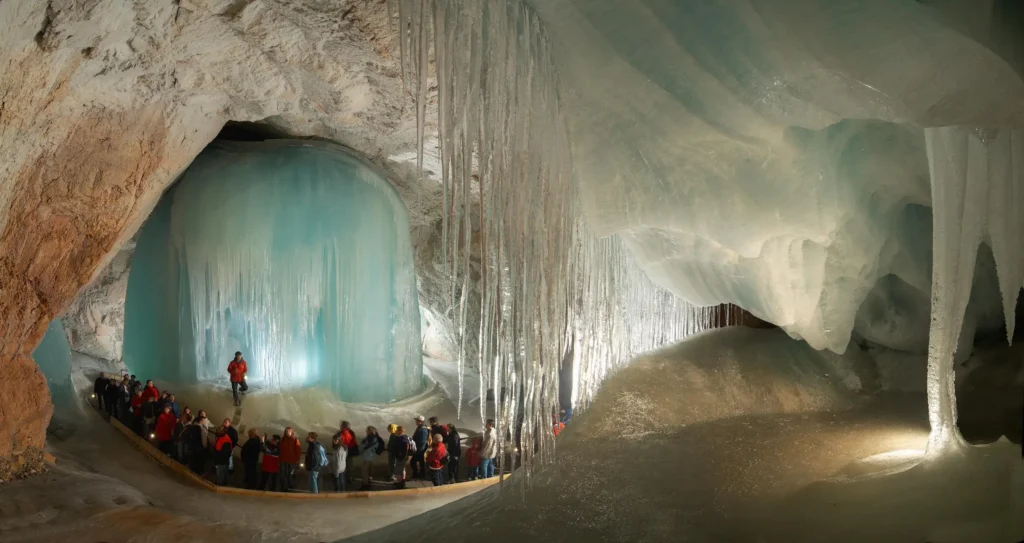
It wasn’t until 1912 that Alexander von Mörk, a speleologist from Salzburg, led proper expeditions into the depths. He explored far beyond Posselt’s 200-metre mark, mapping the cave and naming its chambers after Norse mythology – Hymir’s Castle, the Ice Palace, all inspired by the Edda saga about Thor’s journey to the giants.
Von Mörk died in World War I in 1914. He was just 26 years old. His last wish was to be placed inside Eisriesenwelt. An urn containing his ashes sits in a niche carved into the cave wall. Visitors pass his memorial during tours to see where he became part of the cave forever.
Wind That Blows Out Your Lamp
The entrance to Eisriesenwelt is sealed by a heavy door.
When tour guides swing it open, visitors are advised to brace themselves. The temperature difference between the outside world and the frozen interior creates wind gusts that can reach 56 to 62 mph! The draft physically shoves you through the doorway…
Inside, there’s no electricity.This is intentional. The cave is explored exactly as it was during its discovery – using carbide lamps and magnesium flares. Moving ice would destroy any permanent lighting system and generators are impractical. So guides light the way with historically recreated lamps and at the frozen lake inside the Ice Palace, they hold up a magnesium flare.
Frost crystals twinkle in the sudden burst of light. It’s the same view von Mörk saw over a century ago.
Ancient Cave, Relatively New Ice
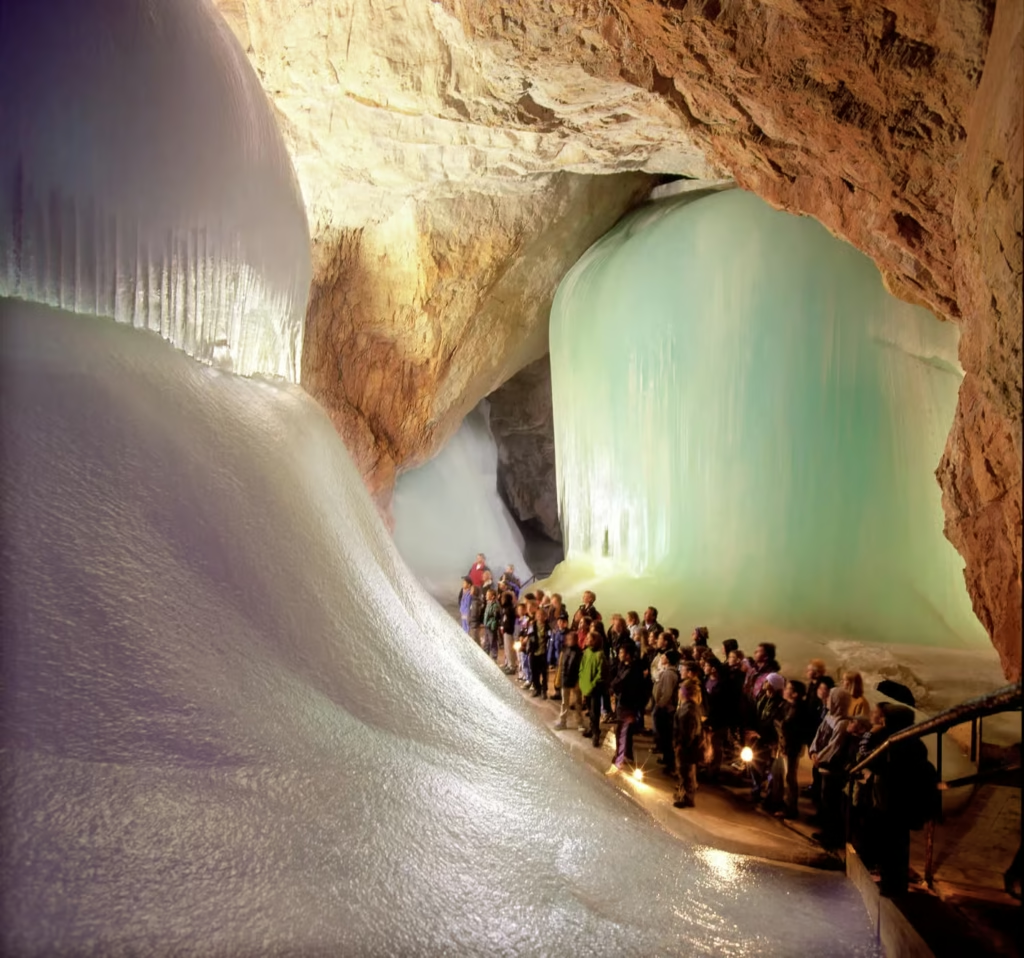
Eisriesenwelt extends over a whopping 42 kilometres, making it the largest ice cave in the world.
Only the first kilometre is open to the public. The rest remains largely unexplored by tourists. The cave itself is ancient, somewhere between 50 and 100 million years old, carved out by the Salzach River over geological time. But the ice formations inside are far younger. Scientific testing dates the oldest ice layers at approximately 1,000 years old.
Some of the ice visitors see today formed during the same era as ‘Ötzi’ the Iceman, the 5,300-year-old mummy discovered in the Alps.
The cave was likely ice-free during the Medieval Warm Period. The ice only began accumulating in earnest around the 13th century, coinciding with the onset of the Little Ice Age. A simple door installed at the lower entrance now keeps the cold air trapped inside during warmer months, preserving the ice. Without the door, the cave would likely melt.
Ready To Walk Through The Devil’s Breath Yourself..?
Guided tours of Eisriesenwelt last around 75 minutes and involve a significant climb, both to reach the cave entrance and within the cave itself. A reasonable level of fitness is recommended.
You’ll walk past von Mörk’s ashes. You’ll feel the wind that terrified locals for centuries and you’ll stand in the chambers named after Norse giants and watch magnesium flares illuminate ice that’s older than most nations.
Booking in advance is essential, especially during peak season. Private tours from Salzburg offer the convenience of expert guidance and transportation, letting you focus on the experience rather than logistics.
The cave’s been waiting 100 million years. It can wait for your booking confirmation…!