

Ever had this..? You wake up. You can’t move. And there’s a tall figure in the corner of the room wearing a hat. This isn’t a one-off nightmare. It’s a pattern reported across continents, cultures and generations…
The Hat Man shows up in bedrooms from California to Choctaw territory, from Victorian England to modern-day Asia. The consistency is what makes it strange. Different people, different countries, yet the same figure appearing in their dreams.
The Numbers Don’t Lie
Bizarre But True! Approximately 20 percent of people experience at least one sleep paralysis episode during their lifetime. Up to 75 percent of those report hallucinations at the same time with 58 percent sensing a non-human presence in the room and 22 percent seeing what appeared to be a human figure.
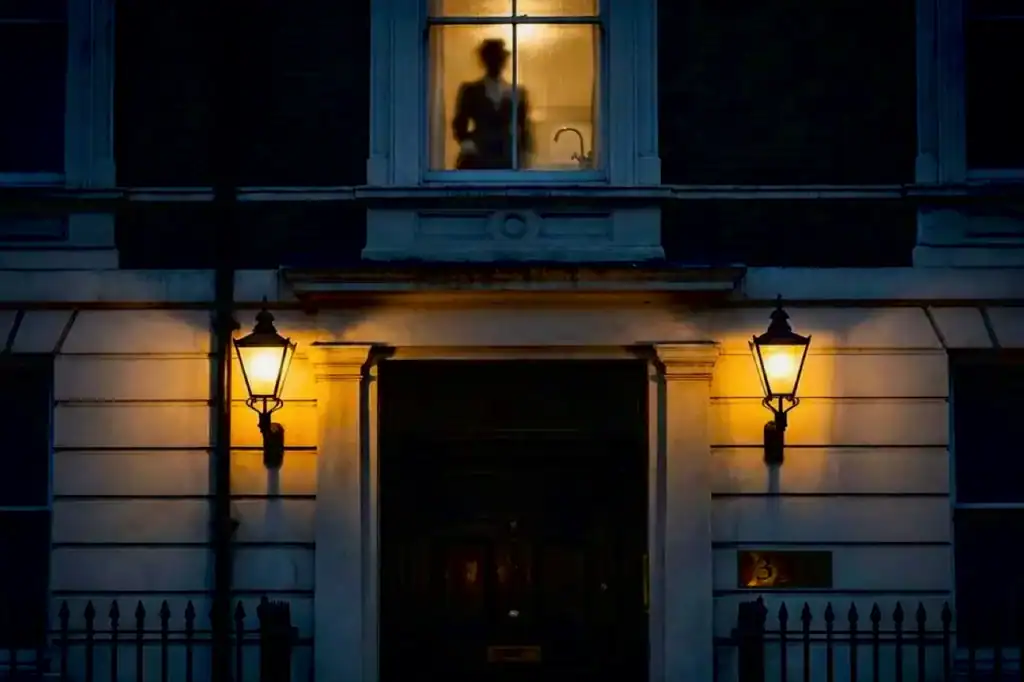
The Hat Man is the most commonly reported of these figures. Not a vague shadow. Not a blur, but a man. Wearing a hat. ‘The Hat Man Project’, started by researcher Timothy M. Brown Jr. in 2001, has collected hundreds of first-hand stories of this specific phenomena from people all over the world over the past 20 years.
What Witnesses Actually Describe
The details stay consistent. He’s tall, minimum six feet, but more often 8 to 10 feet. That height forces him to crouch whilst standing, you open your eyes at night and see a hunched figure bending unnaturally to keep from hitting your ceiling fan with the top of his hat.
Some witnesses report he sometimes carries a gold pocket watch that he’ll occasionally glance at. He’s sticking around long enough to be curious about the time. He doesn’t flicker. He doesn’t distort. He just presents himself. Most shadow figures vanish as soon as you notice them, but the Hat Man does not behave that way.
The Ancient Precedent
This phenomenon isn’t new. The earliest documented clinical account of sleep paralysis dates back to 1664, when a Dutch physician described it as the “Incubus or the Night-Mare” affecting one of his patients.
Ancient Greek physician Galen was already trying to find a non-supernatural explanation in his own era. He suggested excessive alcohol consumption and gastric disturbances as possible causes.
The term “nightmare” comes from “night-mare” – not the four-legged animal, but from an Old Norse spirit called the mara. This usually female supernatural being was believed to sit on top of someone’s chest to suffocate them whilst they slept.
The ‘Coast To Coast AM’ Effect
Modern awareness of The Hat Man exploded after a single radio show. On April 12, 2001, Coast to Coast AM host Art Bell interviewed a man (pretending to be a Native American elder) about shadow people.
Listeners were encouraged to submit drawings of shadow people they had seen. The response was immediate and striking – hundreds of illustrations poured in, depicting similar dark, humanoid shapes, many wearing hats. For many people, it was the first time they realised others had seen the same thing. The cultural priming had begun.
Cultural Priming And Shared Nightmares
Stanford University’s Dr Cyle Johnson wrote that “in a phenomenon known as cultural priming, shared cultural narratives of sleep paralysis, such as attacks from sinister figures, can predispose individuals to experience a greater fear reaction, a more intense effort to escape paralysis, and culture-dependent hallucinations”.
Experts think we can track trends of sleep paralysis demons through the ages. “Witches, hags and incubi” were most common in the early modern period. Victorian era people saw vampires and ghosts. Nowadays it’s “horror-movie-style monsters and villains”.
The Hat Man fits this pattern. But there’s a wrinkle…
The Cross-Cultural Problem
What makes the Hat Man particularly eerie is the consistency of reports across different cultures, from North America and Europe to Asia and Africa. Despite geographical and cultural differences, witnesses often describe nearly identical experiences.
In Japan, sleep paralysis is called ‘kanashibari’ – the experience of waking immobilised with a presence nearby. In Newfoundland, it’s the Old Hag, where victims report being completely conscious but unable to speak or move, with a person or animal sitting upon their chest. In Egypt, elaborate beliefs about malevolent spirit-like creatures called jinn have produced particularly high rates and long durations of sleep paralysis experiences.
Brazilian folklore describes the ‘Pisadeira’, an old woman who lies in wait on roofs and walks on the chests of people who sleep on their backs with a full stomach. In Turkey, some versions involve a djinn with a wide hat that, if stolen, becomes the person’s slave.
The Choctaw people, who have inhabited America for nearly 4,000 years, speak of the Nalusa Cheeto – a shadow entity that appears when someone entertains evil thoughts and devours their soul whilst they sleep. The terror is so ingrained that many Choctaw still even avoid speaking its name.
Different cultures. Different spirits. Different names. But the same underlying experience of paralysis, crushing pressure and malevolent presence.
The Benadryl Connection
Then there’s the more dangerous connection behind The Hat Man too. It’s been found the visions are commonly associated with sleep paralysis and, bizarrely, the abuse of the antihistamine medicine diphenhydramine, commonly sold under the brand name Benadryl.
At high doses, diphenhydramine causes hallucinations and delirium. It has strong anticholinergic properties that can trigger dangerous cardiac arrhythmias and seizures. The FDA has issued warnings after multiple deaths.
Between 2014 and 2023, US poison centres recorded an 87.2 percent increase in paediatric diphenhydramine cases. That’s not a typo. Nearly double.
The rumour of a link between DPH and the Hat Man led some people to deliberately ingest dangerous quantities “in hopes of seeing the Hat Man or other shadow people”. Social media challenges. TikTok experiments. Teenagers filming themselves swallowing fistfuls of pills.
Most don’t report positive effects. Most don’t want to repeat the experience. Some end up in hospital. Some don’t make it out…
What This Actually Means
The Hat Man sits at the intersection of neuroscience and folklore. Sleep paralysis is real. The hallucinations are real. The terror are all real.
Whether the Hat Man’s a shared archetype emerging from our collective unconscious, a side effect of how our brains misfire during REM sleep, or something else entirely doesn’t change the experience for the people who see him.
The data remains the same either way. Thousands of people, across decades and continents, see the same tall figure wearing a hat standing in their bedrooms whilst they can’t move…