

Bizarre But True! You share 98% of your DNA with a chimpanzee and you share 60% with a banana. But here’s what nobody tells you: scientists still don’t understand what most of our genome actually does…
The complete human genome was only finished in 2022 – twenty-one years after researchers thought they’d cracked it. But although we’ve identified our complete set of genes, we have no clue what most of them actually do…
Read on to discover the hidden ‘dark matter’ inside our DNA and for your chance to have your own DNA decoded!
Only 2% Of Your DNA Does What You Think It Does
Your genome contains roughly 3 billion base pairs. Only 2% of that codes for proteins, the stuff that actually builds your body. The remaining 98% was dismissed as “junk DNA” for decades.
Turns out, that junk is actually running the show. More than 80% of the so-called non-coding genome is still biologically active and impacts how genes in the neighbourhood get expressed. Researchers now describe it like this: “Proteins are the hardware, and the dark genome is the software.”
This dark genome controls when genes switch on, how they respond to environmental signals and which proteins get made. Without it, the 2% that codes for proteins would be completely useless.
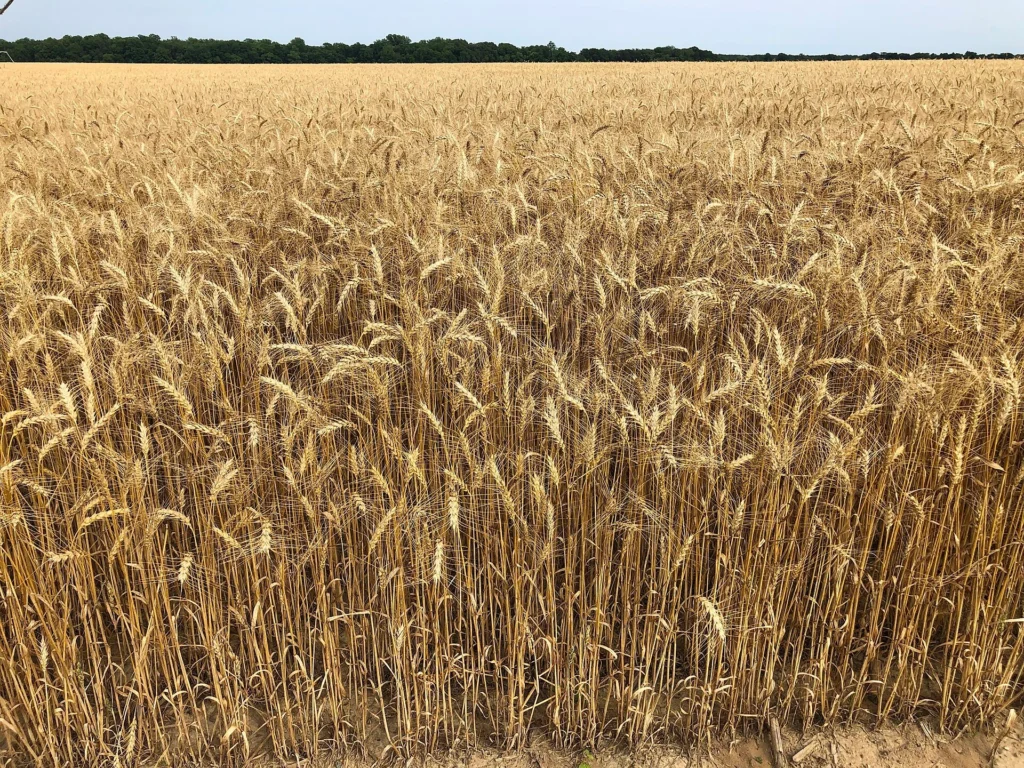
Wheat Has Five Times More Genes Than You Do
Wheat has 124,207 genes. Humans only have about 24,200.
This is called the ‘G-value paradox’ and it breaks the assumption that complexity equals more genes. A microscopic nematode with only a thousand cells has roughly the same number of genes as a human.
So what makes humans more sophisticated?
It’s not the number of genes. It’s the diversity of protein families those genes produce and how the dark genome regulates them. You don’t need more code, you need better instructions.
8% of Your Genome Comes From Ancient Viruses
What are known as ‘Endogenous retroviruses’ make up about 8% of human DNA. That’s four times the amount dedicated to protein-coding genes.
These are remnants of viral infections that hit our evolutionary ancestors millions of years ago. The viruses inserted their genetic material into our cells and it stayed there – passed down through every generation since. There are around 30 different kinds of human endogenous retroviruses embedded in your genome today, amounting to over 60,000 proviruses.
Once dismissed as junk, some of these viral remnants now actually protect you! An ERV-derived envelope protein can block infections in human cells. The viruses that tried to kill your ancestors ended up saving you.
Ghost DNA From Species We’ve Never Found
Your genome also contains DNA from Neanderthals and Denisovans – extinct human species we’ve dug up and sequenced.
But it also contains hints of ghost lineages, with no known fossils.
In 2020, researchers reported that West African genomes contained DNA from an unknown archaic population. In May 2025, scientists in China analysed a 7,100-year-old skeleton and found markers from a previously unknown human branch, dubbed the Basal Asian Xingyi lineage, which diverged from other humans around 40,000 years ago.
If these ghost genes remain today, they likely provided a survival advantage. We just don’t know what species they came from or whether it was one lost group or several.
Thousands Of Genes Have Completely Unknown Functions
There are still a couple thousand genes in the human genome for which essentially nothing is still known.
Until recently, geneticists could only chart the easiest structural variations in DNA, leaving the most tangled, repetitive regions in the dark. An international team decoded some of the most stubborn, overlooked regions using complete sequences from 65 individuals across diverse ancestries, closing 92% of the remaining data gaps.
But gaps still exist. And those gaps might hold the answers to rare genetic diseases that have no explanation…
Humans Lost 10,000 Genes – And It Made Us Superior
Nearly 10,000 genes common to all other mammals are missing in humans.
Many are related to sensory perception, metabolism and brain function. Their absence suggests they offered a survival advantage to early humans but that losing them was actually beneficial. Humans have also accumulated thousands of pseudogenes or broken versions of once-functional genes. Despite being inactive, these lost genes often regulate active ones and help define species-specific traits.
You can’t produce vitamin C, for example, because of a broken gene called GULO. That’s not a flaw. That’s evolution deciding you didn’t need it.
“Junk DNA” Can Kill You If You Delete It
When researchers knocked out a specific transposon in mice, half their pups died before birth.
This was the first example of a piece of “junk DNA” being critical to survival in mammals. Transposons make up half the human genome and are descended from ancient viruses. When they jump into different positions, they create genetic mutations that can cause harm, grant protection, or lead to evolutionary change.
Transposon-driven mutations cause diseases like haemophilia and certain cancers. Nearly half of all miscarriages in humans are undiagnosed or don’t have a clear genetic component. Could transposons be involved? Researchers are asking that question now.
Pharma Only Targets 812 Proteins – Ignoring 250,000 “Dark Proteins”
Billions of dollars have been spent trying to cure diseases over the last 50 years. The pharmaceutical industry has looked at 20,000 proteins and selected 812 to investigate for treating illness.
Add in a high likelihood of failure -95% of clinical trials fail by the time they reach phase three, at which point roughly $2 billion has already been spent.
Scientists have already catalogued around 250,000 new “dark proteins”, learning about the biological processes they’re involved in and whether they’re dysfunctional in various diseases. Algorithms have predicted at least 2 million more. The cures might already be in the dark genome. We just haven’t looked there yet.
What Next…?
The complete human genome was only finished three years ago. Thousands of genes remain unexplained. And somewhere in that 98% we used to call junk, there are answers we haven’t even thought to ask for yet but could hold the key to our survival…
Want To Discover More About Your Own Genes…?
It’s now possible to take a swab of your own DNA for analysis. Check out the kit below that gives you a window into your own past by analysing mitochondrial DNA to discover your genetic family tree…
- A FEW SIMPLE STEPS: Discover your DNA story with our easy-to-follow instructions. Simply activate your DNA kit online and return your saliva sample in the prepaid package to our state-of-the-art lab. In roughly six to eight weeks, your results will be ready online.
- DNA + TRAITS: AncestryDNA + Traits lets you discover 35+ of your most interesting traits, allowing you to explore how your genes might have influenced a range of appearance, sensory, fitness, nutrient, and other personal characteristics—like endurance fitness, heart rate recovery, and more.
- ETHNICITY ESTIMATES AND INHERITANCE: A more precise ethnicity estimate with greater geographic detail and in-depth historical insights connects you to the places in the world where your story started—and with our specialized SideView technology, we can show you which ethnicities were passed down to you from each parent, even without them taking a DNA test.
- BUILD A FAMILY TREE: With an Ancestry subscription you can combine what you learn from your DNA with over 100 million family trees and billions of records for more insight into your genealogy and origins.
- PROTECTING PRIVACY: When you send in your DNA test kit, we employ industry-standard security measures in all stages of our process, work to protect your data, and give you control over it—with data encryption, secure databases, and easy-to-use controls.