

Nearly 300 robots – over thirty different types. Tokyo’s Henn-na Hotel opened as the world’s first robot-staffed hotel with a mechanical workforce so ambitious it earned a Guinness World Record. But within four years, they’d fired half of them…
The survivors? A bizarre menagerie including sneezing dinosaur receptionists, fossil fish swimming in lobby aquariums and voice-activated assistants that mistook snoring for commands. Read on if you’re curious about spending a night inside the worlds most comprehensive robotic hotel…!
The Robot Zoo: What Actually Works There
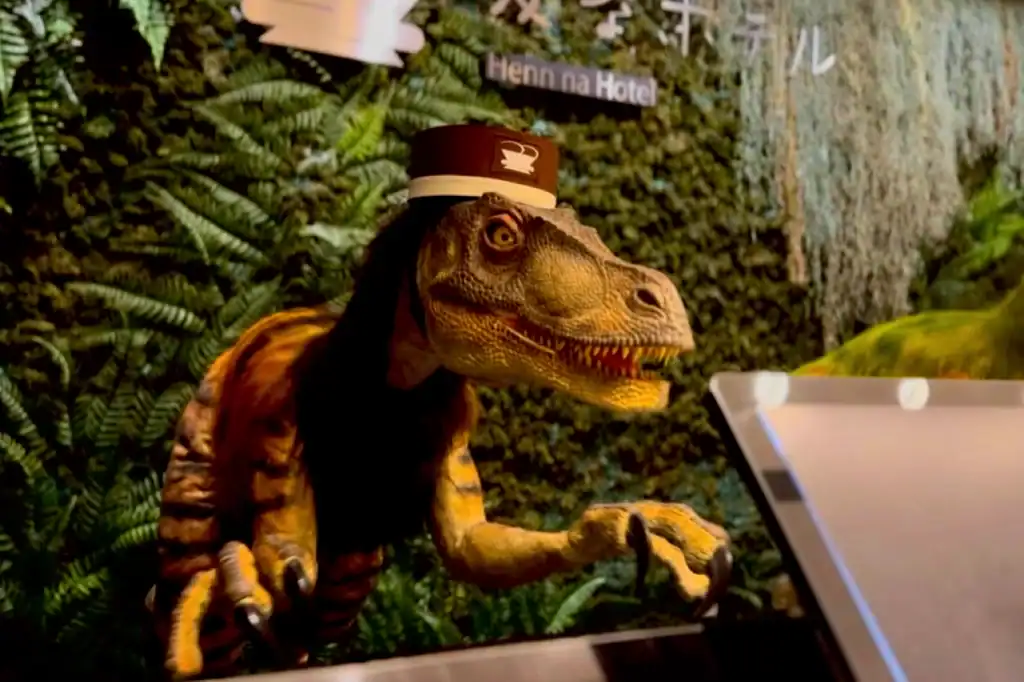
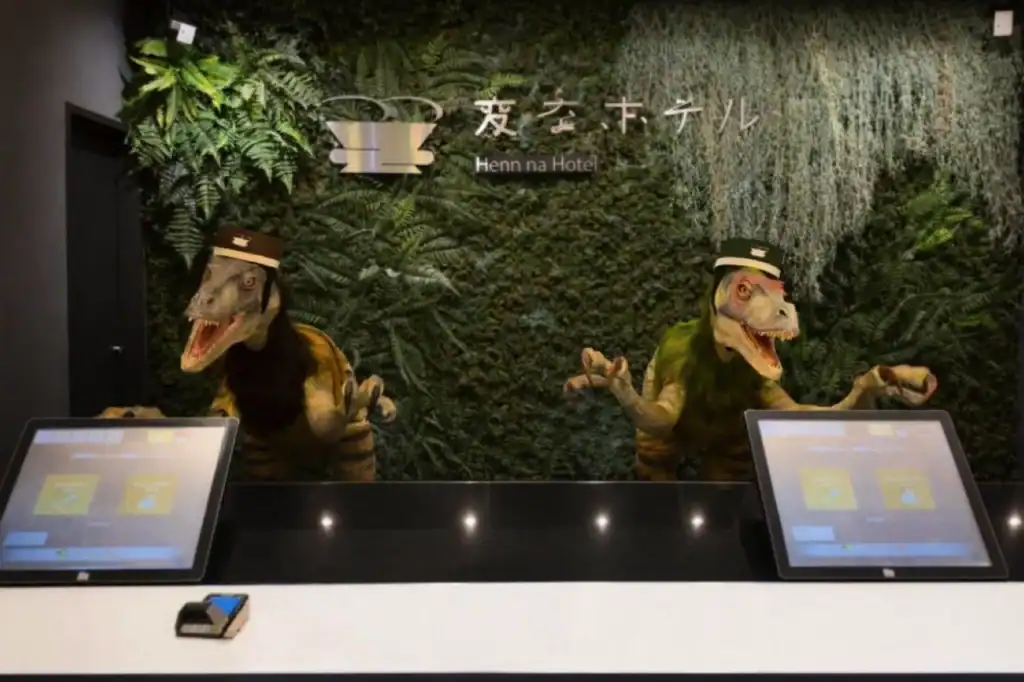
Walk into their Maihama Tokyo Bay location and you’re greeted by multilingual velociraptor receptionists wearing tiny bellboy caps.
They bow. They occasionally sneeze. They speak Japanese, English, Mandarin and Korean. Behind them: a giant T-Rex model. In the lobby aquarium: robotic carp called ‘Airo’ that you can actually fish for. Swimming alongside them: fossil fish robots with articulated bodies and flickering LED lights powered by batteries.
The hotel chain started with 82 robots across six types in 2015. As locations expanded, the workforce ballooned to nearly 300 robots spanning 30 different varieties.
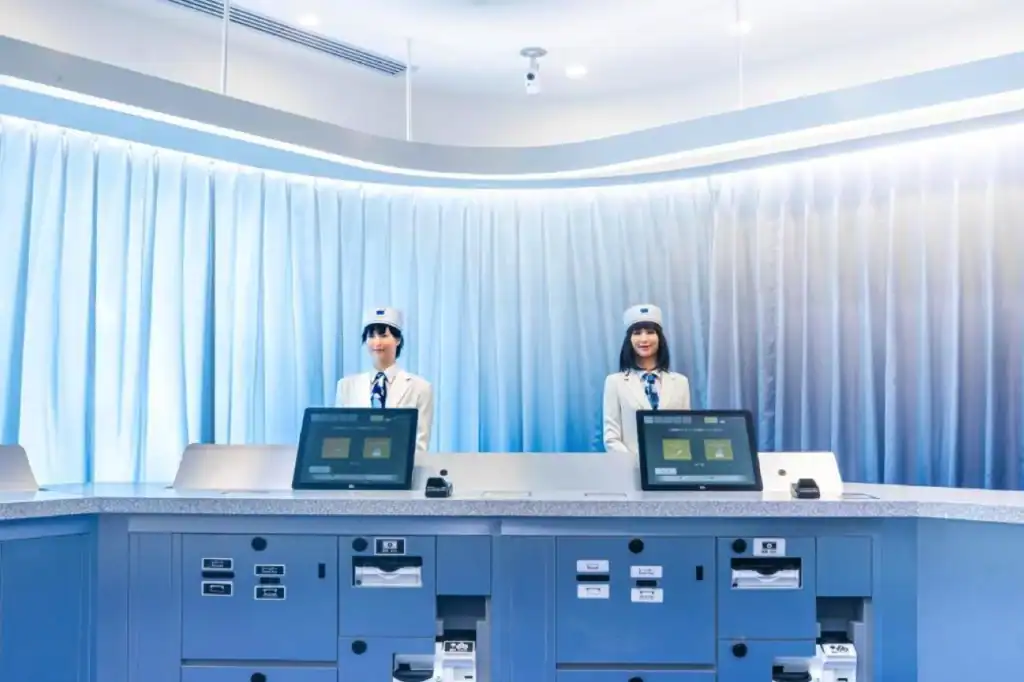
Each location deployed different mechanical staff. Maihama got dinosaurs for Disney visitors. Tokyo Akasaka got humanoid androids. Some branches featured ‘Unibo’ – a concierge robot with extensive local knowledge about nearby restaurants and shops.
When Robots Create More Work Than They Eliminate
The in-room assistant was called Tapia in some locations, Churi in others and consisted of voice-activated robots meant to control your TV, air conditioning and lights.
Fatal flaw though: they interpreted snoring as voice commands. Guests reported being woken repeatedly throughout the night with “Sorry, I couldn’t catch that.”
The velociraptor receptionists had a different problem. Their tiny T-Rex arms – an authentic anatomical detail, couldn’t physically scan passports. Human staff had to intervene constantly.
The luggage-porter robots could only handle one job. Turns out, they couldn’t do that properly either. The dancing dog robots in the lobby didn’t dance. The cloakroom robot malfunctioned. The cleaning robots disturbed Japanese guests who expected human attention to detail.
By 2019, the 243-robot workforce was slashed by more than half. The survivors? Only the ones that could actually complete their assigned tasks without human intervention.
The Operational Reality No One Expected
On paper, the efficiency looked insane. The original Nagasaki location, a 144-room hotel, dropped from 40 human employees to just 7. That’s an 82.5% reduction in labour costs.
Reality delivered something else: robots breaking down constantly, creating maintenance work that exceeded the labour costs they’d eliminated! Guests waiting 20+ minutes at reception whilst credit cards failed to process and dinosaurs summoned human backup.
Manager Yukio Nagai admitted they’d fundamentally miscalculated: “We haven’t quite figured out when exactly guests want to be served by people and when it’s okay to be served by robots.” This confession came after expanding to eight Japanese locations plus international branches – all running the same flawed model.
The Hybrid Solution That Actually Delivers
Most companies would abandon this disaster. Henn-na Hotel recalibrated.
Today, over 20 locations operate globally, including branches in Seoul and even New York. The pandemic validated their contactless model. Budget-conscious travellers appreciated the competitive rates and the strangeness became the selling point.
The surviving robots handle specific, repeatable tasks: facial recognition for keyless entry, basic multilingual greetings, voice-controlled room features when guests deliberately activate them.
Human staff manage everything else requiring judgment, local expertise, or physical dexterity. The LG Styler clothes-cleaning machines work. The radiant panel heating cuts energy costs. The robot fossil fish still swim in their aquarium because they’re decoration, not labour.
The chain proved something valuable: automation works when robots do robot-appropriate jobs whilst humans handle human-appropriate ones…
The rates stay competitive because the operational model, now a finely tuned balance and after mass robot redundancies.
Book your room at Henn-na Hotel today, where 150 robots got sacked for incompetence and the survivors earned their keep…!