

Bizarre But True! Between August and November 1888, someone stalked the narrow streets of Whitechapel, London, murdering at least five women with escalating brutality…
The victims – Mary Ann Nichols, Annie Chapman, Elizabeth Stride, Catherine Eddowes and Mary Jane Kelly, were all working class women living on society’s edge. They died within a one-mile radius of each other, their throats slashed, bodies mutilated with what appeared to be surgical precision.
The killer was never caught…
Scotland Yard interrogated hundreds of suspects. The press whipped the public into hysteria. Vigilante groups roamed the streets. Police received hundreds of letters supposedly from the murderer himself – including the infamous “Dear Boss” letter signed “Jack the Ripper,” which gave the unknown killer his enduring nickname.
Then, as suddenly as the murders began, they stopped.
Mary Jane Kelly’s death on 9 November 1888 was the last confirmed Ripper victim – the most savage of all, mutilated beyond recognition in her own room. The case went cold. Theories multiplied. Suspects ranged from Polish immigrants to members of the Royal Family. Over a century passed with no resolution.
Until a silk shawl supposedly changed everything.
The case that terrorised Victorian London for over a century supposedly closed and finally solved in 2019. A DNA analysis published in the Journal of Forensic Sciences claimed to identify Jack the Ripper as Aaron Kosminski, a Polish barber who died in a mental asylum in 1919.
The problem? The evidence unravels faster than the Ripper’s victims…
The Silk Shawl That Shouldn’t Exist
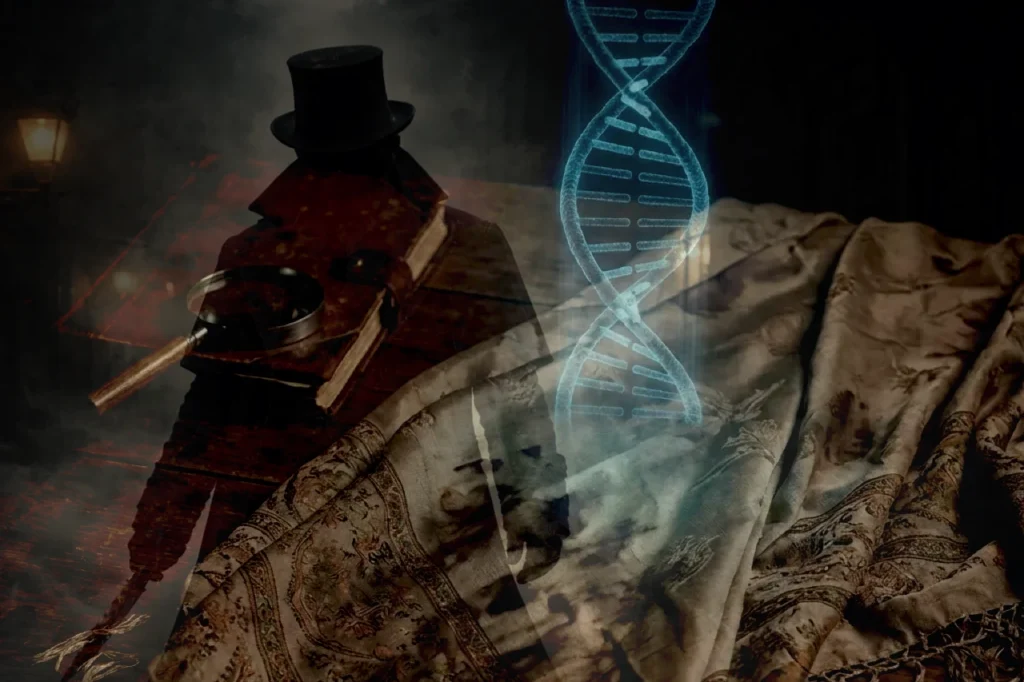
At the heart of this “solution” sits a silk shawl allegedly found next to Catherine Eddowes’ mutilated body in Mitre Square on 30 September 1888. The fabric supposedly contains blood and semen – the latter believed to be from the killer.
The story goes that a police officer named Amos Simpson took the shawl from the crime scene and gave it to his wife as a present. There really was a policeman named Amos Simpson. But he belonged to N Division – a police division some distance from H Division where the murders occurred. Simpson shouldn’t have been anywhere near Mitre Square that night.
More damning: no contemporary police reports mention a shawl at the scene. This would have been major evidence. You don’t just forget to document a blood-soaked piece of fabric next to a disembowelled corpse…
The Double Event That Defined Horror
To understand why this shawl matters though, you need to grasp what happened that night.
Eddowes was the second woman murdered within an hour. Elizabeth Stride died first, her throat cut but body otherwise untouched. Less than a mile away and roughly 45 minutes later, the killer found Eddowes.
This time he had more time…
Her throat was severed to the bone. Her face was mutilated. Her uterus and left kidney were removed with what doctors described as anatomical knowledge. The brutality escalated from other victims – Chapman had her uterus taken, but Eddowes’ injuries were more extensive.
Before her death, Eddowes told the superintendent at a casual ward that she’d come back to London to earn the reward for catching the Whitechapel murderer. She said: “I think I know him.” The superintendent warned her to be careful. She replied: “Oh, no fear of that.”
Hours later, she was dead.
The DNA That Proves Nothing
Fast forward 131 years. Businessman Russell Edwards bought the shawl at auction and commissioned forensic analysis. The results showed a 99.2% match on the first DNA strand and a perfect 100% match on the second.
Sounds conclusive? It isn’t.
The DNA extracted was mitochondrial – passed down through the maternal line. Mitochondrial DNA can’t positively identify a suspect. It can only rule one out. Thousands of people in 1888 London could have shared the same mitochondrial profile as Kosminski.
You can’t convict someone based on evidence that matches thousands of others.
Then there’s the contamination problem. Two of Eddowes’ descendants spent three days in the same room as the shawl in 2007. The fabric has been openly handled by loads of people over 130 years – touched, breathed on, potentially contaminated by anyone who came near it.
The scientific controversy erupted immediately. Researchers from Innsbruck Medical University tore apart the methodology. The Journal of Forensic Sciences issued an expression of concern – academic code for “we’re not sure this holds up.”
Key genetic details weren’t included in the paper. Instead, the authors used coloured boxes in a graphic. That’s not how you present forensic evidence that supposedly solves the most famous murder case in history.
But Who Was Aaron Kosminski?
The man allegedly identified worked as a hairdresser in Whitechapel. He emigrated from Congress Poland in the 1880s and lived in the East End during the murders.
In 1891, Kosminski threatened his sister with a knife. Authorities institutionalised him at Colney Hatch Lunatic Asylum, then transferred him to Leavesden Asylum. He died there in 1919 at age 53 from gangrene of the leg.
Two senior Metropolitan Police officers – Chief Inspector Donald Swanson and Assistant Commissioner Robert Anderson, named Kosminski as a prime suspect in their private notes. Swanson wrote that a witness identified Kosminski but refused to testify because both men were Jewish. The witness didn’t want to condemn another Jew to hanging.
But that’s circumstantial. Suspicion isn’t the same as proof.
The Legal Push That Won’t Happen
Russell Edwards hired a legal team to push for an inquest. Karen Miller, Eddowes’ great-great-great-granddaughter, supports the effort. She said: “Having the real person legally named in a court, which can consider all the evidence, would be a form of justice for the victims.”
The hope is that a court will legally tie Kosminski to the murder.
It won’t happen.The evidence just doesn’t meet the threshold. The shawl’s provenance is questionable. The DNA is mitochondrial and contaminated. No contemporary records support the shawl’s existence at the crime scene. You can’t build a legal case on a piece of fabric that might not have been there in the first place.
See The Locations For Yourself…
The Ripper case remains unsolved because the evidence keeps disintegrating under scrutiny.
But the streets where it happened still exist…
Mitre Square looks different now, but you can stand where Eddowes died. You can walk the route between the two murder sites from that night. You can see how close the killer came to being caught – how narrow the window was between Stride’s murder and Eddowes’ death.
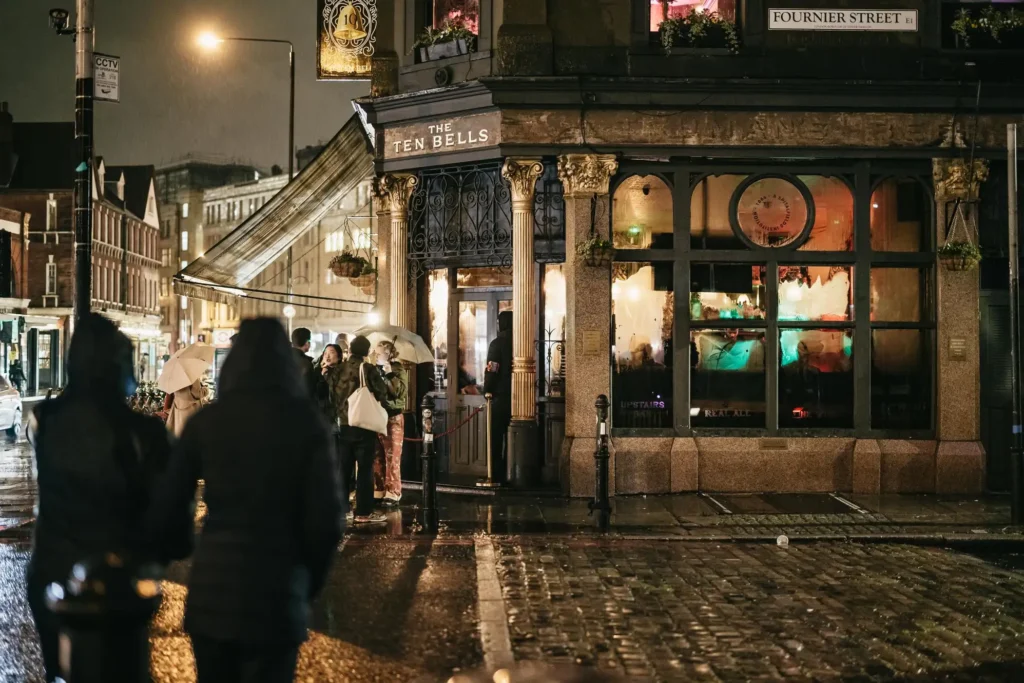
The Original Jack the Ripper Walking Tour takes you through the actual locations where five women were murdered in autumn 1888.
The tour runs nightly through Whitechapel and the City of London. Guides use contemporary police reports, witness statements and coroner’s inquests – the actual documentary evidence that still exists. You’ll see where the bodies were found, where the witnesses lived and where the investigation collapsed under the weight of its own failures.
Book directly below and you’ll be walking the same cobblestones the Ripper used to disappear into the fog…