


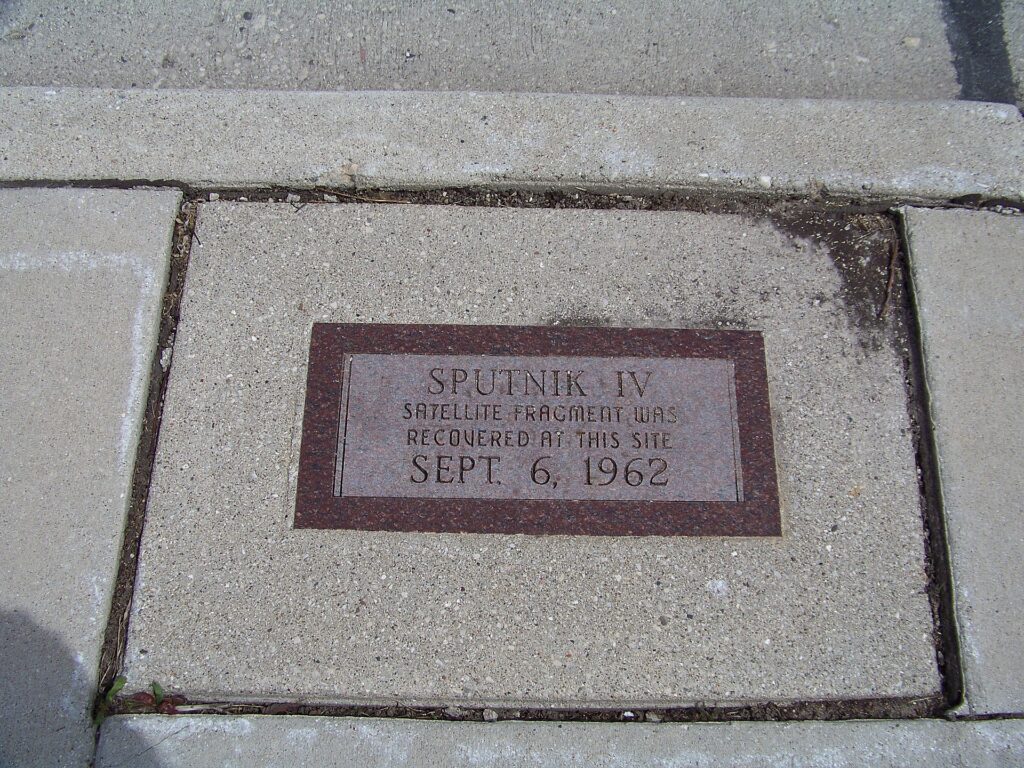
Bizarre But True! A 20-pound chunk of the Soviet Union smashed into North 8th Street in Manitowoc, Wisconsin on 6 September 1962…
Two police officers found it in the middle of the road. They looked at it. They walked away. When they came back, the thing was still there, smoking, too hot to touch. So they kicked it aside and left it in the gutter for seven hours.
That’s how casually America handled the first documented case of space debris hitting US soil…
The Metal That Fell From Orbit
The object was part of Sputnik IV, a five-ton Soviet satellite that’d been circling Earth since 1960. When it finally gave up and plummeted back through the atmosphere, most of it burnt up.
But this particular chunk survived re-entry, travelled thousands of miles and landed in the street of a small Wisconsin town. A smaller piece went through the roof of a church a few hundred feet away. That church filed what was likely the first insurance claim for space debris damage in history.
The whole thing was so mundane that the officers didn’t even think to secure the scene immediately. Just another day in Manitowoc…?!
When Russia Won The Sky
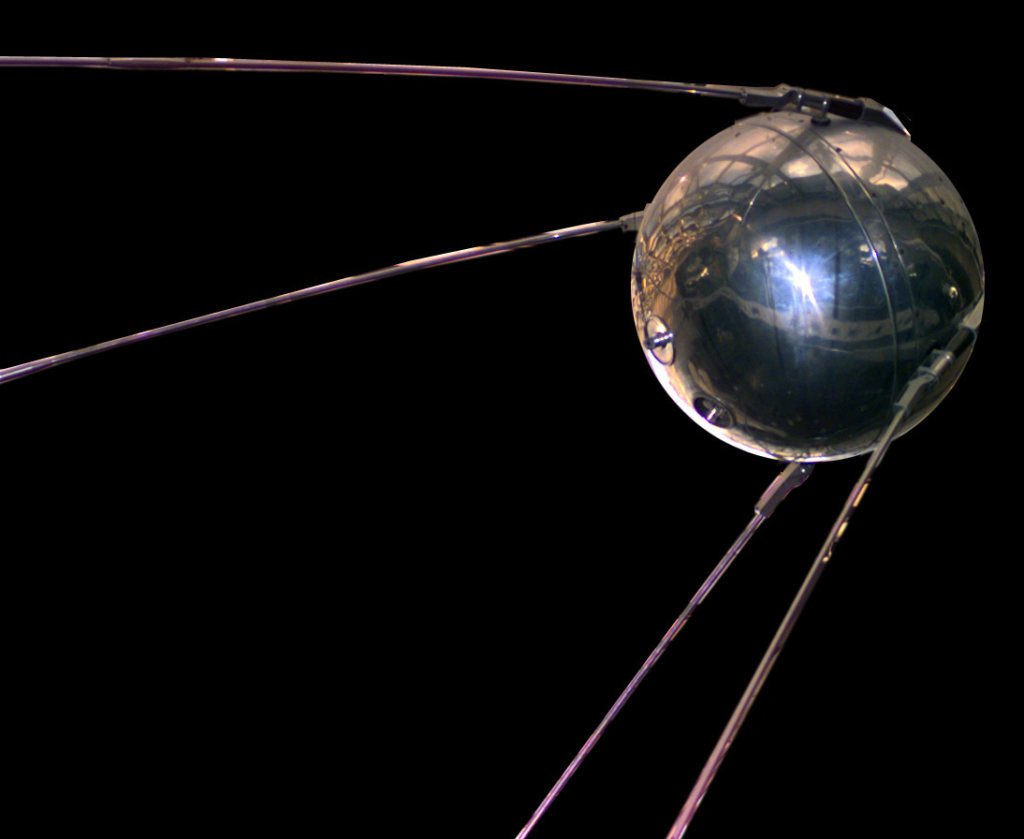
Five years earlier, on 5 October 1957, the Soviet Union launched the original Sputnik into orbit. The reaction in America was instant hysteria.
The satellite was silver, about the size of a beach ball, and weighed 184 pounds. It couldn’t do anything except orbit Earth and transmit radio blips. But the psychological impact was massive.
The NBC announcer that night said: “Listen now, for the sound that forevermore separates the old from the new.” Within weeks, Americans were dividing time into “pre-Sputnik” and “post-Sputnik.” The Space Age had arrived and America was losing.
The Panic That Bought A Generation
The New York Times mentioned Sputnik in 279 articles between 6 October and 31 October 1957. That’s more than 11 articles per day.
The idea of a communist satellite passing over America seven times a day, visible in the night sky, sending signals back to Moscow shattered the national mood. Writer Arthur C. Clarke said the day Sputnik orbited Earth, the United States became a second-rate power.
But here’s the bizarre bit: polling data showed that 40% of Americans dismissed it without serious thought. Eighty percent believed the US was “at least even” in the space race. Most people weren’t actually panicking.
The hysteria was manufactured.
Politicians, particularly John F. Kennedy during his campaign, amplified the perceived Soviet victory to gain electoral advantage. They transformed public perception from mild interest into national crisis. And it worked…
The Money Avalanche
Astronomer John Jefferies, working at the High Altitude Observatory in 1957, recalled what happened the week after Sputnik launched: “We were digging ourselves out of this avalanche of money that suddenly descended.”
Congress increased the National Science Foundation budget for 1959 to $134 million – nearly $100 million higher than the previous year. By 1968, the NSF budget stood at nearly $500 million.
The National Defense Education Act funnelled loans to students. In 1960, there were 3.6 million students in college. By 1970, there were 7.5 million. Thousands of them got degrees only because Sputnik scared Congress into opening the wallet.
The Diplomatic Shuffle
After the Wisconsin crash, NASA examined the debris for nine days. Once they confirmed it was just a hunk of metal, they offered most of it back to the Soviets.
The Russians huffed, puffed, and finally accepted – carrying it away in a box.
But not before NASA made two replicas. Neither Wisconsin’s Democratic senator nor its Republican representatives wanted them. Both replicas ended up back in Manitowoc, even though the town only wanted one.
What A Beach Ball Did To A Superpower
Sputnik didn’t carry any weapons. It didn’t spy. It didn’t threaten anyone. It just beeped. But that beep rewired American education, reshaped federal spending priorities and launched the space race that eventually put humans on the Moon.
The panic wasn’t about the satellite. It was about what people were told the satellite meant.
(NB: Cover Image is an artist’s impression!)