
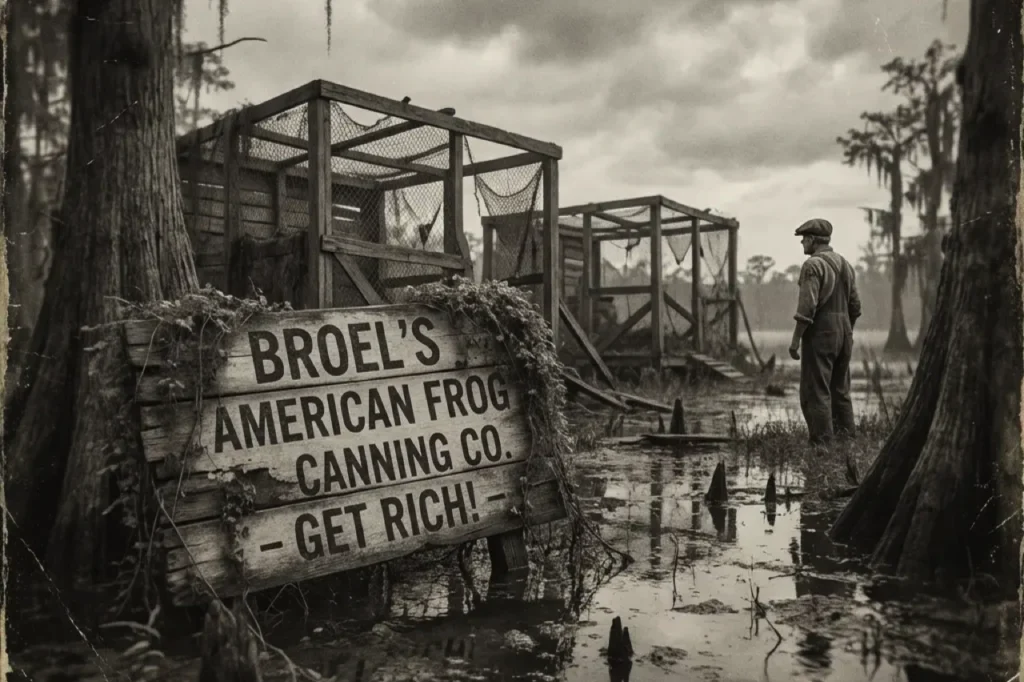

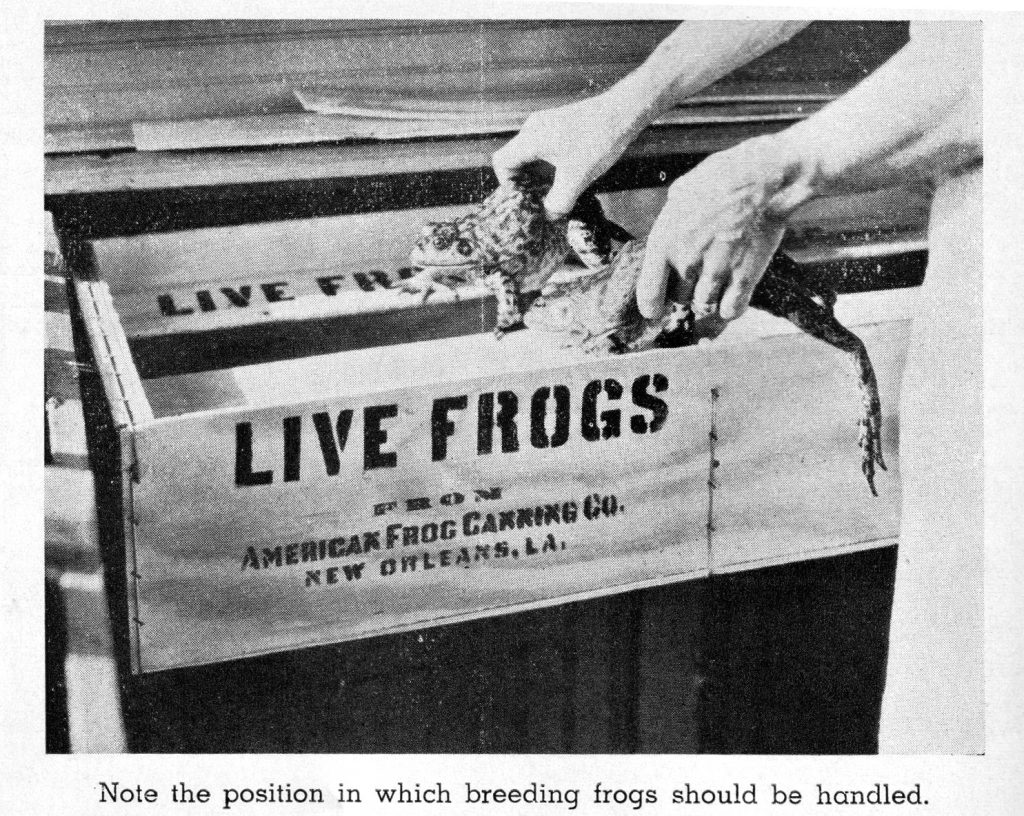
In the depths of the Great Depression, a man named Albert Broel sold Americans a dream wrapped in slime. The pitch was simple. Buy breeding frogs from his American Frog Canning Company. Build some ponds. Wait for nature to do its thing. Then harvest the legs and watch the money roll in…
Thousands of desperate farmers bought in.
The mathematics Broel presented were staggering. According to promotional materials, he claimed farmers could make “$360 billion in one decade” – a figure so absurd he later denied ever saying it, stating “I assume it is needless to tell you that I made no such statement.”
But the cheques had already cleared…
The Man Behind The Scheme
Broel wasn’t exactly a stranger to questionable ventures.
Before frogs, he’d operated as a naprapath, a sort of alternative medicine practitioner, until he got caught operating without proper licensing. He’d run a personal ads service for wealthy singles that allegedly aided serial killer Harry Powers, though supposedly without Broel’s knowledge.
He’d even staged his own kidnapping for reasons nobody quite understood. Frog farming was just his latest pivot…
And it worked brilliantly. In just four months, Broel pocketed $15,000 – nearly $336,000 in today’s money, selling instructional brochures and breeding stock to aspiring amphibian entrepreneurs. The structure was a textbook pyramid scheme. Broel made more money selling the idea of frog farming than from actual frog production itself.
But Reality Bites (Or Jumps) Back
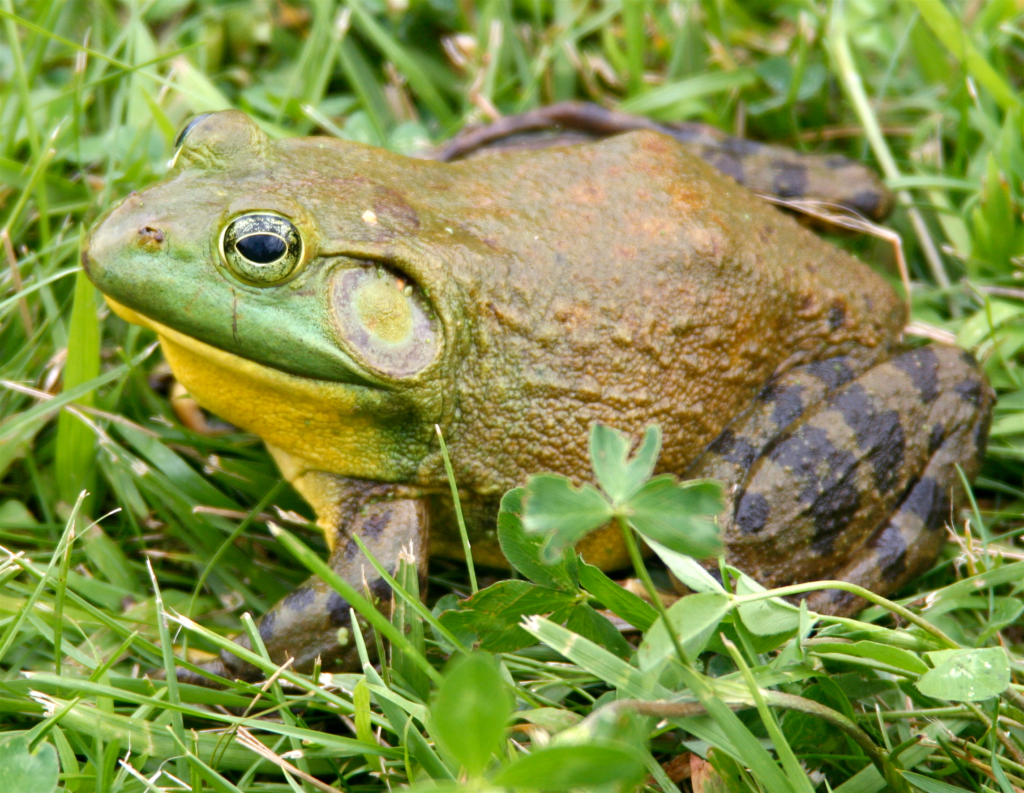
The farmers who bought in quickly discovered the brutal mathematics of bullfrog biology.
Each frog needed 1.15 pounds of live food to reach a marketable weight of just 0.4 pounds. Each adult required roughly 20 feet of shoreline to hunt effectively. And the wait time? Three years for a frog to reach adulthood.
Chickens take nine weeks…
The mortality rates were catastrophic. Frogs are susceptible to fungal diseases that can wipe out thousands in a single season. Modern outbreaks show losses of 10% on day one, climbing to over 90% by day three or four. Oh, and adult frogs are cannibalistic. They’ll happily eat their own tadpoles if you don’t separate them into different ponds.
Even Broel couldn’t make it work. The sign outside his factory read “We buy frogs!” because he relied on wild frog hunters wading through Louisiana swamps, where catching 100 frogs in a few hours was actually possible.
The farms? They were failing spectacularly.
The Government Hops In..!
By 1933, the U.S. Department of Agriculture had seen enough.
They released a bulletin that demolished the entire premise: “Within the past fifteen years the bureau has received thousands of inquiries concerning frog raising, but to the present time it has heard of only about three persons or institutions claiming any degree of success.”
Three. Out of thousands.
The U.S. Postal Service indicted Broel for mail fraud in the mid-1930s. When they arrested him, newspapers ran gleeful headlines: “Frog Breeders Leap with Cash.” Reports noted that Broel and a partner had “hopped to New Orleans” after cashing $15,000 worth of cheques for instructional materials.
The puns were inevitable. But the financial damage was real.
What The Failure Reveals…
The frog farming collapse wasn’t just about one con artist and some gullible farmers though. It exposed something deeper about how people evaluate opportunity during desperation. The Depression created a perfect environment for schemes that promised quick returns with minimal expertise. Farming was familiar. Frogs seemed simple. The combination felt plausible.
But plausibility isn’t viability.
The economic fundamentals were broken from the start. Setup costs were high. Maintenance was complex. Disease management required expertise nobody had. The three-year growth cycle meant farmers needed capital to survive whilst waiting for their first harvest.
And the market price for frog legs? Ironically, not nearly high enough to justify any of it.
The farms that survived did so by abandoning Broel’s model entirely. They supplemented with wild-caught frogs, diversified into other products, or simply cut their losses and moved on.
The 1930s frog farming boom lasted barely a decade. The ponds were drained. The breeding stock died or escaped. And thousands of farmers learned an expensive lesson about the difference between a sales pitch and a sustainable business model. Broel moved on to his next venture. The frogs went back to the swamps.
But somewhere in Louisiana, you can probably still find the ruins of a frog farm – overgrown, abandoned and serving as a monument to the gap between what sounds good and what actually works. Take note during these hard financial times..!