

Over 550,000 people visit the Paris catacombs every year. They queue. They pay. They descend into tunnels holding the remains of more than 6 million people. This isn’t modern day grave robbing either. It’s tourism..!
From bone-decorated chapels in Central Europe to mummified bodies dressed in their Sunday best, here’s a list of attractions that turn death into spectacle. The deceased become architecture and we became spectators!
Here’s seven sites where human remains are the main attraction…
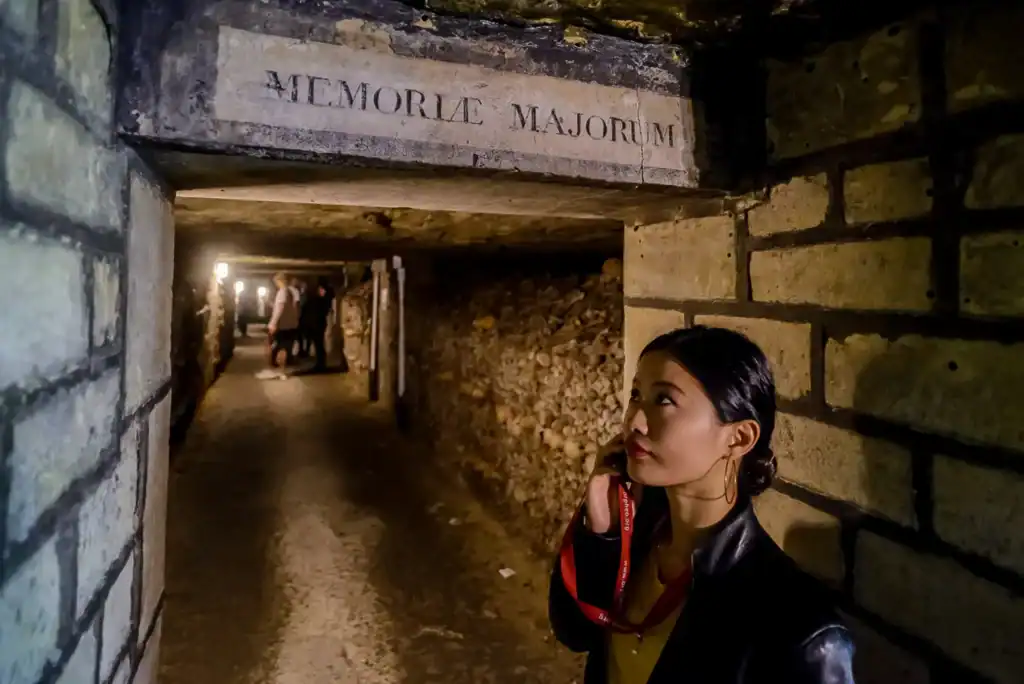
1. The Catacombs Of Paris, France
The scale: Over 6 million people. 300 kilometres of tunnels beneath the city.
In 1780, the Cemetery of the Innocents became so overcrowded that decomposing bodies began spilling into nearby cellars. On 31 May that year, a basement wall in a property adjoining the cemetery collapsed under the weight of the mass grave behind it.
The solution was industrial-scale relocation.
Between 1785 and 1788, remains were transported by ox-drawn carts to abandoned quarry shafts. They were dropped down and left piled where they fell. No ceremony. No reverence.
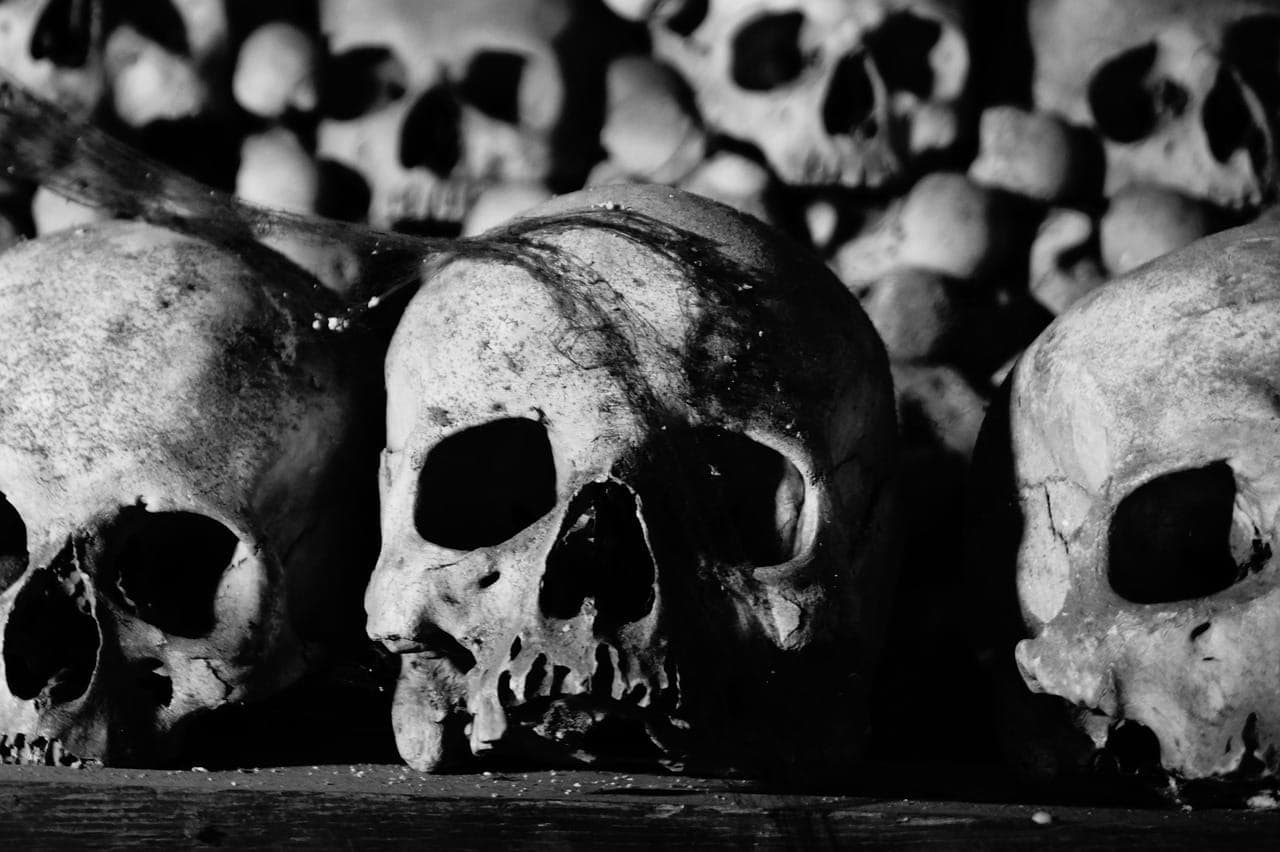
Then Napoleon decided the bones should be organised into a necropolis resembling ancient Rome. So from 1810 to 1814, Inspector Héricart de Thury arranged the bones into intricate structures. Skulls stacked in geometric patterns. Femurs forming archways.
Sadly, theft remains an ongoing problem. Skulls, small bones and teeth are all found on some visitors leaving the catacombs. Picture memories clearly aren’t enough for some people.
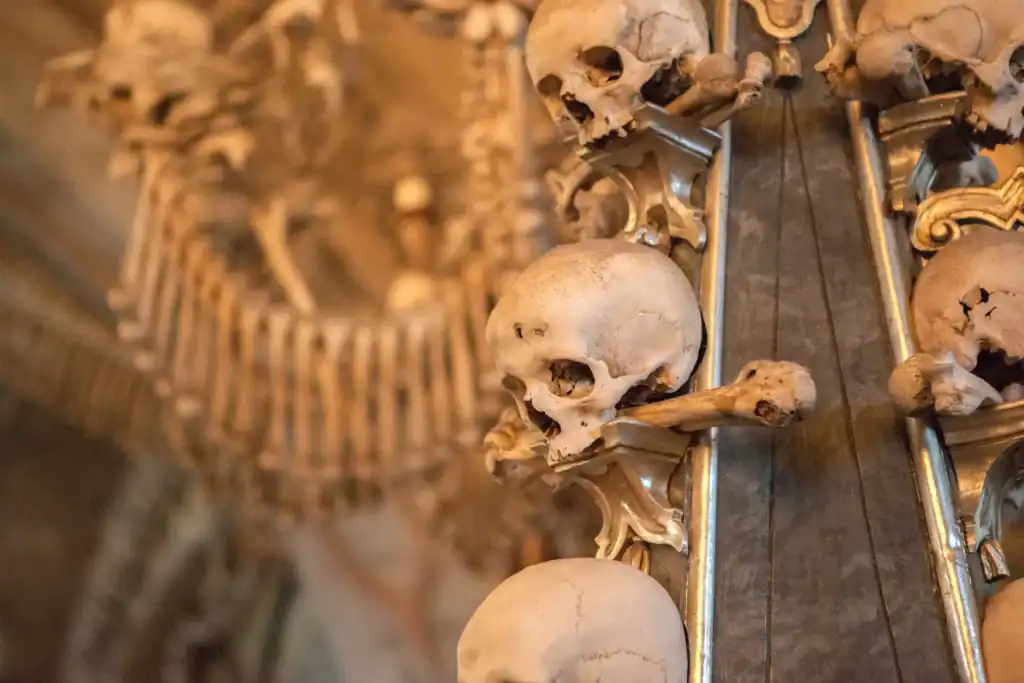
2. Sedlec Ossuary, Czech Republic
The scale: Between 40,000 and 70,000 corpses.
The Sedlec Ossuary, sometimes known as ‘The Church of Bones’, contains skeletons that have been artistically arranged to form decorations and furnishings for the chapel.
A chandelier hangs from the centre of the nave containing at least one of every bone in the human body. Garlands of skulls drape the vault.
The creation story adds another layer. An abbot returned from the Holy Land with earth removed from Golgotha and sprinkled it over the abbey cemetery. Word spread and the cemetery in Sedlec became a desirable burial site throughout Central Europe.
In 1870, František Rint—a woodcarver—was employed by the Schwarzenberg family to put the bone heaps into order. His job title was essentially interior decorator. His medium was human remains.
Photography inside the ossuary has since been banned out of respect for the dead. A belated acknowledgement of boundaries after centuries of display. But visitors are still welcome to visit and see the unique designs for themselves.
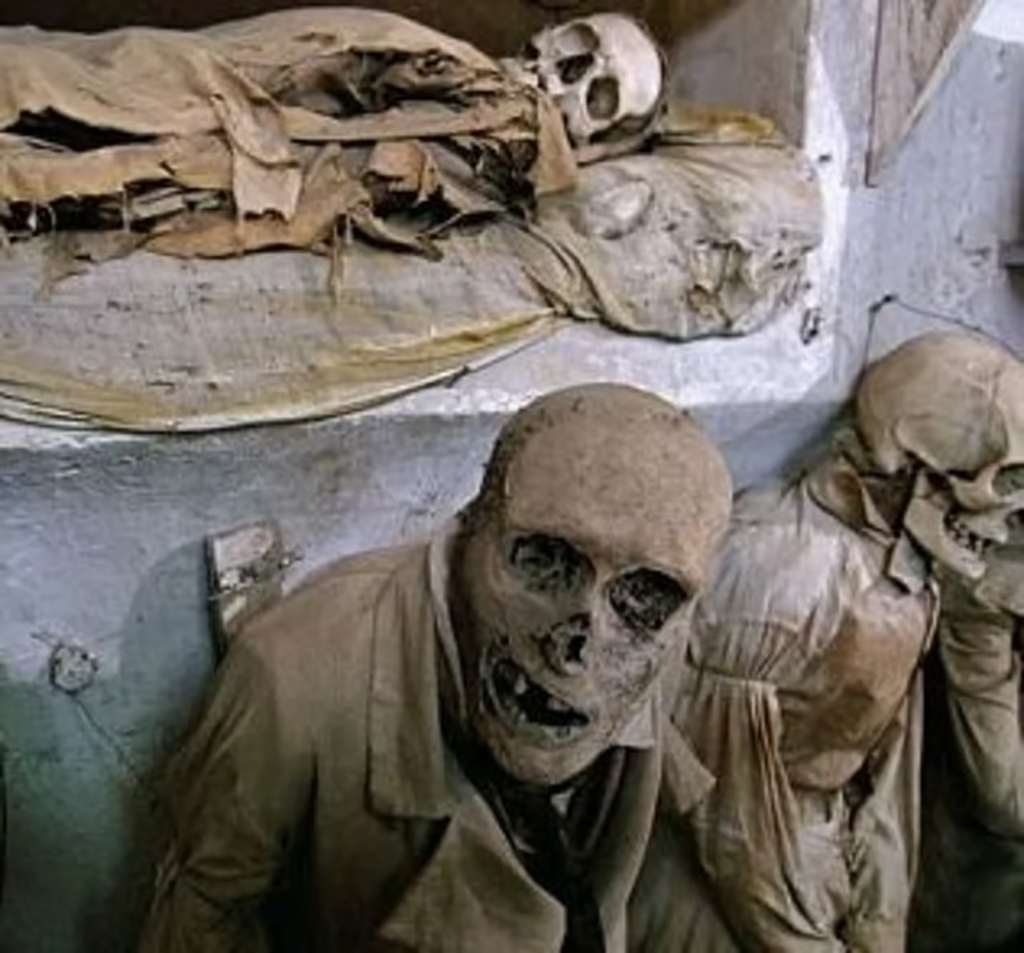
3. Capuchin Catacombs of Palermo, Italy
The scale: Approximately 8,000 mummified bodies. Each one dressed in the clothing they wore in life.
The Capuchin Catacombs of Palermo display corpses pinned to walls. Sitting on benches. Tucked into open coffins. Nearly 8,000 corpses in their Sunday best.
The preservation method reveals deliberate strangeness. Bodies were laid on terracotta pipes designed to drain body fluids and promote spontaneous desiccation. Rooms were sealed for about a year. Then corpses were exposed to air, washed with vinegar, and dressed. It became a status symbol to be entombed in the Capuchin catacombs.
Local luminaries requested in their wills to be preserved in certain clothes. Some even specified having their clothes changed at regular intervals.
The site’s most famous resident is Rosalia Lombardo. She was nearly two years old when she died. Her body remains remarkably intact, preserved with a procedure performed by Professor Alfredo Salafia.
The embalming procedure: formalin to kill bacteria, alcohol to dry the body, glycerin to keep it from overdrying, salicylic acid to kill fungi, and zinc salts to give rigidity.
4. The Mütter Museum, Philadelphia, USA
What you’ll see: Medical specimens, skeletal remains and preserved organs.
This medical museum houses one of the most extensive collections of anatomical specimens in the world. Human skulls displaying various pathologies. A wall of preserved organs in jars. The skeleton of the “soap lady”—a woman whose body turned into adipocere after burial.
The museum operates under the premise that these remains serve educational purposes. That viewing deformities and diseases advances medical understanding.
But the question sits uncomfortably: when does education become spectacle?
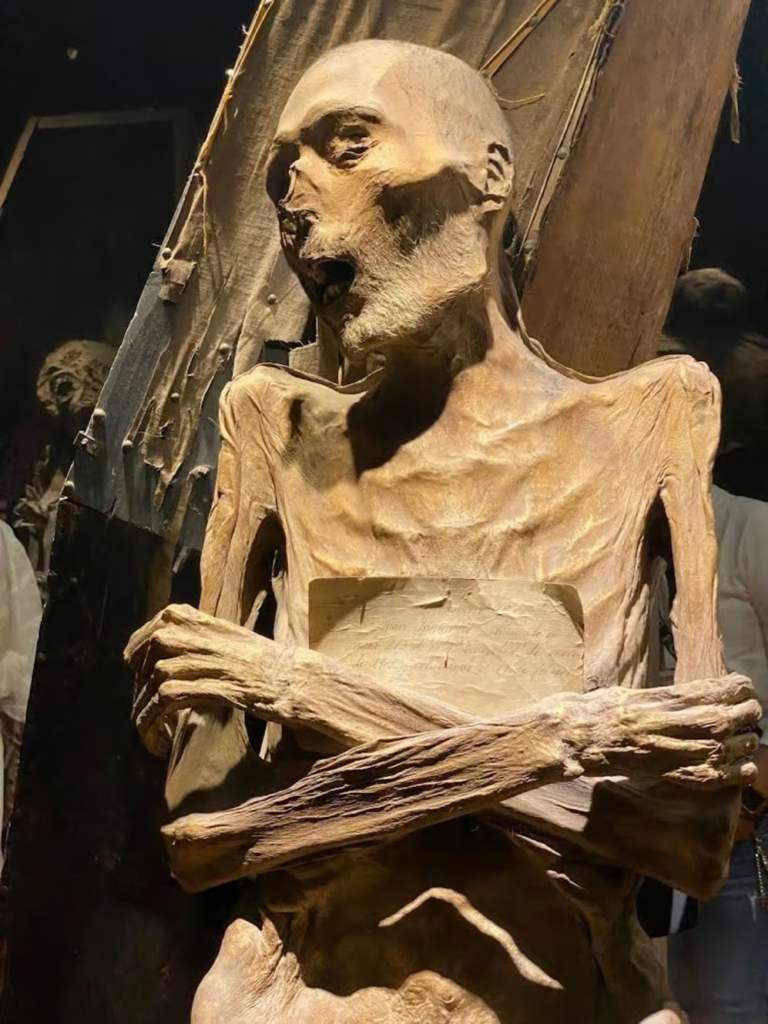
5. The Mummies Of Guanajuato, Mexico
The scale: Over 100 naturally mummified bodies on display.
These weren’t meant to be mummies. Between 1833 and the late 1950s, a local tax required families to pay to keep bodies interred. When families stopped paying, bodies were exhumed.
The dry climate and mineral-rich soil had naturally mummified the remains. Authorities displayed them and they became a tourist attraction. The expressions on the faces are what visitors remember. Mouths frozen open. Skin stretched across bone. Some still wearing remnants of burial clothes. Horror that requires no enhancement.
6. Skull Tower of Niš, Serbia
The scale: Originally 952 skulls embedded into a tower. Around 58 remain.
In 1809, Serbian revolutionaries fought Ottoman forces at the Battle of Čegar. When defeat became certain, Serbian commander Stevan Sinđelić fired into the gunpowder depot, killing himself and the advancing Ottomans.
The Ottoman commander ordered the heads of dead Serbian fighters be skinned, stuffed, and sent to Constantinople. The skulls were embedded into a tower as a warning. Serbia later built a chapel around the tower to protect it.
A monument to brutality that became a memorial.
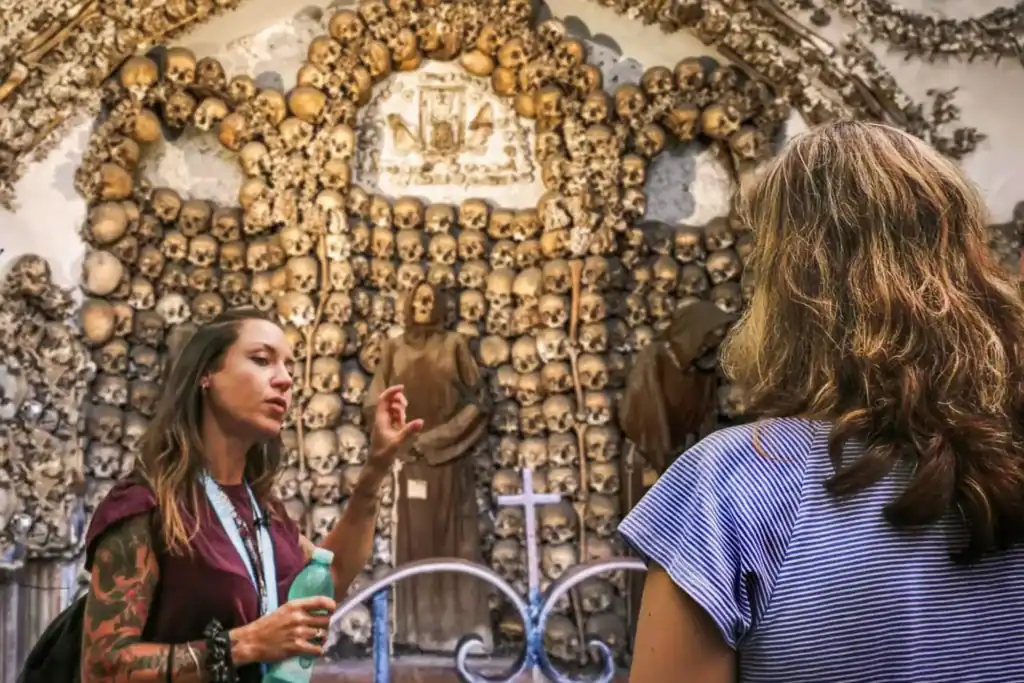
7. The Capuchin Crypt, Rome, Italy
The scale: Bones from approximately 3,700 Capuchin friars arranged into decorative displays.
Five chapels contain skeletal remains arranged into elaborate patterns. Vertebrae form flowers. Pelvic bones create hearts. Entire skeletons stand in alcoves wearing Capuchin robes. A plaque reads: “What you are now, we once were; what we are now, you shall be.”
The message is direct. Mortality applies universally. Whether that message requires decorating walls with fibulas remains debatable…