


Bizarre But True! There’s a sword stuck in stone in Italy. Not a replica. Not a tourist trap. An actual 12th-century blade wedged into solid rock on a hilltop in Tuscany and scientists have confirmed it’s the real thing…
This isn’t King Arthur. This is ‘San Galgano’ – a violent medieval knight who jammed his weapon into stone as a symbolic middle finger to his former life. The sword is still there. The chapel built around it is still standing, albeit as a ruin. And the mummified hands of the thief who tried to steal it are still on display…

The Science That Shut Down The Sceptics
In 2001, Luigi Garlaschelli from the University of Pavia analysed the metal composition and confirmed the sword dates to the 12th century. The composition of the metal and the style are compatible with the era of the legend and the upper piece and invisible lower one belong to one artefact.
When researchers removed the top half of the blade, the break line was a perfect fit. The bottom half remained embedded in the rock.
Ground-penetrating radar revealed something even stranger: a cavity measuring 2 by 1 metres beneath the sword, potentially containing the remainder of the blade – or possibly the body of San Galgano himself.
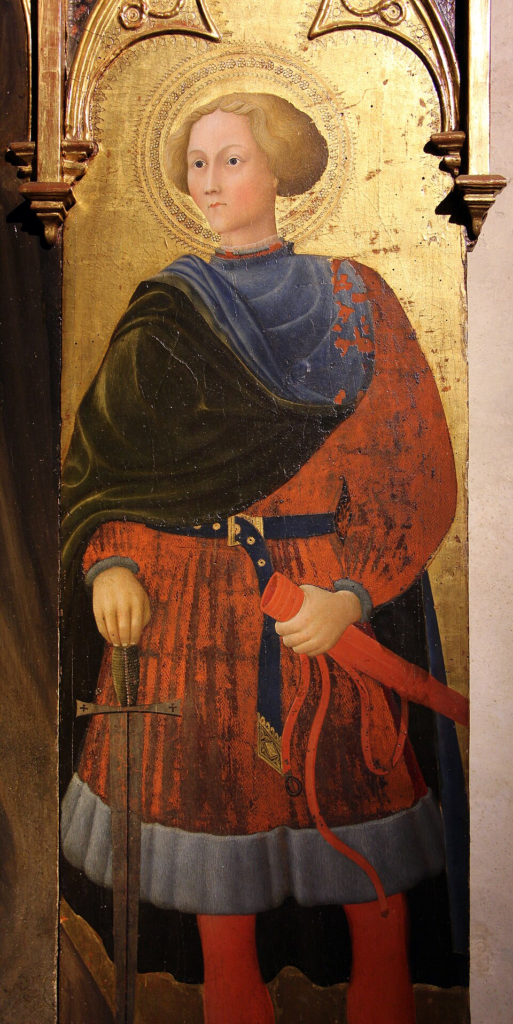
The Knight Who Rejected Violence
Historical accounts describe Galgano Guidotti as vain, violent and self-indulgent. He embodied the worst parts of medieval knighthood.
Around the age of 32, after a series of visions of the Archangel Michael, he experienced a spiritual awakening. In 1180, he climbed Montesiepi Hill and drove his sword into the stone, creating a cross he could pray before.
The sword slid into living rock. It’s been stuck there ever since.
San Galgano became the first saint whose canonisation was conducted through a formal process by the Roman Church. Much of his life is documented through the canonisation records from 1185, just a few years after his death.
The Mummified Warning…
On display at the chapel are also the mummified hands of a thief who tried to remove the sword!
Legend says wild wolves, loyal companions of the saint, sensed treacherous intent and attacked the would-be thief. Carbon-dating confirmed the hands date back to the 12th century.
Why only the hands survived is unexplained. They remain in the chapel as a haunting relic.
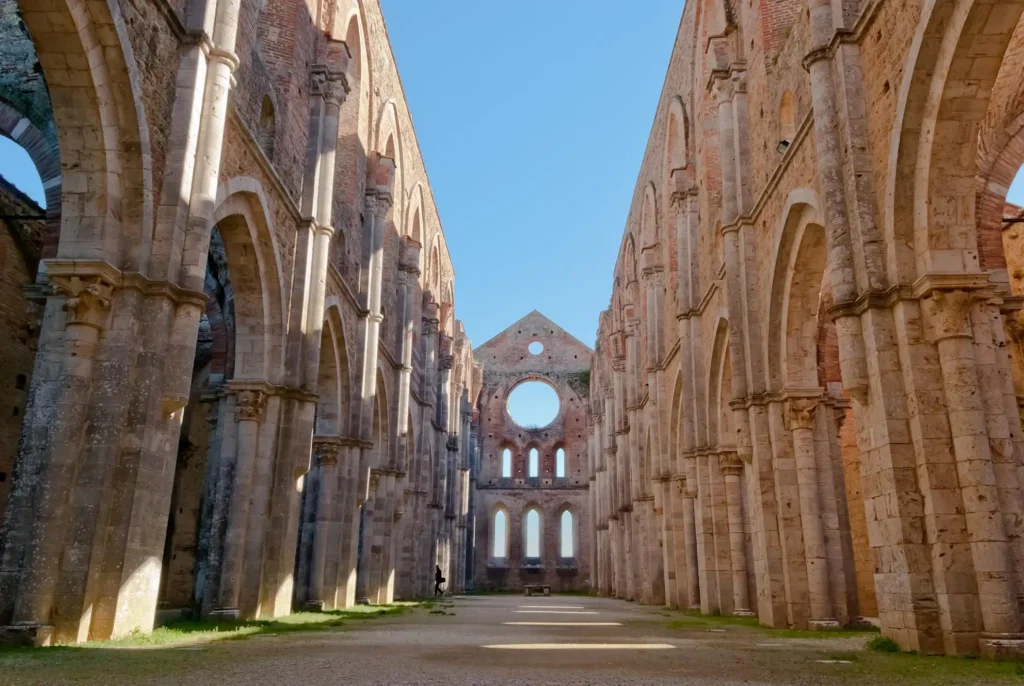
The Abbey That Collapsed
After flourishing in the 13th century, the abbey built in San Galgano’s honour began a slow deterioration. Abbots became more interested in revenues than spiritual leadership.
By the late 16th century, the roof had collapsed. In 1786, the bell tower fell, nearly destroying the adjacent buildings. A certain Giovanni Andrea Vitelli removed and sold the leading of the abbey in 1548.
The roofless abbey still stands today – a massive, open-air skeleton of Gothic architecture.
The Arthurian Connection
The Italian ‘sword in the stone’ is historically documented from 1180. The first stories in which Arthur’s figure is recognised date back more or less to the same period…
King Arthur appears in Geoffrey of Monmouth’s work from 1136, but the version of Arthur extracting the sword from the stone appears later in the French tale of Robert de Boron, between the end of the 12th and the beginning of the 13th century.
Many scholars hypothesise that Templar knights and medieval pilgrims brought the Tuscan story to France and England, where it transformed into the legend of Arthur.
The real sword came first. The legend followed.
The Physical Impossibility
You can visit the sword today at the Montesiepi Chapel in Chiusdino, Italy.
The blade remains embedded in stone. The hands of the thief remain mummified in the chapel. The cavity beneath the rock remains unexplored.
No one has explained how a medieval knight drove a sword through solid rock, but the science confirms the sword is real…
(Photo Credit: Wiki Commons / Alexmar983)