
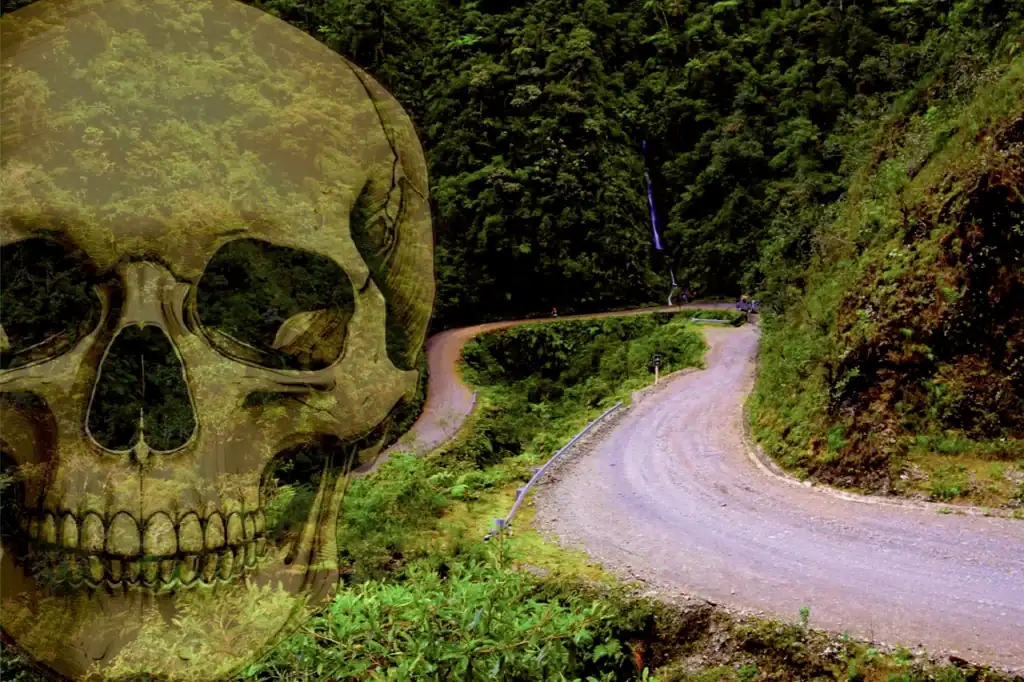

The North Yungas Road, also known locally as the ‘Death Road”, doesn’t mess about. This 69-kilometre stretch of Bolivian mountainside earned its nickname the hard way – through body counts that made international development banks sit up and officially declare it the world’s most dangerous road in 1995…
Not tourist marketing. Not local legend. An actual declaration from the Inter-American Development Bank after studying the carnage.
Between 200 and 300 people died here every year before the mid-1990s. In a single year, 25 vehicles plunged off its cliffs entirely. And the crosses marking crash sites multiply faster than you can count them.
Built By Prisoners…
The road’s horror story starts even at its construction…
During the 1930s Chaco War, Paraguayan prisoners carved this route into the Andes using picks, shovels and dynamite. No safety measures. No engineering standards. Just prisoners dying whilst building what would become their legacy – a road that kept killing long after they were gone.
The route plummets 3,600 metres from La Paz highlands to the Amazon rainforest.
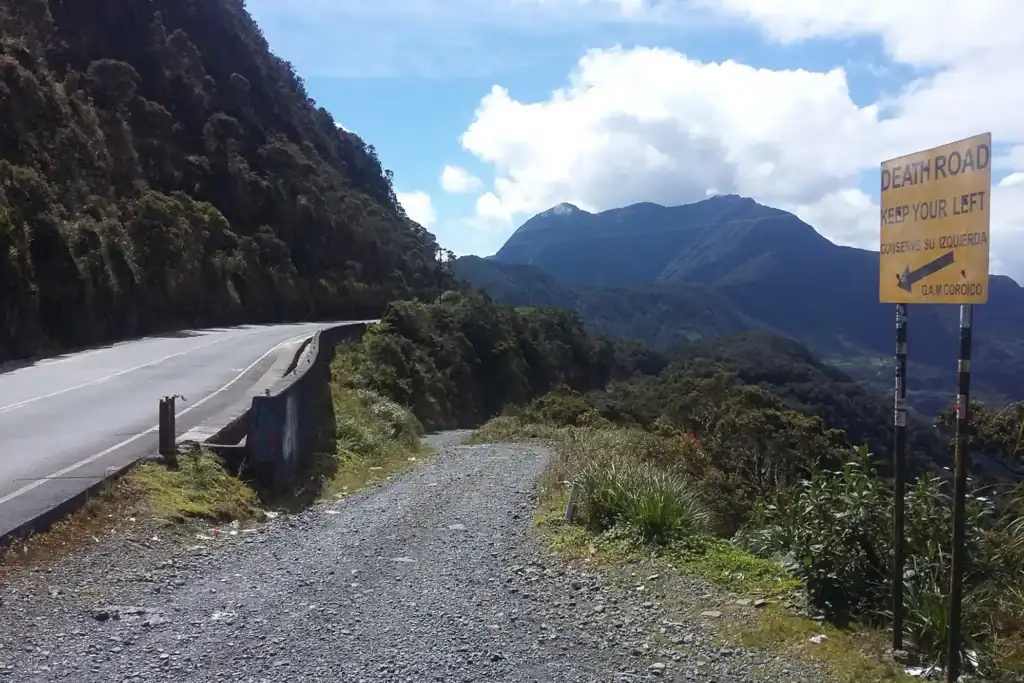
At its narrowest, the road measures 3.2 metres wide. That’s barely enough for one vehicle, yet it handled two-way traffic for decades. Sheer drops exceed 600 metres. No guardrails. Hairpin turns. Blind corners. Fog. Cascading waterfalls eroding the unpaved surface.
July 1983 proved exactly how deadly this combination becomes. A bus fell from the Yungas Road into a canyon. More than one hundred passengers died. Every single person aboard perished in one of Bolivia’s worst ever road accidents.
The Counter-Intuitive Survival Rule
Here’s where it gets properly bizarre.
Bolivia drives on the right everywhere in the country. Except here. The Yungas Road operates on left-hand traffic – the opposite of national law, because drivers need to position themselves closer to the cliff edge to see where their tyres are. Yes, you read that correctly.
Survival requires driving towards the drop. The logic holds: better to see the abyss than guess where it starts. This counter-intuitive rule saved lives by letting drivers gauge the distance between their vehicle and oblivion.
When two vehicles meet on a single-lane mountain track with no room to pass, someone reverses. The vehicle travelling uphill yields because they’re positioned on the cliff side with better visibility. The downhill vehicle clings to the mountain wall, praying their wheels hold.
When Thrill-Seekers Replaced Commuters
A new road opened in 2006. Locals abandoned Death Road immediately.
Sensible people chose the safer route with actual guardrails and pavement. But something unexpected happened – the empty road attracted a different population entirely.
Mountain bikers.
Around 25,000 cyclists annually now test themselves on the route that killed hundreds. Tour operators offer guided descents with bikes, safety gear and experienced guides who know every lethal turn.
At least 18 cyclists have died since mountain biking tours began in 1998.
The danger didn’t vanish when traffic decreased. Loose gravel still shifts under tyres. Hairpin turns still require split-second decisions. The edge still drops 600 metres into nothing. The road’s fundamental lethality remains unchanged – only the volume of potential victims decreased.
The Descent Into Extremity
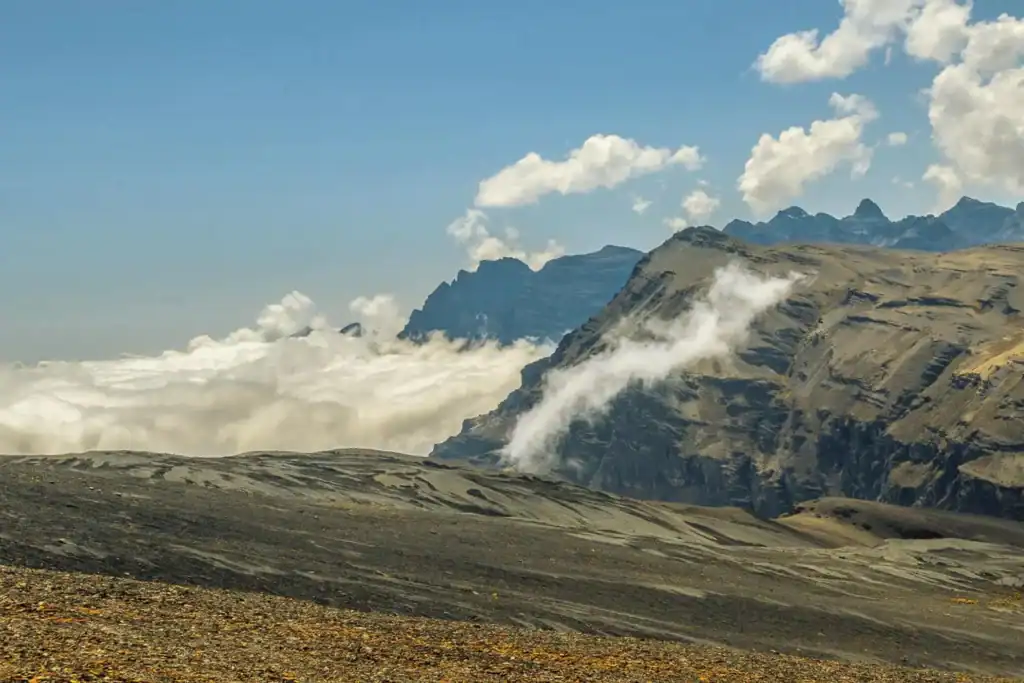
The ride starts at 4,650 metres above sea level.
You begin in freezing highland air, surrounded by snow-capped peaks. The descent drops you through cloud forests into subtropical humidity. Temperature shifts 20 degrees. Ecosystems transform completely. Your ears pop repeatedly as altitude plummets.
Waterfalls cross the track. Mud slicks appear without warning. Rocks tumble from above. The surface transitions from gravel to dirt to pure erosion. Every metre travelled reinforces why this road earned its name…
Your Turn To Test The Statistics…
The question isn’t whether Death Road deserves its reputation. The data settled that decades ago. The question is whether you’ve got the nerve to become a statistic – hopefully a surviving one?
Multiple operators run daily tours from La Paz. Professional guides provide equipment, safety briefings, support vehicles, meals and photos of your descent. Prices vary, but you’re investing in a full-day experience that separates people who talk about adventure from people who actually pursue it.
You can read about Death Road, or you can ride it. Which type of person are you..?