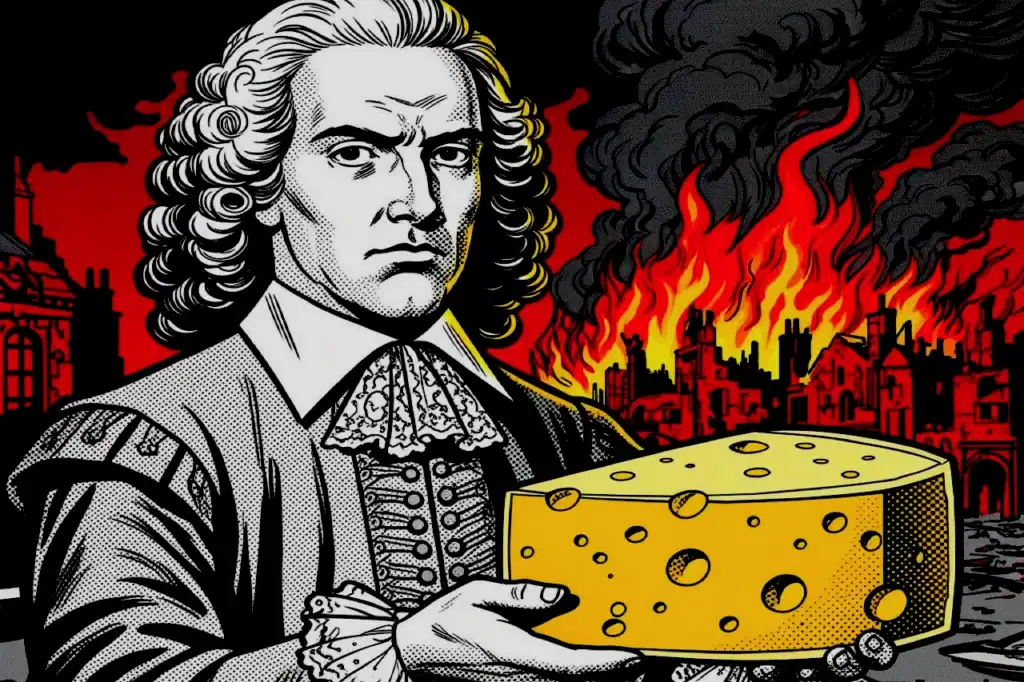

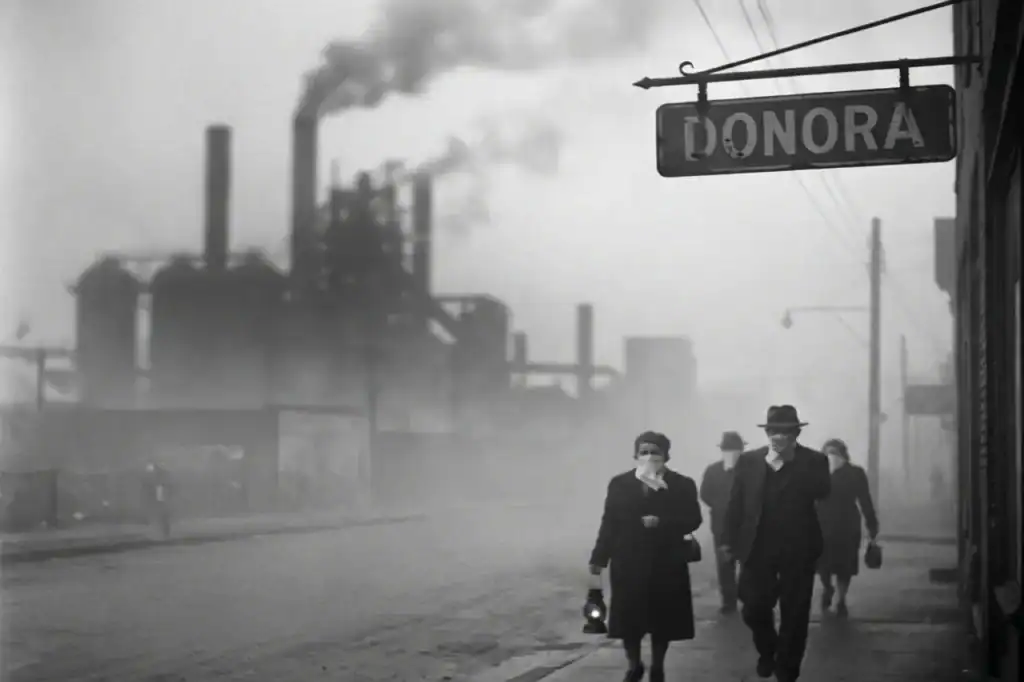

Late October 1948. A Pennsylvania mill town woke up to smog so thick you couldn’t see your own feet. Within five days, twenty people were dead. Thousands couldn’t breathe. And the local factory kept running. This is the Donora smog disaster – the environmental catastrophe that changed American laws forever. And it’s more bizarre than you think…
The Town That Smelt Like Money
Donora sat in the Monongahela River valley, population 14,000, dominated by two massive operations: American Steel and Wire Company and the Donora Zinc Works.
The smokestacks never stopped. Sulphuric acid, nitrogen dioxide, fluorine – all of it poured into the sky constantly. Locals called it “the smell of money.”
The zinc plant’s emissions were so toxic they’d killed all vegetation within half a mile of the factory. Gilmore Cemetery experienced such severe erosion from the barren landscape that heavy rains even exposed caskets before the disaster even occurred. Burials had stopped thirteen years earlier because nobody wanted to be buried that close to the Zinc Works.
That, should’ve been the warning…
When The Sky Became A Lid
27 October 1948. A temperature inversion settled over the valley. Warm air trapped cool air below it and the pollutants had nowhere to go.
Within hours, visibility dropped to less than a metre. Day turned to permanent twilight. Fire Chief Russell Davis recalled: “I drove on the left side of the street with my head out the window. Steering by scraping the kerb.” Ambulances had to be led by people on foot carrying lanterns.
You couldn’t see the person standing next to you. Drivers couldn’t even see their own hands on the steering wheel!
The Halloween Parade Nobody Stopped
On 29th October, people were dying. Respiratory systems shutting down. Dr Koehler making house calls through fog so thick he needed guides. And children in costumes still walked down Main Street for the annual Halloween parade.
“Like shadows moving through the gloom,” witnesses described it.
The next day, Friday, the Donora Dragons played their scheduled football game. They ran the ball instead of throwing it because nobody could see far enough to catch a pass. Seventeen people died on Saturday alone.
The Mills Kept Running
For three full days into the crisis, the zinc works continued operating.
Stacks “pouring an acrid grey smoke into the suffocating sky” whilst people literally suffocated in their homes. The plant only shut down at 6 a.m. Sunday 31 October after explicit orders from the Health Department.
Hours later, the rain arrived. The smog dispersed.
By then, funeral homes had run out of caskets. Florists ran out of flowers. The old Donora Hotel was converted into an improvised infirmary, sick people on the street level, the dead on the lower level.
The Numbers They Didn’t Want You To Know
Official death toll: 20 people.
Reality: Within one month, about 70 people had died. Another 50 residents died of respiratory causes shortly after, but these deaths rarely made it into official counts.
Nearly half of Donora’s population—approximately 6,000 people—fell ill during those five days.
And here’s the bit that should make you angry: cancer deaths in Donora nearly doubled in the following decade. The rate of death from cancer and cardiovascular disease from 1948 to 1957 was significantly elevated.
Even ten years after the incident, mortality rates remained higher. Autopsy results revealed fluorine levels in victims’ bodies were as much as 20 times higher than normal—in the lethal range.
The Cover-Up
U.S. Steel called it “an Act of God.” Company officials suggested residents’ smoking habits were to blame. Or maybe mysterious weather. Anything but the factory.
When federal investigators first arrived to examine the disaster, they were run out of town by people with handguns. Residents feared losing their jobs more than they feared the truth about what killed their neighbours. The U.S. Public Health Service conducted an investigation but their findings were notably restrained. No direct attribution to the zinc works. Political and economic pressures during the post-war industrial boom kept the report soft.
Survivors filed lawsuits. American Steel & Wire settled for $250,000 without accepting blame. Industry consultant Philip Sadtler, who investigated the scene, said years later: “It was murder. The directors of US Steel should have gone to jail for killing people.”
What Changed
Public outrage grew as details emerged. The Donora smog disaster provided undeniable evidence that industrial air pollution posed serious threats to public health. You couldn’t dismiss it. You couldn’t spin it.
Twenty dead. Thousands sick. A town that chose paycheques over breathing.
The tragedy directly influenced the Air Pollution Control Act of 1955—America’s first federal legislation addressing air quality. It marked the beginning of governmental recognition that air pollution was a national public health issue, not just a local concern.
Donora was cited repeatedly during Congressional debates on environmental protection throughout the 1950s and 1960s. The disaster contributed momentum towards the Clean Air Act of 1963 and its strengthening in 1970, which established national air quality standards and gave the federal government enforcement powers.
The Lesson Nobody Wanted
Local doctor William Rongaus stated that if the smog had lasted one more evening, “the casualty list would have been 1,000 instead of 20. Think about that. One more day. One thousand dead.
The zinc works closed permanently in 1957. Donora never recovered its industrial prominence.
Today, the town commemorates the tragedy with a historical marker and museum exhibits. The victims are remembered. The lessons, supposedly, learned. But here’s what Donora really proved: communities shouldn’t have to choose between paycheques and breathable air.
That’s not a trade-off. That’s extortion.
(NB: Cover image is an artist’s impression.)