
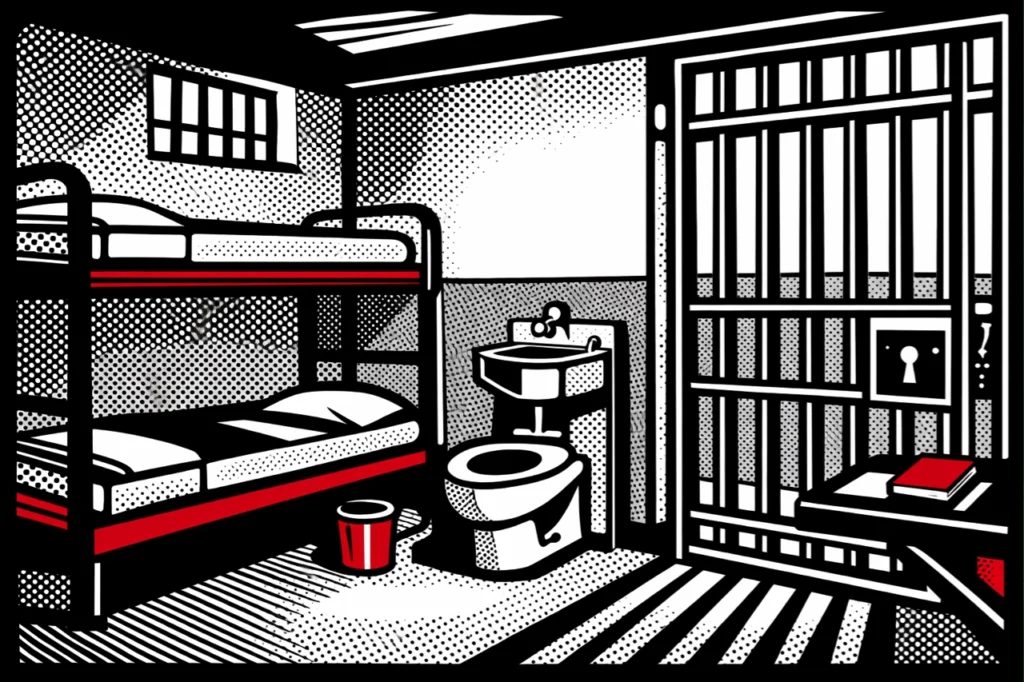

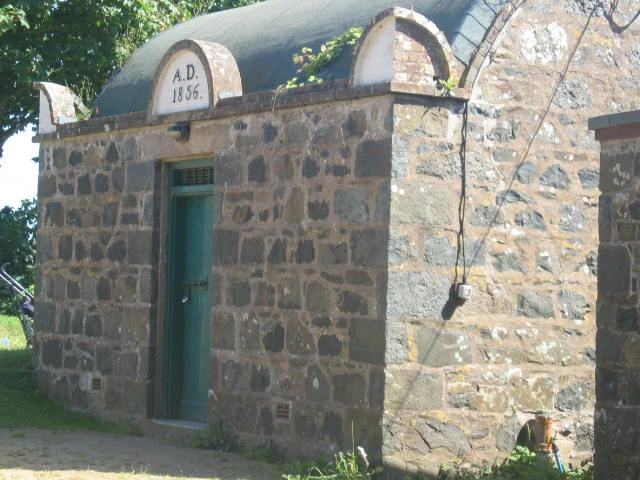
Tucked away on Sark, a tiny Channel Island with no cars and no streetlights, sits the world’s smallest prison. It’s not a tourist attraction trying to be quirky. It’s an actual functioning jail…
Two cells. That’s it. One measures 6 feet by 6 feet. The other stretches to a luxurious 6 feet by 8 feet. Both windowless. Both separated by a three-foot corridor that somehow makes the whole thing feel even more claustrophobic.
Bizarre But True! Built in 1856, this barrel-roofed detention centre holds the Guinness World Record for the planet’s smallest prison… And it’s still in use today!
You Can Only Stay Two Days (By Law)
Sark’s judicial powers date back to 1583. The law says prisoners can be held for a maximum of just two days. After that, they’re shipped off to larger facilities on neighbouring Guernsey Island.
This isn’t some modern health and safety regulation. It’s a centuries-old legal constraint that turns the prison into what it really is: a sobering-up station.
Most people who end up inside are drunk tourists or seasonal workers who’ve had one too many. The island is policed by just two unpaid volunteers bearing the titles Constable and Vingtenier.
That’s the entire law enforcement infrastructure.
The Servant Girl Who Got Company
One of the earliest known inmates was a servant girl who (despite the rules) seems to have spent three full days locked up for stealing a handkerchief from her mistress.
She was terrified of the dark. So residents let her put her chair in the open doorway. Local ladies sat outside the prison to keep her company, knitting and chatting until she’d paid her dues.
That’s community-based justice in its purest form. No rehabilitation programmes. No psychological assessments. Just neighbours making sure someone doesn’t lose their mind in a windowless box.
The One-Man Invasion
But the prison’s most famous inmate wasn’t a drunk tourist…
In 1990, Andres Gardes, an unemployed French nuclear physicist, decided he was the rightful heir and owner of Sark Island.
No one took his claims seriously. So he invaded. Alone.
He plastered the island with posters announcing his arrival, then showed up armed with a semi-automatic rifle. The Constable on duty punched him in the face and disarmed him.
His weapon now sits in the Sark Museum. Gardes spent some quality time in one of those tiny cells before being transferred off the island. That’s the only armed invasion Sark has ever faced. And it lasted about as long as it takes to make a cup of tea.
Europe’s Last Feudal State
Until 2008, Sark operated as Europe’s last feudal state.
The island’s laws were promulgated in 1565 under Elizabeth I. Before reforms, the Seigneur held the sole right to keep pigeons or an unspayed dog. That second right was repealed in 2008, presumably because someone finally asked why it mattered.
Queen Elizabeth I granted the feudal title with an obligation to maintain 40 households and men with arms to defend the island. The annual rent to the Crown? The twentieth part of a knight’s fee. In today’s money, that’s about £1.79.
The current Seigneur pays via online bank transfer. Feudalism meets digital banking.
Total Darkness At Night
Sark has no artificial lights. None.
The night sky is so clear of light pollution that in 2011, Sark became Europe’s first Dark Sky Community. You can do naked-eye astronomy without any equipment.
The prison too operates in total darkness at night. No overhead bulbs. No corridor lighting. Just blackness.
If you’re locked in one of those windowless cells after sunset, you’re experiencing darkness that most people in developed countries never encounter.
What This Actually Reveals
The prison’s continued existence says something uncomfortable about modern justice systems. Sark has virtually no crime. When someone does break the law, it’s usually minor. Public intoxication. Disorderly conduct. Nothing that requires months of incarceration or complex rehabilitation.
The two-cell prison works because the island’s close-knit community handles justice through proximity and social pressure. Everyone knows everyone. Reputation matters more than any legal penalty. Serious offenders get transferred. The rest sober up and rejoin society within 48 hours…