
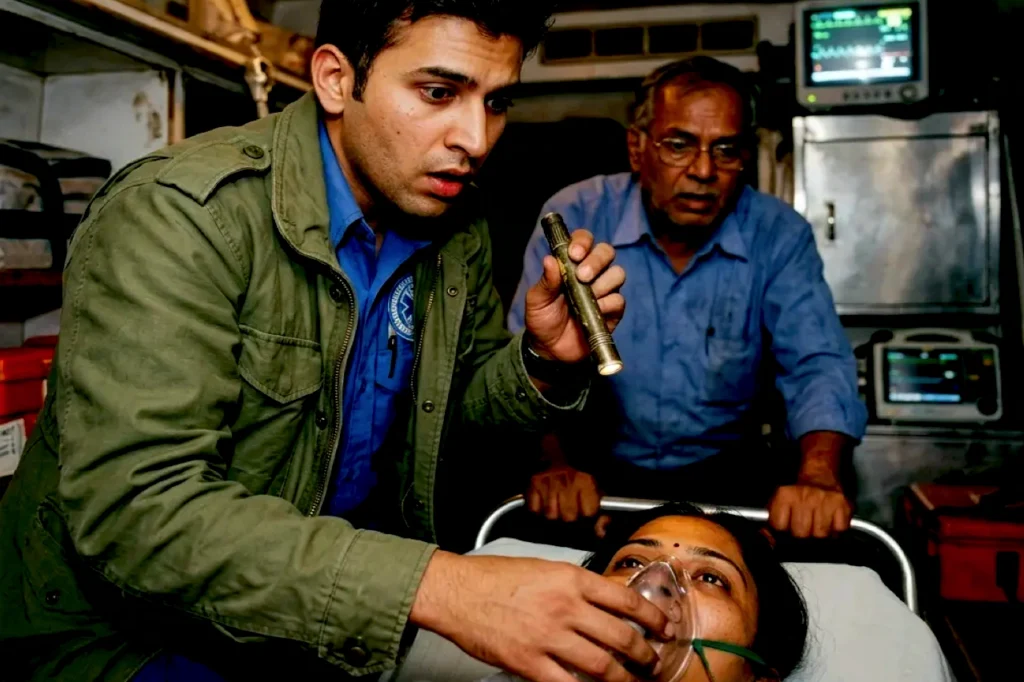

Vineeta Shukla was being driven home to die. Doctors in Bareilly, Uttar Pradesh, had declared her brain dead. Her Glasgow Coma Scale score had dropped to three points – complete unresponsiveness. Her pupils were dilated. Brainstem reflexes were absent. The medical team had made their determination, and her family was transporting her body back to Pilibhit for final rites…
Then, the ambulance hit a pothole. The jolt from India’s notoriously damaged roads threw everyone inside the vehicle. Bizarre But True! Vineeta started breathing again.
The “Miracle” That Wasn’t
The story spread fast. A brain-dead woman revived by a pothole. The narrative had everything: tragedy, hope, divine intervention. But the medical reality tells a completely different story.
Subsequent tests at a Pilibhit hospital revealed heavy neurotoxins in Vineeta’s bloodstream and lymphatic system. A neurosurgeon who treated her confirmed what the original diagnosis missed – she’d been bitten by a venomous snake or toxic insect. Her condition wasn’t brain death at all. It was neurotoxic poisoning mimicking brain death!
After treatment with anti-snake venom, Vineeta made a full recovery within 12 days. She’s now conscious and speaking with her family. The pothole didn’t save her life. But misdiagnosis nearly ended it…
When Venom Looks Like Death
Neurotoxic snake bites create a diagnostic nightmare. The venom attacks the nervous system, causing paralysis that can present identically to brain death: no reflexes, fixed pupils, complete unresponsiveness. Research on neurotoxic bites warns that intensivists should carefully evaluate these potential effects before withdrawing life support or considering organ donation.
The lag between bite and proper diagnosis can span hours. During that window, patients appear dead by every standard metric. But they’re not. They’re poisoned.
The Brain Death Problem
India adopted brain death criteria relatively recently, following UK practice that equates death with brainstem death. Legally and medically, if brainstem death is certified, the patient is dead – even whilst their heart continues beating.
That concept remains difficult for families to accept. It’s also proving difficult for medical professionals to apply consistently.
False positive misdiagnosis of brain death happens. Some patients diagnosed as “dead by neurologic criteria” continue exhibiting brain functions, most commonly neuroendocrine activity. The diagnostic process isn’t foolproof and the consequences of getting it wrong are irreversible. In Vineeta’s case, the presence of neurotoxins should have triggered additional investigation before a brain death declaration. It didn’t.
The Lazarus Effect Is Real (But Rare)
Vineeta’s revival isn’t entirely unprecedented. Between 1982 and 2022, medical literature documented 76 cases of autoresuscitation – the Lazarus phenomenon, where people declared dead from cardiac arrest suddenly showed signs of life. Most occurred within 10 minutes of CPR cessation. However, most patients died within hours or days anyway.
The longest recorded resuscitation lasted 90 minutes. The shortest, six minutes.
Medical guidelines now recommend monitoring patients for 10 minutes after CPR stops to confirm death. But that protocol doesn’t account for neurotoxic poisoning masquerading as brain death over extended periods…
(NB: Cover illustration is an artist’s impression)