
Bizarre But True! You’re more likely to die from a falling coconut than a shark attack. That’s not hyperbole either. Between 30 and 50 people die from dog bites each year in the U.S. alone, whereas sharks killed nine people globally in 2022 across all species…
The internet turned sharks into clickbait monsters. Jaws on repeat. Sensationalised footage with dramatic music. The reality? Out of more than 480 shark species, only three are responsible for double-digit fatal unprovoked attacks: great whites, tigers and bulls.
Hammerhead sharks haven’t caused a human fatality in over 120 years. There have been just 16 incidents involving people. None fatal.
The sharks, mostly, aren’t actually the danger, it’s in the disconnect between perception and fact that can be more harmful. So with that in mind, if you fancy a slightly more bizarre activity for your next vacation, then here are five wonderfully bizarre places where you can test that disconnect yourself and dive with sharks…
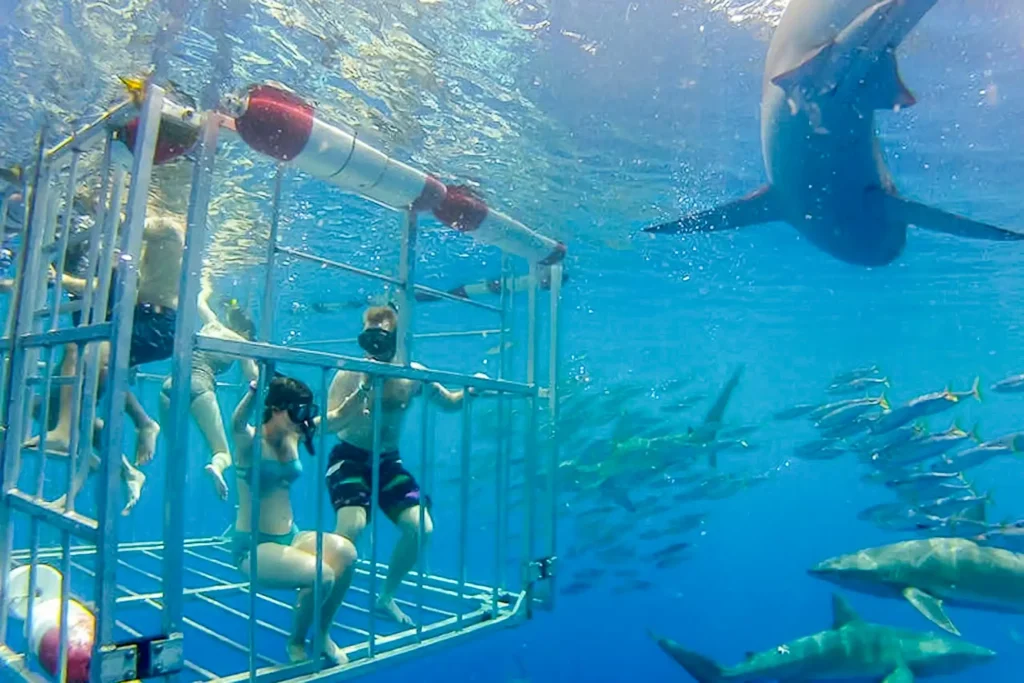
1. Oahu, Hawaii: Half-Day Shark Dive
Three miles off the North Shore of Oahu, you’ll drop into open water with sharks circling below…
No cage. Just you, a wetsuit and a guide who’s done this hundreds of times. The half-day shark dive runs for about two hours on the water. You’ll encounter Galapagos sharks and sandbar sharks – species that have zero recorded human fatalities.
The boat provides all equipment. You bring your nerve.
What you’ll learn: sharks don’t behave like the footage suggests. They’re curious, not aggressive. They circle, assess and move on. The guide explains their behaviour in real time whilst you’re in the water.
You’ll see how electroreception works up close. Sharks possess the strongest electroreception of any animal on Earth. Their ampullae of Lorenzini can detect electrical fields as weak as five nanovolts per centimetre – that’s five billionths of a volt. They sense your heartbeat before they see you.
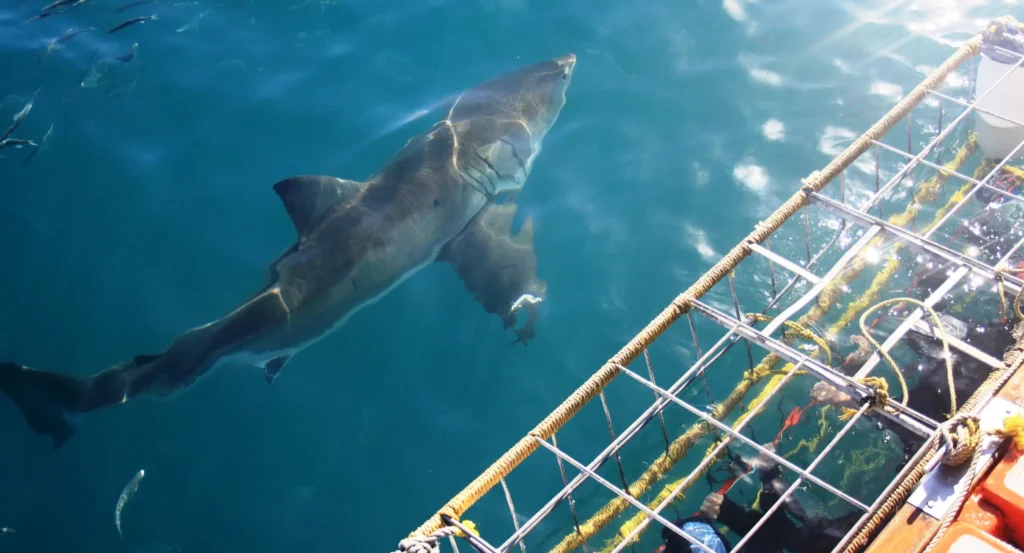
2. Gans Bay, South Africa: Shark Cage Diving
Gans Bay calls itself the “Great White Shark Capital of the World.”
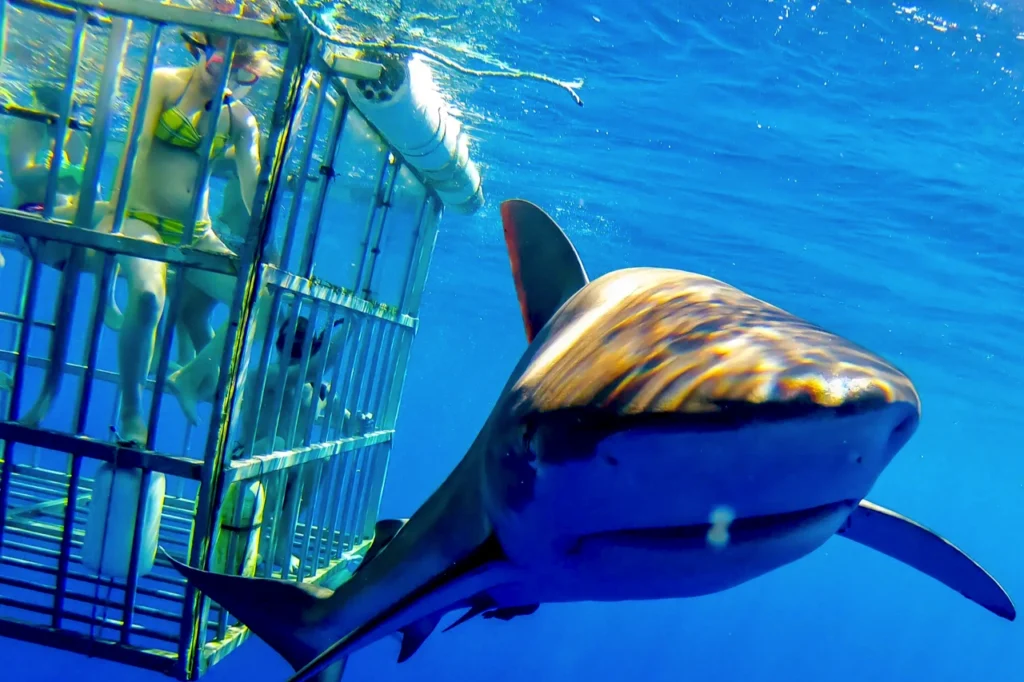
The cage diving experience puts you face-to-face with Great Whites in their natural hunting grounds. The cage sits just below the surface. Sharks approach within inches of the bars.
Here’s the key thing: no human has ever died by shark attack in a shark cage diving accident. Ever.
The closest incident happened in 2005 when a British tourist, Mark Currie, was attacked by a great white whilst in a cage off South Africa. The shark bit through the bars and destroyed a flotation buoy. The cage sank. Currie escaped by swimming out of the top whilst the boat captain fended off the shark by jabbing at its head.
He survived. The shark moved on.
In 2019, a great white shark died after becoming trapped in a cage off Guadalupe Island, Mexico. Its head became stuck between the bars for approximately 25 minutes. Its neck was cut in the process. It eventually floated away and sank to the ocean floor. The incident was caught on film. Conservationists were outraged.
Cage diving is safer for humans than it is for sharks.
The Gans Bay experience includes breakfast, lunch and all safety equipment. You’ll spend roughly five hours on the water. The crew provides wet suits rated for the cold Atlantic waters.
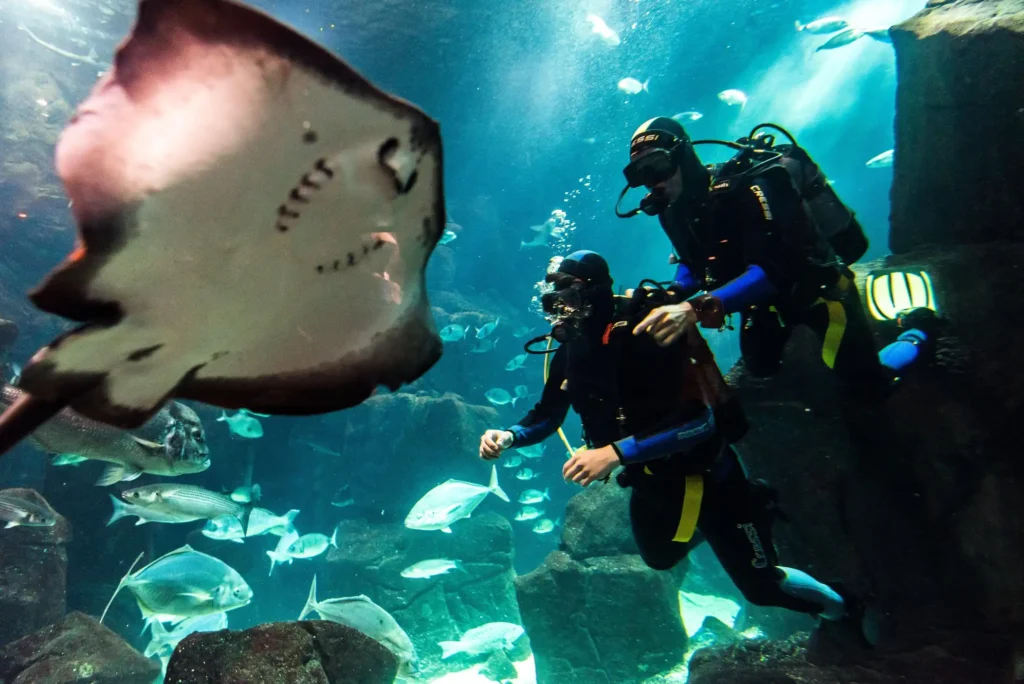
3. Madeira, Portugal: Porto Moniz Aquarium Dive
The Madeira Aquarium in Porto Moniz offers something different: a controlled environment where you can dive with sharks and rays without the unpredictability of open water.
You’ll encounter nurse sharks, blacktip reef sharks and various ray species in a 500,000-litre tank.
The aquarium provides a 30-minute briefing before the dive. You’ll spend roughly 30 minutes underwater. All equipment is included.
You’ll learn how sharks interact with their environment when food scarcity isn’t a factor. How they navigate shared space with rays. How they respond to human presence when it’s normalised rather than novel.
The experience is designed for divers of all levels. If you’ve never dived before, this is where you start…
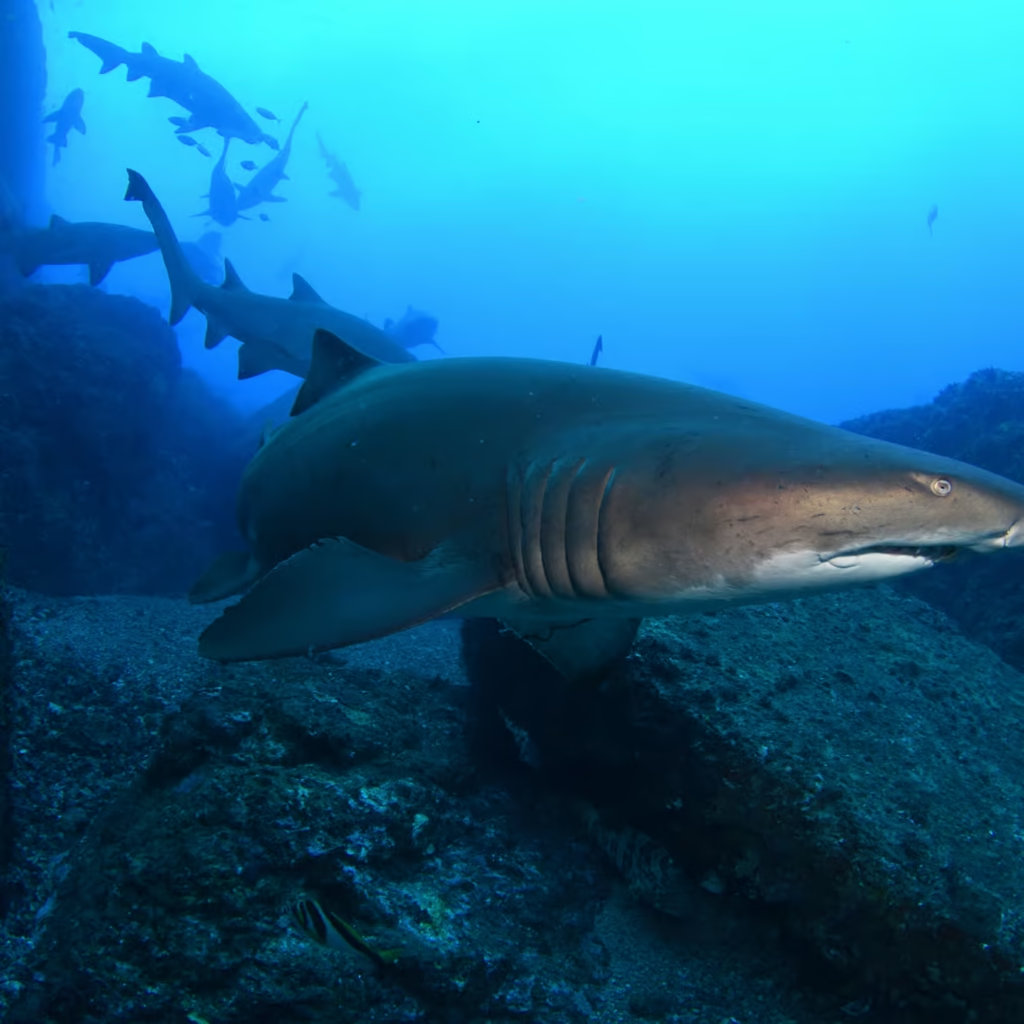
4. Sydney, Australia: Bushrangers Bay Scuba Dive
Bushrangers Bay sits off the coast of Sydney. The day trip scuba dive takes you into natural habitat where Port Jackson sharks, wobbegongs and occasionally grey nurse sharks patrol the underwater landscape.
You’ll dive to depths of 12-18 metres. The visibility averages 10-15 metres on good days.
Port Jackson sharks are bottom-dwellers. They don’t attack humans. They’ve never caused a fatality. They’re more interested in shellfish than anything else. Wobbegongs are ambush predators. They lie camouflaged on the ocean floor waiting for prey to swim past. They look like carpet. They move like lightning when they strike. They’ve never killed a human either.
The trip includes all dive equipment, a qualified instructor and transport from Sydney. You’ll spend roughly eight hours total, with two dives planned.
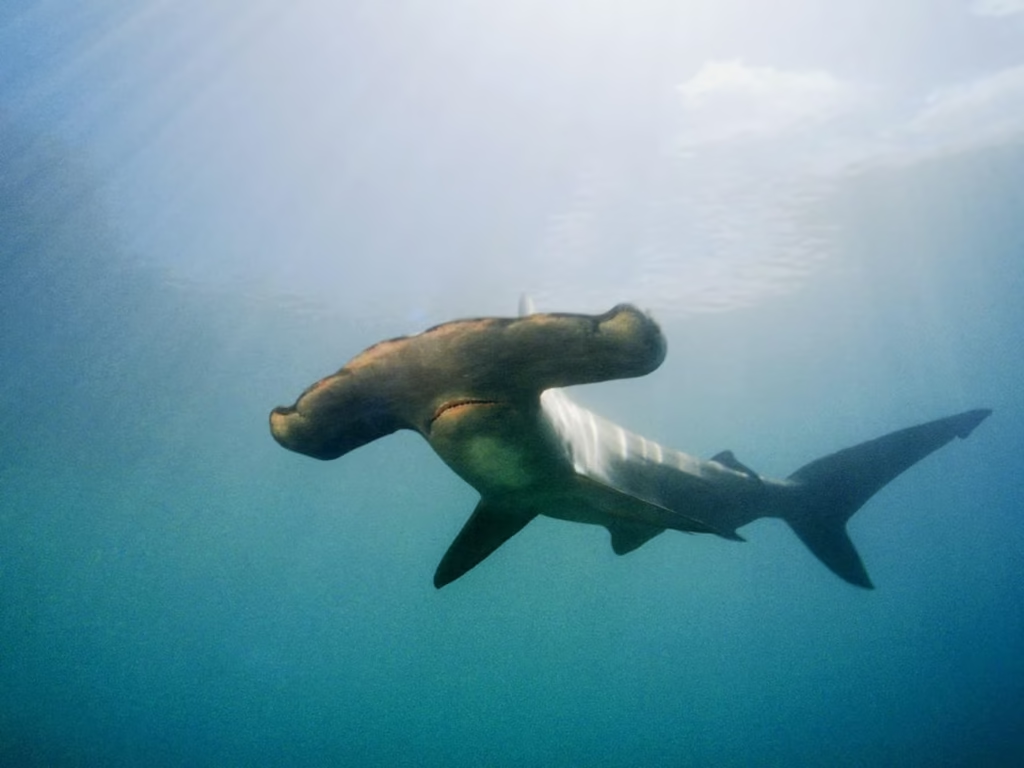
5. Auckland Region, New Zealand: Hauraki Gulf Hammerhead Experience
The Hauraki Gulf Dive Charter offers something rare: the chance to encounter smooth hammerhead sharks in New Zealand waters.
Hammerheads are strange even by shark standards. They use their heads as hammers, pinning stingrays to the seafloor before eating them. They’ve evolved a tolerance to stingray venom. One great hammerhead was caught with a stingray’s barb still embedded in its skin.
Despite having 360-degree vision above and below them, hammerhead sharks have a complete blind spot directly in front of their nose. Small fish have been observed hiding right there, invisible to the shark. They can get scared off by bubbles and there are rules around swimming with them that include not exhaling bubbles when they’re nearby.
The charter runs for a full day. You’ll complete two dives in the Hauraki Gulf. All equipment is provided but you need to be an experienced diver – this isn’t an entry-level experience. Hammerhead populations have declined by more than 80% globally. Encountering them in the wild is becoming rarer each year.