


The ‘katana’ has become the ultimate symbol of honour, precision and mystical craftsmanship. Films, games and pop culture have all turned it into something almost supernatural. But the reality is far stranger, darker and more fascinating than any of the myths…
The actual history of these samurai swords involves corpse-testing competitions, marketing deceptions that persist today and a complete reimagining of what “samurai honour” even means. The gap between legend and documentation is massive.
Read on to discover the truth behind Samurai blades and a unique chance to make your own Samurai Knife in Seki, Japan’s knife forcing capital…
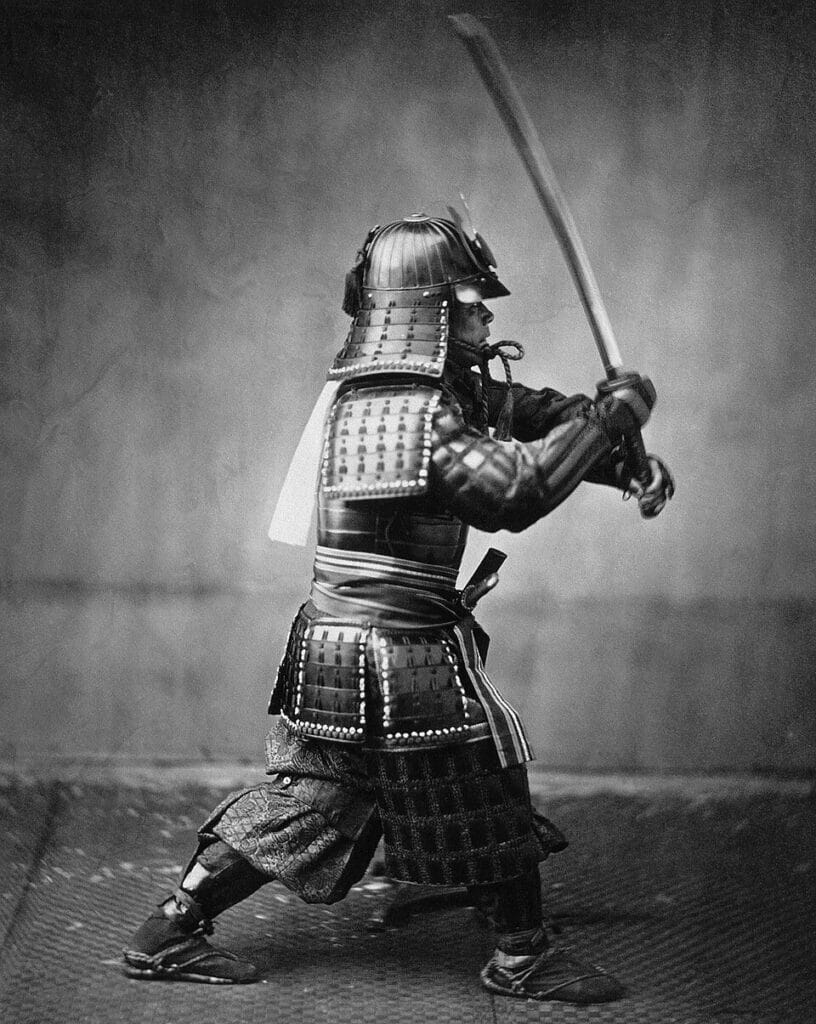
The Folding Myth: Mathematics vs Marketing
You’ve heard it a thousand times: katanas are “folded a thousand times” to create an impossibly strong blade.
That’s mathematically impossible.
Bizarre But True! The steel is only folded 10 to 12 times. Each fold doubles the number of layers, so by fourteen folds you’ve already created over 16,000 layers. The folding process wasn’t about creating strength either – it was about removing impurities from terrible-quality iron.
Medieval Japanese furnaces couldn’t reach iron’s full liquefaction temperature of 2,800°F. They maxed out at 2,500°F, producing inconsistent, impurity-laden metal that needed folding just to become usable!
Modern steel? Already homogeneous. No impurities. Folding it actually makes the blade weaker, though many forges still do it purely for marketing reasons. The “thousand-fold” claim is a romantic mistranslation that refuses to die because it sounds incredible and ‘romantic’…
Blade Testing: The Corpse-Cutting Competitions
But here’s where the history gets bizarrely dark…
Samurai didn’t test their swords on bamboo or straw. They tested them on human corpses – specifically, the bodies of executed criminals piled up in stacks. The practice was called tameshigiri and older swords still carry inscriptions on their tang that read things like “5 bodies with Ryu Guruma (hip cut)”. If a blade failed the test, the disgrace was so profound that the swordsmith might commit seppuku.
But it gets worse…
When criminal corpses weren’t available, innocent bystanders became targets. This was called tsuji giri – “crossroad cutting”, where samurai would test their new blades on random passersby at night.
During World War II, this practice returned in a horrific form. Japanese officers routinely tested their new swords on captured Allied soldiers and Chinese civilians. Two lieutenants held a competition to see who could behead 100 people fastest, a fact they later admitted in Tokyo District Court.
The blade wasn’t just a weapon. It was a status symbol that required human proof…
The “Honour Code” Was Invented in 1900
Everything you think you know about samurai honour? Fabricated.
The bushido code – the supposed ancient warrior philosophy, was reimagined by Nitobe Inazo in 1900, drawing fictional associations between samurai and chivalric honour. This concept was then reimported back into Japan and weaponised by the imperial government to force soldiers to fight to the death.
Actual samurai had a custom called kiri-sute gomen – the right to strike and kill anyone of a lower class who “dishonoured” them. This wasn’t a last resort. It was a legal privilege.
The romanticised samurai of film and literature is mostly just a 20th-century invention, not a historical reality.
The Katana Wasn’t Even Their Main Weapon
Samurai didn’t primarily fight with swords either…
The spear (yari) remained the preferred weapon for actual combat because it offered reach and penetrating power that the katana couldn’t match. Early samurai were mounted archers – “the way of the horse and bow”, not swordsmen.
Swordsmanship became culturally significant later, but there’s nothing special about a Japanese sword that would give it an edge over a European broadsword in direct comparison. Different metallurgy, different techniques, different contexts.
The katana’s reputation exceeds its battlefield utility by a significant margin.
The Sharpness Paradox: Paper vs Bamboo
Modern katana marketing loves to show blades slicing through paper like butter. That’s actually a warning sign, not a feature.
If your katana cuts through paper effortlessly, you’ll be disappointed when cutting thick bamboo – you’ll notice chips and rolls along the cutting edge afterwards. Japanese swords were not made to cut through printer paper.
A properly forged katana has a specific edge geometry designed for controlled cutting of resistant materials. Making it “paper-sharp” actually compromises its structural integrity for the sake of a party trick.
The sharpness that impresses in demonstrations often fails in actual use!
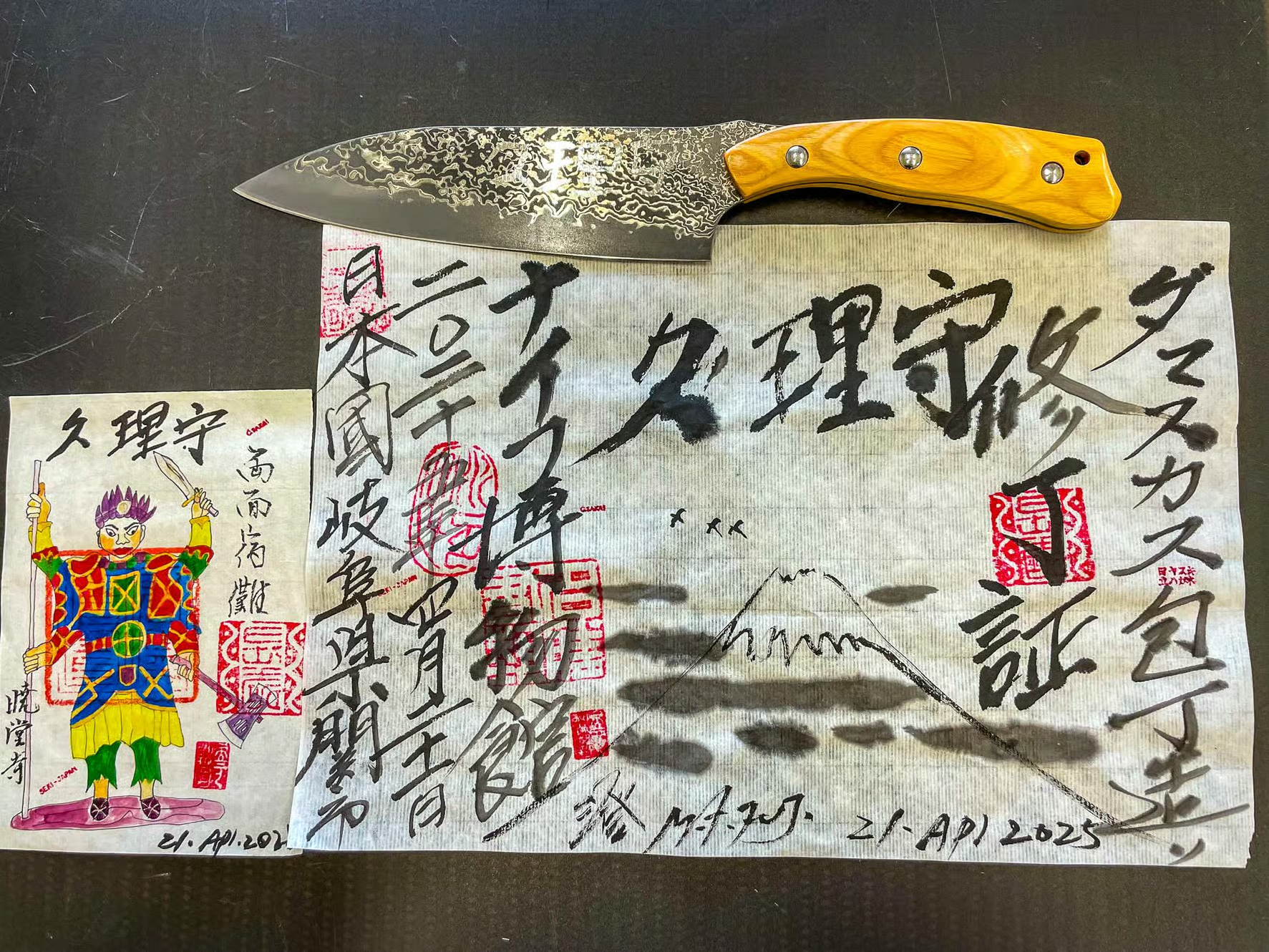
Your Chance To Make a Samurai Blade
Now that you know the real history – the brutal testing methods, the metallurgical limitations, the marketing myths, you can experience the actual craft behind these legendary blades for yourself…
The Seki Samurai Knife Making Experience lets you forge your own knife blade using traditional techniques in the knife-making capital of Japan. You’re not watching a demonstration. You’re working the steel yourself.
Seki has been producing blades for over 700 years, and this hands-on workshop gives you direct access to the methods that created both the mystique and the reality of Japanese bladesmithing.
Book your experience below now at the Knife Museum and forge something that connects you to the actual history – not the Hollywood version..!